This volume contains the proceedings of the 19th International Conference on Difference Equations and Applications, held at Sultan Qaboos University, Muscat, Oman in May 2013.
This book constitutes the refereed proceedings of the 5th International Conference on Pattern Recognition and Machine Intelligence, PReMI 2013, held in Kolkata, India in December 2013.
The two volume sets LNCS 8033 and 8034 constitutes the refereed proceedings of the 9th International Symposium on Visual Computing, ISVC 2013, held in Rethymnon, Crete, Greece, in July 2013.
The two volume sets LNCS 8033 and 8034 constitutes the refereed proceedings of the 9th International Symposium on Visual Computing, ISVC 2013, held in Rethymnon, Crete, Greece, in July 2013.
This book constitutes the refereed proceedings of the 9th International Symposium on Bioinformatics Research and Applications, ISBRA 2013, held in Charlotte, NC, USA, in May 2013.
This volume gathers together previously unpublished articles focusing on the relationship between preference adaptation and autonomy in connection with human enhancement and in the end-of-life context.
This book constitutes the thoroughly refereed post-conference proceedings of the Third International Workshop on Statistical Atlases and Computational Models of the Heart: Imaging and Modelling Challenges, STACOM 2012, held in conjunction with MICCAI 2012, in Nice, France, in October 2012.
The challenge of creating a real-life computational equivalent of the human mind requires that we better understand at a computational level how natural intelligent systems develop their cognitive and learning functions.
The two volume set LNCS 7431 and 7432 constitutes the refereed proceedings of the 8th International Symposium on Visual Computing, ISVC 2012, held in Rethymnon, Crete, Greece, in July 2012.
The two volume set LNCS 7431 and 7432 constitutes the refereed proceedings of the 8th International Symposium on Visual Computing, ISVC 2012, held in Rethymnon, Crete, Greece, in July 2012.
The two volume set LNCS 7491 and 7492 constitutes the refereed proceedings of the 12th International Conference on Parallel Problem Solving from Nature, PPSN 2012, held in Taormina, Sicily, Italy, in September 2012.
The two volume set LNCS 7491 and 7492 constitutes the refereed proceedings of the 12th International Conference on Parallel Problem Solving from Nature, PPSN 2012, held in Taormina, Sicily, Italy, in September 2012.
This book constitutes the first of 3 volumes of refereed conference proceedings of the 8th International Conference on Intelligent Computing, ICIC 2012, held in Huangshan, China, in July 2012.
This book constitutes the thoroughly refereed post-conferenceproceedings of the 4th International Joint Conference on BiomedicalEngineering Systems and Technologies, BIOSTEC 2011, held in Rome, Italy, in January 2011.
This book constitutes the refereed proceedings of the Second International ICST Conference on Wireless Mobile Communication and Healthcare, MobiHealth 2011, held on Kos Island, Greece, in October 2011.
This book constitutes the refereed proceedings of the 15th European Conference on Genetic Programming, EuroGP 2012, held in Malaga, Spain, in April 2012 co-located with the Evo* 2012 events.
The two volume set LNCS 6938 and LNCS 6939 constitutes the refereed proceedings of the 7th International Symposium on Visual Computing, ISVC 2011, held in Las Vegas, NV, USA, in September 2011.
The two volume set LNCS 6938 and LNCS 6939 constitutes the refereed proceedings of the 7th International Symposium on Visual Computing, ISVC 2011, held in Las Vegas, NV, USA, in September 2011.
This book constitutes the refereed proceedings of the 14th European Conference on Genetic Programming, EuroGP 2011, held in Torino, Italy, in April 2011 co-located with the Evo* 2011 events.
This book constitutes the thoroughly refereed post-conferenceproceedings of the Third International Joint Conference on BiomedicalEngineering Systems and Technologies, BIOSTEC 2010, held in Valencia,Spain, in January 2010.
This book constitutes the thoroughly refereed post-conference proceedings of the 11th International Conference on Membrane Computing, CMC11, held in Jena, Germany, in August 2010 - continuing the fruitful tradition of 10 previous editions of the International Workshop on Membrane Computing (WMC).
It is with great pleasure that we present the proceedings of the 6th Inter- tional, Symposium on Visual Computing (ISVC 2010), which was held in Las Vegas, Nevada.
It is with great pleasure that we present the proceedings of the 6th Inter- tional, Symposium on Visual Computing (ISVC 2010), which was held in Las Vegas, Nevada.
It is with great pleasure that we present the proceedings of the 6th Inter- tional, Symposium on Visual Computing (ISVC 2010), which was held in Las Vegas, Nevada.
The fields of Bioinformatics and Computational Biology have been growing steadily over the last few years boosted by an increasing need for computational techniques that can efficiently handle the huge amounts of data produced by the new experimental techniques in Biology.
This volume is part of the two-volume proceedings of the 19th International Conf- ence on Artificial Neural Networks (ICANN 2009), which was held in Cyprus during September 14-17, 2009.
This volume is part of the two-volume proceedings of the 19th International Conf- ence on Artificial Neural Networks (ICANN 2009), which was held in Cyprus during September 14-17, 2009.
This volume contains the proceedings of the 7th Conference on Computational Methods in Systems Biology (CMSB 2009), held in Bologna, from August 31 to September 1, 2009.
This volume (II) contains all publications accepted for the symposiums and workshops held in parallel with the 10th International Work-Conference on Artificial Neural Networks (IWANN 2009), covering a wide spectrum of technological areas such as distributed computing, artificial intelligence, bioinformatics, soft computing and ambient-assisted living: * DCAI 2009 (International Symposium on Distributed Computing and Artificial Intelligence), covering artificial intelligence and its applications in distributed environments, such as the Internet, electronic commerce, mobile communi- tions, wireless devices, distributed computing, and so on.
This volume presents the set of final accepted papers for the tenth edition of the IWANN conference "e;International Work-Conference on Artificial neural Networks"e; held in Salamanca (Spain) during June 10-12, 2009.
This book contains the best papers of the First International Joint Conference on B- medical Engineering Systems and Technologies (BIOSTEC 2008), organized by the Institute for Systems and Technologies of Information Control and Communication (INSTICC), technically co-sponsored by the IEEE Engineering in Medicine and Bi- ogy Society (EMB), ACM SIGART and the Workflow Management Coalition (WfMC), in cooperation with AAAI.
A key driving factor for biometrics is the widespread national and international depl- ment of biometric systems that has been initiated in the past two years and is about to accelerate.
This volume contains the papers from BIOWIRE 2007, the first in a series of wo- shops on the bio-inspired design of networks, and additional papers contributed from the research area of bio-inspired computing and communication.
This book constitutes the refereed joint proceedings of seven international workshops held in conjunction with the 27th International Conference on Conceptual Modeling, ER 2008, in Barcelona, Spain, in October 2008.
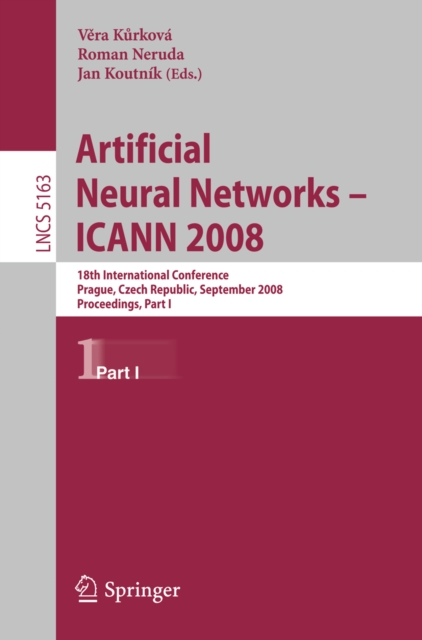
This two volume set LNCS 5163 and LNCS 5164 constitutes the refereed proceedings of the 18th International Conference on Artificial Neural Networks, ICANN 2008, held in Prague Czech Republic, in September 2008.
This two volume set LNCS 5163 and LNCS 5164 constitutes the refereed proceedings of the 18th International Conference on Artificial Neural Networks, ICANN 2008, held in Prague Czech Republic, in September 2008.
The success of Bioinformatics in recent years has been prompted by research in mole- lar biology and medicine in initiatives like the human genome project.
This LNCS volume contains the papers presented at the second Workshop on Human Motion Understanding, Modeling, Capture and Animation, which took place on October 20th, 2007, accompanying the 11th IEEE International C- ference on Computer Vision in Rio de Janeiro, Brazil.
This book constitutes the refereed proceedings of the 10th International Conference on Simulation of Adaptive Behavior, SAB 2008, held in Osaka, Japan in July 2008.