This second volume on meta-omics technologies brings together the rapidly growing facets of this discipline, focusing on its application in crop improvement.
This second volume on meta-omics technologies brings together the rapidly growing facets of this discipline, focusing on its application in crop improvement.
This book provides a detailed exploration of bioaerosols in indoor environments, focusing on their sources, transport mechanisms, health implications, and mitigation strategies.
This book provides a detailed exploration of bioaerosols in indoor environments, focusing on their sources, transport mechanisms, health implications, and mitigation strategies.
Experimental Evolution: The Making of a Modern Science connects molecular biology/biochemistry with ecology/evolution to show how molecular mechanisms and ecological processes work together to drive evolutionary change.
Experimental Evolution: The Making of a Modern Science connects molecular biology/biochemistry with ecology/evolution to show how molecular mechanisms and ecological processes work together to drive evolutionary change.
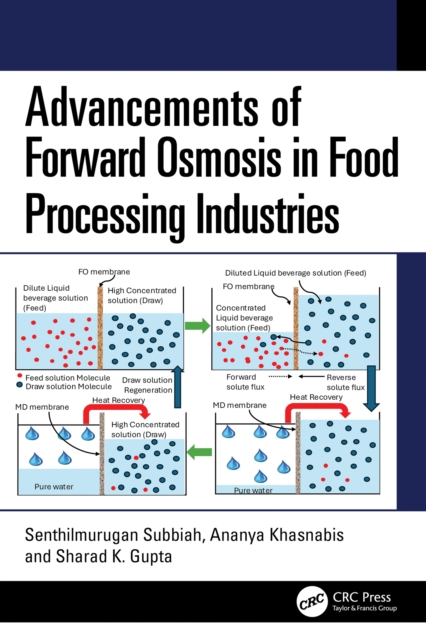
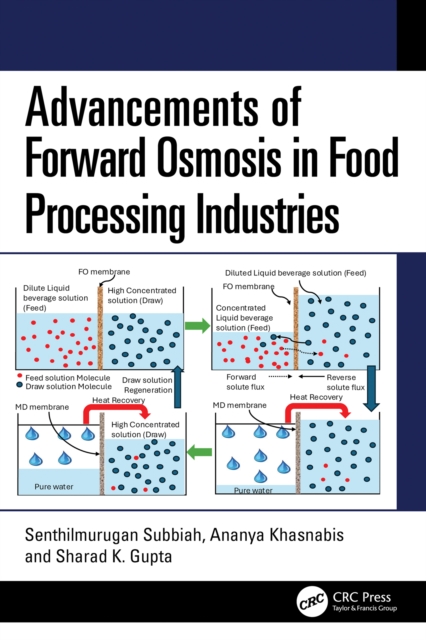
This book provides a comprehensive exploration of forward osmosis (FO) technology and its transformative impact on the food processing industry including fundamental principles, its current applications, and the emerging trends that promise to revolutionize food processing.
This book provides a comprehensive exploration of forward osmosis (FO) technology and its transformative impact on the food processing industry including fundamental principles, its current applications, and the emerging trends that promise to revolutionize food processing.
It has been known for a number of years that not only pathogenicity islands but also plasmids and bacteriophages are able to carry genes whose products are involved in pathogenic processes.
This book gathers contributions by 16 international authors on the phenomenon "e;bats,"e; shedding some light on their morphology, the feeding behaviors (insects, fruits, blood) of different groups, their potential and confirmed transmissions of agents of diseases, their endo- and ectoparasites, as well as countless myths surrounding their lifestyle (e.
This detailed collection covers methods recently developed for experiments on organisms from each of the major euglenozoan groups, including diplonemids, euglenids, and kinetoplastids.
This detailed collection covers methods recently developed for experiments on organisms from each of the major euglenozoan groups, including diplonemids, euglenids, and kinetoplastids.
This contributed volume provides an in-depth examination of entomopathogenic fungi, focusing on their diversity, ecological roles, and potential as biocontrol agents.
This detailed collection covers methods recently developed for experiments on organisms from each of the major euglenozoan groups, including diplonemids, euglenids, and kinetoplastids.
This detailed collection covers methods recently developed for experiments on organisms from each of the major euglenozoan groups, including diplonemids, euglenids, and kinetoplastids.
This book examines the crucial role of soil microbial communities in agroecosystems, highlighting their contributions to plant growth promotion, disease suppression, pathogen resistance, and soil remediation.
This book examines the crucial role of soil microbial communities in agroecosystems, highlighting their contributions to plant growth promotion, disease suppression, pathogen resistance, and soil remediation.
This book bridges the gap between science communication and plant-microbe communication and shows how both can be exploited to make agriculture more sustainable.
This book bridges the gap between science communication and plant-microbe communication and shows how both can be exploited to make agriculture more sustainable.
Decoding Plant-Environment-Microbiome Interactions in Stress-Resilient Agriculture delivers both foundational understanding and forward-looking perspectives on the rapidly advancing field of phytomicrobiome research.
With one volume each year, this series keeps scientists and advanced students informed of the latest developments and results in all areas of the plant sciences.
With one volume each year, this series keeps scientists and advanced students informed of the latest developments and results in all areas of the plant sciences.
With one volume each year, this series keeps scientists and advanced students informed of the latest developments and results in all areas of the plant sciences.
With one volume each year, this review series keeps scientists and advanced students informed of the latest developments and results in all areas of the plant sciences.
This contributed volume provides an in-depth examination of entomopathogenic fungi, focusing on their diversity, ecological roles, and potential as biocontrol agents.
Decoding Plant-Environment-Microbiome Interactions in Stress-Resilient Agriculture delivers both foundational understanding and forward-looking perspectives on the rapidly advancing field of phytomicrobiome research.
Understanding the Pandemic: Pathophysiology, Transmission, and Treatment of COVID-19 aims to cover all aspects of COVID-19 infection from the virus, transmission, pathogenesis, immune-inflammation response, systemic injury, organ damage and associated factors comorbidities that drive mortality.
Understanding the Pandemic: Pathophysiology, Transmission, and Treatment of COVID-19 aims to cover all aspects of COVID-19 infection from the virus, transmission, pathogenesis, immune-inflammation response, systemic injury, organ damage and associated factors comorbidities that drive mortality.
Based on the success of the first edition, Pigments from Microalgae Handbook – Second Edition, Volume III: Industrial and Functional Applications is the final volume of a comprehensive three-volume series that captures the transition from cutting-edge microalgal pigment science to real-world innovations across consumer-driven industries.
Based on the success of the first edition, Pigments from Microalgae Handbook – Second Edition, Volume III: Industrial and Functional Applications is the final volume of a comprehensive three-volume series that captures the transition from cutting-edge microalgal pigment science to real-world innovations across consumer-driven industries.
This book is about vermitechnology and focuses on its current status and future directions in the economic, environmental and sustainable agricultural development.
This book is about vermitechnology and focuses on its current status and future directions in the economic, environmental and sustainable agricultural development.
Based on the success of the first edition, Pigments from Microalgae Handbook – Second Edition, Volume II: Bioprocess Engineering, Smart Extraction Technologies, Omics Tools, and Sustainability-Driven Innovations is the second of a comprehensive three-volume series offering a cutting-edge reference on the transition from laboratory research to industrial-scale processes in the development of microalgal pigments.
Based on the success of the first edition, Pigments from Microalgae Handbook – Second Edition, Volume II: Bioprocess Engineering, Smart Extraction Technologies, Omics Tools, and Sustainability-Driven Innovations is the second of a comprehensive three-volume series offering a cutting-edge reference on the transition from laboratory research to industrial-scale processes in the development of microalgal pigments.
This book explores the potential of biofertilizers as a natural and eco-friendly alternative for promoting sustainable soil fertility management among smallholder farmers in Africa.
This book explores the potential of biofertilizers as a natural and eco-friendly alternative for promoting sustainable soil fertility management among smallholder farmers in Africa.
This book examines the convergence of nanotechnology and bioenergy to develop sustainable biowaste-based biorefineries, offering solutions to growing concerns about fossil fuel depletion, waste accumulation, and environmental degradation.
This book provides a ground-breaking and thorough analysis of how climate change affects tick populations and the transmission of diseases linked to them.
This book spotlights the potential of nanozymes in combating antimicrobial resistance (AMR), a growing global health crisis with high mortality and morbidity.
This book provides a ground-breaking and thorough analysis of how climate change affects tick populations and the transmission of diseases linked to them.
This book examines the convergence of nanotechnology and bioenergy to develop sustainable biowaste-based biorefineries, offering solutions to growing concerns about fossil fuel depletion, waste accumulation, and environmental degradation.