This book offers a comprehensive review of the latest developments, challenges and trends in C1-based (one-carbon based) bioproduction, and it presents an authoritative account of one-carbon compounds as promising alternative microbial feedstocks.
This book reviews new promising drug targets for Neglected Tropical Diseases (NTDs), with a special focus on antiprotozoal drugs against trpyanosomatids Trypanosoma cruzi and Leishmania spp.
This book describes emerging and established industrial processes of biomining technologies used for the recovery of metals of economic interest from, e.
The SIR - model supported by a new density and its derivatives receive a statistical data background from frequency distributions, from whose parameter values over the new density distribution a quality-oriented probability of the respective infection process and its future can be concluded.
This book series focuses on current progress in the broad field of medical microbiology, and covers both basic and applied topics related to the study of microbes, their interactions with human and animals, and emerging issues relevant for public health.
This textbook explores the complex nature of soil biological communities and their environments, and covers deserts, rainforests, seasonal tropical forests, dry deciduous forests, and island environments in the tropical zone.
The book is an update on contentious or unsettled issues concerning invasive diagnostic and therapeutic challenges in cancer and related disorders, focusing on the surgical approach.
This book has been developed to provide a detailed discussion of probiotics, which have been evaluated for use predominantly in fish and shellfish aquaculture.
This book covers the wider aspects of the microbiology of hot desert soil ecosystems, compiling disparate information from a range of relevant desert soil microbial fields.
This second fully updated and extended edition of Biotechnology and Conservation of Cultural Heritage provides in-depth insights into the role of different microorganisms and microbial compounds in biodeterioration, conservation and restoration of artworks and artifacts.
This book explains the metabolic processes by which microbes obtain and control the intracellular availability of their required metal and metalloid ions.
This second edition is fully updated throughout and covers the emerging evidence that indicates that the Gadd45 family of proteins plays a unique and critical role as sensors of stress, including genotoxic, physiological, and oncogenic stress.
This monograph emphasizes the many facets of bacterial evolution as impacted by bacterial interactions with phages, as well as, to a lesser degree, the evolutionary impact of phages on other organisms, including other phages.
This book outlines the production of chitooligossacharides and their derivatives and discusses their main biological activities, biomedical applications and their role in disease prevention.
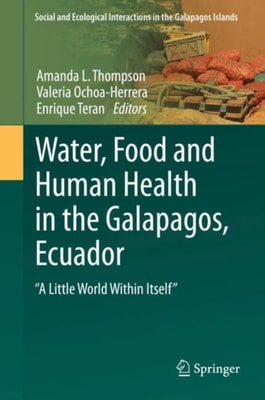
In this book, we bring together interdisciplinary scholars and clinicians in medicine, public health, anthropology, nutrition, environmental sciences, and geography from the University of North Carolina at Chapel Hill, Universidad San Francisco de Quito, the Ministry of Health and the Hospital Oskar Jandl.
This book provides readers with a collection of latest reviews written by Chikungunya virus (CHIKV) research leaders who cover topics related to CHIKV replication, advances in CHIKV research reagents and model system development, as well as the pathogenesis of chronic CHIKV disease.
This book reviews the occurrence and fate of pesticides in soils, their impact on soil quality and soil ecosystems, and it also provides a comprehensive overview of the latest prevention and remediation strategies of soil contamination.
Advances in Trichoderma Biology for Agricultural Applications covers the beneficial properties of Trichoderma in enhancing global agricultural productivity.
Valuable progress has been made in food packaging over the past two decades, reflecting advancements in process efficiency, improved safety and quality throughout the supply chain, and the need to reduce product loss and environmental impact.
This book covers recent advances and future trends in yeast synthetic biology, providing readers with an overview of computational and engineering tools, and giving insight on important applications.
This first volume of a two-volume work presents the manifold applications of beneficial microbes and microbiomes in plant growth promotion, in enhancing crop resilience and in control of phytopathogens through microbial antagonists.
This book reviews the current knowledge of the globally circulating SARS-CoV-2 variants, highlights their distinct genetic characteristics and associated conformational changes in the viral spike protein, and profoundly discusses the mechanisms of convergent evolution that led to the rise of these mutated strains at different geographic regions during the Covid-19 pandemic.
This second volume of a two-volume work reviews beneficial bioactive compounds from various microorganisms such as bacteria, fungi, cyanobacteria in plant diseases management and the postharvest management of fruits using microbial antagonists.
This book provides, for the first time, a comprehensive overview of the fundamental roles that ecological interactions play in extinction processes, bringing to light an underground of hidden pathways leading to the same dark place: biodiversity loss.
The depletion of fossil fuel reserves and concerns for environmental degradation due to the fossil fuel burning have led the scientific community to look for alternative renewable energy sources.