This completely revised, updated, and expanded edition has been neces- sitated by the many important newer discoveries that have been made since the publication of the first edition.
This book provides an ample overview of the current state of research on nutrition's influence on the human microbiome and how it can be leveraged in personalized diets.
Environmental Approach to Remediate Refractory Pollutants from Industrial Wastewater Treatment Plants discusses the emerging trends in the bioremediation of hazardous pollutants found in wastewater, including the fate of pollutants produced after the treatment process both at the laboratory scale and at the industrial scale.
'A big-picture forecast of how medicine stands on the threshold of a revolution that will radically change all of our lives' The TimesWelcome to a revolution in the science of you.
The steadily increasing presence of both natural and anthropogenic pollutants in our environment poses a considerable challenge, given the recalcitrance of many of these pollutants.
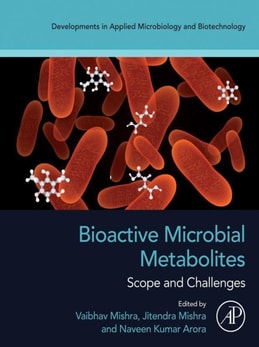
Bioactive Microbial Metabolites: Scope and Challenges not only focuses on the identification, separation and purification of bioactive metabolites, the book also provides an understanding of the metabolic pathways for bioactive metabolites production that play an important role in modern healthcare as frontline treatments for many diseases.
This Brief describes in three concise chapters one of the newest 'hot topics' under EU Food Law and Policy: the new Regulation (EU) No 2015/2283 from the European Parliament and by the Council, November 25, 2015, on novel foods, applicable from January 2018.
The meeting on "e;Microbial Surface Components and Toxins in Relation to Pathogenesis"e; was held on May 15-19, 1989, in the Mitzpe Rachel guesthouse of Kibbutz Ramat Rachel in Israel.
Since the appearance of the first volume of Advances in Microbial Ecology in 1977 under the editorship of Martin Alexander, the series has achieved wide recognition as a source of in-depth, critical, and sometimes provocative reviews on the ecology of microorganisms in natural and man-made ecosystems.
The discovery of adenoviruses naturally induced a new interest in viruses of the human upper respiratory tract since previously unknown viruses infecting this portion of the human body had not been identified in 20 years, and their unique characteristics stimulated investigations into the biochemical events essential for replication of animal viruses.
There were many who joked when we took over Advances in Microbial Ecology at Volume 13; perhaps they should have reserved their expressions of superstition for Volume 14.
The International Committee on Microbial Ecology (ICOME) sponsors both the Interna- tional Symposium on Microbial Ecology, held in various parts of the world at three-year intervals, and the publication of Advances in Microbial Ecology.
Advances in Microbial Ecology was established by the International Committee on Microbial Ecology (ICOME) to provide a vehicle for in-depth, critical, and even provocative reviews to emphasize recent trends in the important field of microbial ecology.
The original aim of this book was to cover different aspects of the tradi- tionally "e;filamentous"e; potex-, carla-, poty-, clostero-, and capilloviruses.
This volume of the series The Plant Viruses is devoted to viruses with rod-shaped particles belonging to the following four groups: the toba- moviruses (named after tobacco mosaic virus), the tobraviruses (after to- bacco rattle), the hordeiviruses (after the latin hordeum in honor of the type member barley stripe mosaic virus), and the not yet officially rec- ognized furoviruses (fungus-transmitted rod-shaped viruses, Shirako and Brakke, 1984).
This volume contains the lectures given at the NATO Advanced Study Institute on "e;Biophysics of Photoreceptors and Photomovements in Microorganisms"e; held in Tir- renia (Pisa), Italy, in September 1990.
The meeting that provided the material for this book was the 58th Symposium of the Federation of European Microbiological Societies (FEMS) entitled MOLECULAR PATHOGENESIS OF GASTROINTESTINAL INFECTIONS which was held in Helsingor, Denmark from 2nd to 4th September, 1990.
The use of biotechnical processes in control of environmental pollution and in haz- ardous waste treatment is viewed as an advantageous alternative or adduct to phys- ical chemical treatment technologies.
This volume is based on the program of the International Conference on Drugs of Abuse, Immunity and Immunodeficiency held in Clearwater Beach, Florida.
Scientists from 24 countries who participated in the ~ Symposium on Candida and Candidamycosis, 24-28 April 1989, Antalya, Turkey, have made important contributions to a better understanding of Candida and its infections - by their presence, presentations and discussions in the meeting.
There has been a tremendous increase in interest in the neuropathogenicity of viruses during the past decade as we have come to recognize that the human immunodeficiency virus, which causes the acquired immunodeficiency syndrome (AIDS), can infect glial cells and cause neurological disease.
It would have been difficult at the beginning of the 80's to have predicted that by the end of the decade, Medical Virology would have become one of the most important topics in the area of both basic and clinical research.
No one whose opinion deserves a moment's consideration can doubt that most of the great positive evils of the world are in themselves removable, and will, if human affairs continue to improve, be in the end reduced to narrow limits.
When we were setting the theme of "e;infection control dilemmas and practical solutions"e; for this symposium, we asked ourselves a basic question: What are some of the most vexing problems and situations facing the hospital microbiologist- epidemiologist team in today's world of opportunistic and new infectious diseases unheard of as common pathogenic occurrences 10 years ago?
The modem microbiologist is often a real specialist who has difficulty under- standing and applying many of the techniques beyond those in his or her own immediate field.
It has been known for a long time that the majority of plant viruses contain RNA and in the past decade and a half it has been realized that many have genomes consisting of three molecules of single-stranded RNA with positive polarity.
The subject matter of this volume was the basis for a confer- ence held in Philadelphia in June, 1981, and is an important one in the contemporary area of how the host interacts with micro- organisms.
Since the publication of my previous monograph in 1974, important progress has been made in the broad area of calcium research, partic- ularly as it pertains to secretory phenomena.
Although there are a number of excellent current reviews on one or another aspect of cytomegalovirus, the last comprehensive treatment of this subject was that of Krech et al.
When we were first approached by the senior editors of this series to edit a book on interactions between the host and infectious agents, we acceptedthis offer as an exciting challenge.