Big on Bk: Current Insights into the Function of Large Conductance Voltage- and Ca2+- Activated K+ Channels at the Molecular, Cellular and Systemic Levels, a volume in the International Review of Neurobiology series, is a comprehensive overview of the state-of-the-art research into this area.
Mitochondria, the "e;power plants"e; of eukaryotic cells, are best known for the generation of adenosine triphosphate (ATP), the universal cellular "e;energy currency"e; of the cell, and the synthesis of different essential components.
Molecular Characterization of Autophagic Responses, Part A, presents a collection of methods for the qualitative and quantitative evaluation of virtually all the morphological, biochemical, and functional manifestations of autophagy, in vitro, ex vivo and in vivo, in organisms as distant as yeast and man.
Cannabinoids and Their Receptors, Volume 593, the latest release in the Methods in Enzymology series, continues the legacy of this premier serial with quality chapters authored by leaders in the field.
Stress and Inflammation in Disorders, Volume 108, the newest volume in this ongoing series, brings forth new information on protocols and analysis of proteins.
Translational Advances in Gynecologic Cancers straddles the bench and bed divide by highlighting important and interesting research that is translatable to the clinic.
Plant Development and Evolution, the latest release in the Current Topics in Developmental Biology series, highlights new advances in the field, with this new volume presenting interesting chapters on the Evolution of the plant body plan, Lateral root development and its role in evolutionary adaptation, the Development of the vascular system, the Development of the shoot apical meristem and phyllotaxis, the Evolution of leaf diversity, the Evolution of regulatory networks in land plants, The role of programed cell death in plant development, the Development and evolution of inflorescence architecture, the Molecular regulation of flower development, the Pre-meiotic another development, and much more.
Methods in Enzymology, Volume 607: Phosphatases, the latest release in this ongoing series, highlights new advances in the field as detailed by an international board of authors.
Microfluidics in Cell Biology Part C, Volume 148, a new release in the Methods in Cell Biology series, continues the legacy of this premier serial with quality chapters authored by leaders in the field.
The Maternal-to-Zygotic Transition provides users with an expert accounting of the mechanisms and functions of this transition in a range of animal and plant models.
Forkhead FOXO Transcription Factors in Development and Disease, Volume 127, the latest release in the Current Topics in Developmental Biology series, provides a comprehensive set of reviews on transcription factors FOXO and their various functions in health and disease.
CRISPR in Animals and Animal Models, Volume 152, the latest release in the Progress in Molecular Biology and Translational Science series, explores the genome editing CRISPR system in cells and animal models, its applications, the uses of the CRISPR system, and the past, present and future of CRISPR genome editing.
Molecular Chaperones in Human Disorders, Volume 114 in the Advances in Protein Chemistry and Structural Biology series, provides an overview of current developments in mechanisms underlying DNA repair and their involvement in maintaining chromatin repair, the balance between chromosomal repair pathways, tumorigenesis, immune signaling and infection-induced inflammation.
This volume of The Enzymes summarizes the most important discoveries associated with a group of enzymes that play an important role in normal biological processes as presented and discussed by leaders authorities in the field.
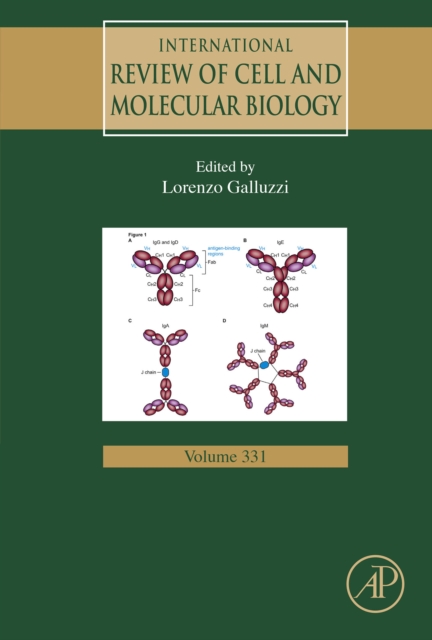
International Review of Cell and Molecular Biology presents comprehensive reviews and current advances in cell and molecular biology, and includes articles that address the structure and control of gene expression, nucleocytoplasmic interactions, control of cell development and differentiation, and cell transformation and growth.
Chemical Glycobiology, Volume 597, the latest release in the Methods in Enzymology series, continues the legacy of this premier serial with quality chapters authored by leaders in the field.
Neural Development and Disease, Volume 142 in the Current Topics in Developmental Biology series highlights new advances in the field, with this new volume presenting interesting chapters by one or more members of an international board of authors.
Early Stage Protein Misfolding and Amyloid Aggregation, Volume 329, the latest in the International Review of Cell and Molecular Biology series presents comprehensive reviews and current advances in cell and molecular biology, including articles that address the structure and control of gene expression, nucleocytoplasmic interactions, control of cell development and differentiation, and cell transformation and growth.
Modern Approaches in Drug Discovery, Volume 611, the latest release in the Methods in Enzymology series, highlights new advances in the field, with this new volume presenting interesting chapters on topics such as Target Identification and Validation, Cell Painting/High Content Imaging, Target ID using chemical probes, Mining the microbiome for targets, Data driven approaches for diversity and drug-likeness, Affinity-based screening, Fragment screening (X-ray), Array-based approaches, Hit-to-lead: assessment and improvement of drug-like properties, Hit assessment and prioritization, Lead Optimization: fine tuning and risk mitigation, and more.
Biology of T Cells - Part B, Volume 342, the latest release in the International Review of Cell and Molecular Biology series, offers an overview of the major molecular and cellular aspects of T-cell biology and their links to human pathophysiology.
Cancer Immunotherapy, Volume 165 in the Progress in Molecular Biology and Translational Science series, provides informative monographs on a variety of research topics related to different approaches to cancer immunotherapy, with this release focusing on TNFR2 in cancer immunology and immunotherapy, From the Hellstrom paradox towards cancer cure, CAR T-cell treatment of T-cell malignancy , Immunotherapy of pancreatic cancer, Cancer stem cell immunology/immunotherapy,Cytokine release syndrome, Tumor cell-based mechanisms of resistance to immune attack, and Mushroom compounds in cancer immunotherapy.
Single-Molecule Enzymology, Part A, the latest volume in the Methods in Enzymology series, continues the legacy of this premier serial with quality chapters authored by leaders in the field.
Computational Approaches for Studying Enzyme Mechanism, Part B is the first of two volumes in the Methods in Enzymology series that focuses on computational approaches for studying enzyme mechanism.
Experimental Analysis of Enzyme Mechanism Using Isotope Effects, Volume 596, the latest release in the Methods in Enzymology series, continues the legacy of this premier serial with quality chapters authored by leaders in the field.
Mechanisms of DNA Recombination and Genome Rearrangements: Intersection between Homologous Recombination, DNA Replication and DNA Repair, Volume 601, the latest release in the Methods in Enzymology series, continues the legacy of this premier serial with quality chapters authored by leaders in the field.
Microbiology of Atypical Environments, Volume 45, presents a comprehensive reference text on the microbiological methods used to research the basic biology of microorganism in harsh, stressful and sometimes atypical environments (e.
DNA Sensors and Inflammasomes, Volume 625, the latest release in the Methods in Enzymology series, continues the legacy of this premier serial with quality chapters authored by leaders in the field.
Nucleic Acid Sensing and Immunity - PART B, Volume 345 gives a comprehensive overview of the nucleic acid machinery, from plants to mammalians, along with their regulation.
Tumor Immunology and Immunotherapy Integrated Methods - Part A, Volume 635 in the Methods in Enzymology series, continues the legacy of this premier serial with quality chapters authored by leaders in the field.
Oligomerization in Health and Disease: From Enzymes to G Protein-Coupled Receptors, Volume 169 in the Progress in Molecular Biology and Translational Science series, provides in-depth reviews on topics of exceptional scientific importance.
Carbonic Anhydrases provides an interdisciplinary review of the burgeoning carbonic anhydrase (CA) research area, spanning from CAs classification (biochemical and structural features) to drug design and pharmacology of CA inhibitors and activators, finally touching on the biotechnological applications of these metalloenzymes.
Optochemical Biology, Volume 624, the latest release in the Methods in Enzymology series, continues the legacy of this premier serial with quality chapters on a variety of topics, including Cell Lineage Tracing in Zebrafish Embryos with an Expanded Genetic Code, Optical Control of Tumor Induction in the Zebrafish, Optogenetic Control by Pulsed Illumination, Optimizing the Photocontrol of bZIP Coiled Coils with Azobenzene Crosslinkers: Role of the Crosslinking Site, Site-Directed RNA Editing in Vivo Can Be Triggered by the Light-Driven Assembly of an Artificial Riboprotein, In Situ Formation of an Azo Bridge on Proteins Controllable by Visible Light, and much more.
Cellular Nutrient Utilization and Cancer, Volume 347 in the International Review of Cell and Molecular Biology (IRCMB) series maintains a high standard by publishing invited articles on timely topics that are authored by prominent cell and molecular biologists.
Peptidomics of Cancer-Derived Enzyme Products, Volume 42, the latest in The Enzymes series, is ideal for researchers in biochemistry, molecular and cell biology, pharmacology, and cancer, with this volume featuring high-caliber, thematic articles on the topic of peptidomics of cancer-derived enzyme products.
Intrinsically Disordered Proteins, Volume 611, the latest release in the Methods in Enzymology series, highlights new advances in the field, with this new volume presenting interesting chapters on topics of interest, including the Characterization of Structure-Function relationships in the intrinsically disordered protein complexin, Distances, distance distributions, and ensembles of IDPs from single-molecule FRET, Biophysical characterization of disordered protein liquid phases, The Use of Mass Spectrometry to Examine IDPs - Unique Insights and Caveats, Fluorescence Depolarization Kinetics to Study Conformational Preference, Structural Plasticity and Membrane Binding of Intrinsically Disordered Proteins, Characterizing the Function of Intrinsically Disordered Proteins in the Circadian Clock, and more.
Echinoderms, Volume 151, the latest release in the Methods in Cell Biology series, highlights advances in the field, with this update presenting chapters on Echinoderm Genome Databases, analysis of gene regulatory networks, using ATAC-seq and RNA-seq to increase resolution in GRN connectivity, multiplex cis-regulatory analysis, experimental approaches GRN/signal pathways, BACs, analysis of chromatin accessibility using ATAC-seq, analysis of sea urchin proteins /Click IT, CRISPR/Cas9-mediated genome editing in sea urchins, super-resolution and in toto imaging of echinoderm embryos, and methods for analysis of intracellular ion signals in sperm, eggs and embryos.
G Protein Signaling Pathways in Health and Disease, Volume 161 in the Progress in Molecular Biology and Translational Science series, provides informative and exciting monographs on a wide variety of research topics related to G Protein Signaling Pathways in Health and Disease.
Tumor Immunology and Immunotherapy - Cellular Methods Part B, Volume 632, the latest release in the Methods in Enzymology series, continues the legacy of this premier serial with quality chapters authored by leaders in the field.
Post-translational Modifications That Modulate Enzyme Activity, Volume 626 in the Methods in Enzymology series, continues the legacy of this premier serial with quality chapters authored by leaders in the field.