Far more than a comprehensive treatise on initial-rate and fast-reaction kinetics, this one-of-a-kind desk reference places enzyme science in the fuller context of the organic, inorganic, and physical chemical processes occurring within enzyme active sites.
Isotope Labeling of Biomolecules: Applications, the latest in the Methods in Enzymology series, focuses on stable isotope labeling methods and applications for biomolecules.
Enzymatic Plastic Degradation, Volume 648 in the Methods in Enzymology series, continues the legacy of this premier serial with chapters authored by leaders in the field.
Cancer Therapy and Diagnosis, Part B, Volume 44 in The Enzymes series highlights new advances in the field, with this new volume presenting interesting chapters on Mesoporous silica nanoparticle synthesis, Periodic mesoporous organosilica, Nanovalves and other nanomachine-equipped nanoparticles and controlled release, Two-photon light control and photodynamic therapy, Biodegradable PMO nanoparticles, Cationic mesoporous silica and protein delivery, Drug loading, stimuli-responsive delivery and cancer treatment, Animal models and cancer therapy, siRNA delivery and TWIST shutdown for ovarian cancer treatment, and TBC (mesoporous silica nanoparticles and cancer therapy or biodistribution of MSN).
Molecular Biology Techniques: A Classroom Laboratory Manual, Fourth Edition is a must-have collection of methods and procedures on how to create a single, continuous, comprehensive project that teaches students basic molecular techniques.
Using chips composed of thousands of spots, each with the capability of holding DNA molecules corresponding to a given gene, DNA microarray technology has enabled researchers to measure simultaneously gene expression across the genome.
Craniofacial Development, the latest volume of Current Topics in Developmental Biology continues the legacy of this premier serial with quality chapters authored by leaders in the field.
Health Professionals' Education in the Age of Clinical Information Systems, Mobile Computing and Social Networks addresses the challenges posed by information and communication technology to health professionals' education, and the lessons learned from field experiences and research.
The 'RNA world' hypothesis that proposed RNA molecules as the first form of genetic material was put forwarded in the late 1980s but got impetus only recently when high-throughput sequencing technologies began unearthing new types of non-coding RNA (ncRNA) transcripts in higher eukaryotes.
Drosophila Cells in Culture, Second Edition, includes comprehensive coverage of cell lines, methods for creating cell lines, methods for genome engineering, and the use of cell lines for genome wide rNAi screens.
Neutron Crystallography in Structural Biology, Volume 634, the latest volume in the Methods in Enzymology series, continues the legacy of this premier serial with quality chapters authored by leaders in the field.
While every cell of an organism has an identical genomic content, extremely complex networks exist to tailor the genomic output to the needs of that cell.
Mechanisms of Cell Death and Opportunities for Therapeutic Development, volume four in the Perspectives in Translational Cell Biology series, offers content for professors, students and researchers across basic and translational biology.
Oxidative Stress: Eustress and Distress presents current knowledge on oxidative stress within the framework of redox biology and translational medicine.
Pancreatic B Cell Biology in Health and Disease, Volume 360 presents the latest release in this ongoing series on the novel and widely studied physiology of pancreatic cells in homeostasis and under pathogenic conditions.
Host-Microbe Interactions, the latest volume in the Progress in Molecular Biology series, provides a forum for the discussion of new discoveries, approaches, and ideas in molecular biology.
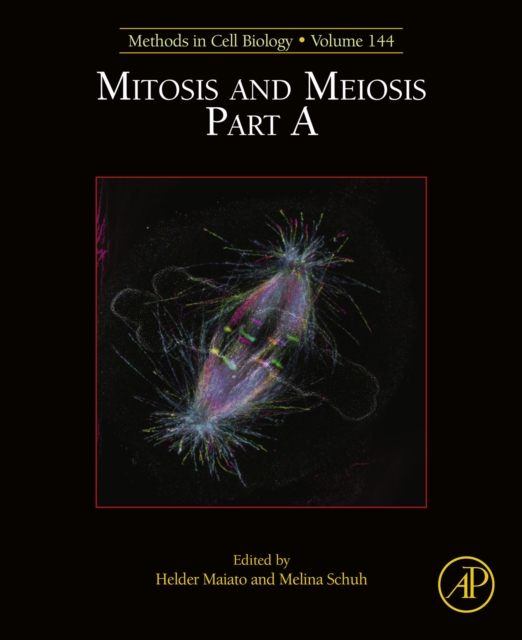
Mitosis and Meiosis, Part A, Volume 144, a new volume in the Methods in Cell Biology series, continues the legacy of this premier serial with quality chapters authored by leaders in the field.
This book provides an entry point into Systems Biology for researchers in genetics, molecular biology, cell biology, microbiology and biomedical science to understand the key concepts to expanding their work.
Neuroepigenetics and Mental Illness, Volume 158, the latest release in the Progress in Molecular Biology and Translational Science series, seeks to provide the most topical, informative, and exciting monographs available on a wide variety of research topics related to prions, viruses, bacteria and eukaryotes.
Advances in Genetics, Volume 98 provides the latest information on the rapidly evolving field of genetics, presenting new medical breakthroughs that are occurring as a result of advances in our knowledge of the topic.
Molecular Biology of Neurodegenerative Diseases: Visions for the Future, Volume 168 in the Progress in Molecular Biology and Translational Science series, provides the most topical, informative and exciting monographs available on a wide variety of research topics.
This volume explores some of the most exciting recent advances in basic research on protein phosphorylation in health and disease and how this knowledge is leading to advances in the various fields.
MicroRNA in Human Malignancies offers a deep overview of the role and translational significance of miRNAs in the development of cancer and other malignancies.
Nanoarmoring of Enzymes: Rational Design of Polymer-Wrapped Enzymes, Volume 590 is the latest volume in the Methods in Enzymology series that focuses on nanoarmoring of enzymes and the rational design of polymer-wrapped enzymes.
Brain Imaging, Volume 164, the latest release in the Progress in Molecular Biology and Translational Science series, provides informative monographs on a variety of research topics related to neuroimaging in aging and neurodegenerative disease.
Single-Molecule Enzymology, Part B, the latest volume in the Methods in Enzymology series, continues the legacy of this premier serial with quality chapters authored by leaders in the field.
cryoEM, a new volume in the Methods in Enzymology series, continues the legacy of this premier serial with quality chapters authored by leaders in the field.
Immunological Methods in Microbiology, Volume 47 in the Methods in Microbiology series, highlights new advances in the field, with this new volume presenting interesting chapters on Immunological Techniques in the Clinical laboratory, Immunologic Diagnosis of HIV and Opportunistic Infections, Combining Antigen Detection and Serology for the Diagnosis of Selected Infectious Diseases, Immunologic Detection of Lyme Disease and Related Borrelioses, Immunodetection of Bacteria Causing Brucellosis, Immunological Diagnostic Techniques Used to Identify and Type Pasteurella, Immunological Tests for Diarrhea caused by Diarrheagenic Escherichia coli Targeting Their Main Virulence Factors, and much more.
Cell Death Regulation in Health and Disease - Part B, Volume 352, the latest release in the International Review of Cell and Molecular Biology, reviews and details current advances in cell and molecular biology.