Banana Peels Valorization: Sustainable and Eco-friendly Applications provides a global overview of world production, physicochemical and microbiological characteristics of Banana Peels and the various pathways for their valorization, considering the advantages, disadvantages and factors impacting on each way of valorization.
This book presents a concept for implementing a mass balance approach toward developing an effective eco-friendly, livestock farming system independent of external energy input.
The Natural History of the Doucs and Snub-nosed Monkeys provides a comprehensive introduction to the biology of some of the rarest and least-known nonhuman primates.
This book provides practical ecological, ethological, evolutionary, and biogeographic data for gall-inducing cecidomyiids, their galls and host plants, based on field surveys, laboratory experiments and genetic analysis.
This book presents a concept for implementing a mass balance approach toward developing an effective eco-friendly, livestock farming system independent of external energy input.
Fungal pathogens pose an on-going and serious threat for poikilotherms and homeotherms, and can cause a broad spectrum of diseases ranging from innocuous to life-threatening.
This book explains how the beautiful goldfish body develops from a single fertilized egg and how this developmental process was changed during the process of domestication.
This book presents the discoveries made during nearly three decades of research on the parental shield bug, Parastrachia japonensis inhabiting Kyushu Island, Japan.
This book aims to provide fundamental knowledge and information for research in molecular systematics on parasitic helminths (nematode, trematode, cestode).
This book presents comprehensive information on various aspects of ecology with special reference to insects, to form a platform to design an ecologically sound insect pest management.
This book presents the whole picture of the ecological and evolutionary study on the ground beetle group, the subgenus Ohomopterus of the genus Carabus, endemic to Japan.
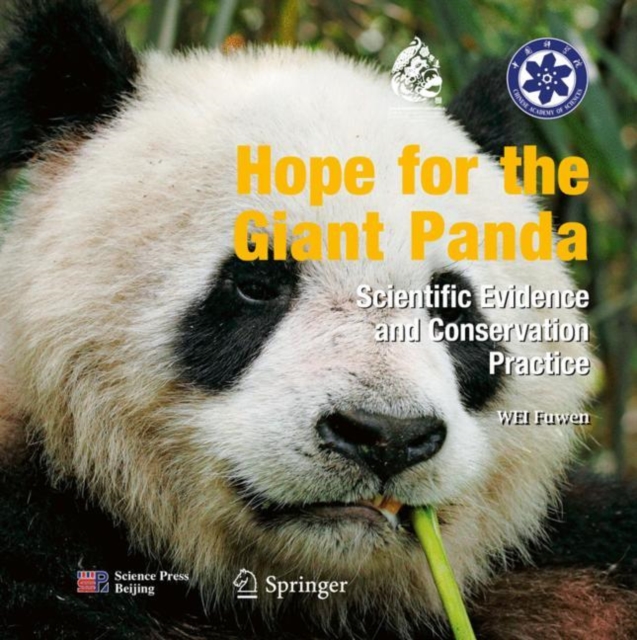
In this book, the author gathered together all the latest evidence and progress in the scientific studies of panda's past, present and future, especially how he has introduced advanced scientific techniques such as population genomics, metagenomics and evolutionary genomics into the study of wild pandas.
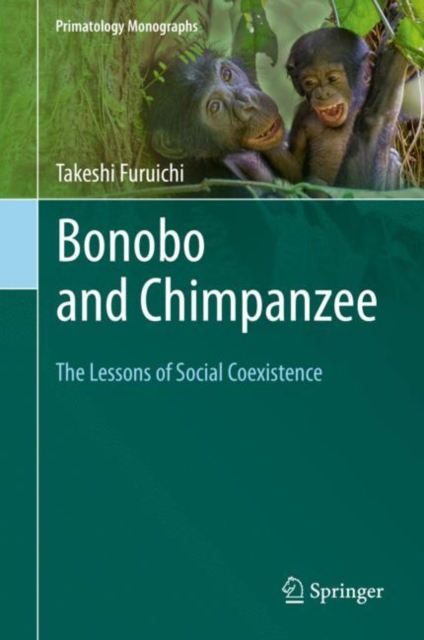
This book describes the similarities and differences between two species, bonobos and chimpanzees, based on the three decades the author has spent studying them in the wild, and shows how the contrasting nature of these two species is also reflected in human nature.
This book comprehensively covers the latest development in developing and deploying the genetically modified vectors, particularly Anopheles and Aedes mosquitoes responsible for transmitting malaria parasites and dengue viruses, the most deadly and/or debilitating among all the vector-borne diseases.
This book provides detailed and updated knowledge about medically important 'Big Four' venomous snakes of India (Indian spectacled cobra, Indian common krait, Indian Russell's viper, and Indian saw-scaled viper).
This book comprehensively summarizes the biological mechanisms of coloration and pattern formation of animals at molecular and cellular level, offering up-to-date knowledge derived from remarkable progress in the last 10 years.
This book explains how the beautiful goldfish body develops from a single fertilized egg and how this developmental process was changed during the process of domestication.
This book provides an up-to-date review of fasciolosis, a disease caused by Fasciola hepatica and Fasciola gigantica, including its biology, transmission, epidemiology, host distribution, economic impact, and novel approaches for its diagnosis, treatment and prevention.
'This book isn't just a guide; it's a lifeline' Shirley Ballas, head judge, Strictly Come Dancing, and ambassador for CALM and Suicide&CoWorldwide, suicide is one of the leading causes of death among young people, and numbers continue to increase.
Understanding the reproductive physiology and endocrinology of fishes is essential for captive maturation and seed production in the field of aquaculture.