Entomological research benefits from a great diversity of technical approaches - from the molecular to the descriptive - and these are applied to an even greater diversity of insect species.
Human exploitation of other mammals has passed through three histori- cal phases, distinct in their ecological significance though overlapping in time.
Over the past 30 years or so, research effort in behaviour and ecology has progressed from simple documentation of the habits or habitats of differ- ent species to asking more searching questions about the adaptiveness of the patterns of behaviour observed; moved from documenting simply what occurs, to trying to understand why.
The Proceedings of the Seventh International Rotifer Symposium, Rotifera VII, spans subjects from community ecology through biochemistry, from the most basic science through the most clearly applied technology.
Chromosomes Today Volume 12 records the plenary proceedings of the 12th triennial International Chromosone Conference, presenting an overview of the current concerns in the developing studies of animal, plant and human cytogenetics.
Historically, ruminant animals have provided farmers with the ability to utilize marginal lands for the production of high quality food for human consumption.
Biotechnology is now one of the major growth areas in science and engineering and within this broad discipline enzyme technology is one of the areas earmarked for special and significant developments.
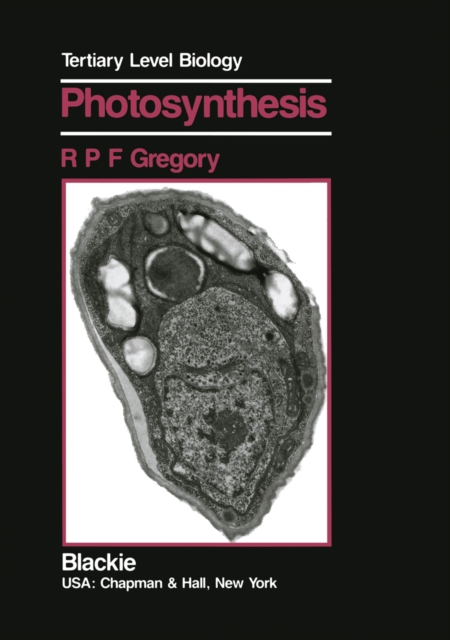
Photosynthesis--the capture of light energy by living organisms -is a simple enough concept, but its investigation draws on the resources of disciplines from all fields of science.
Over the past 50 years a wide variety of antibacterial substances have been discovered and synthesised, and their use in treating bacterial infection has been spectacularly successful.
Mark Chase There are many literature resources available to molecular biologists wishing to assess genetic variation, but the myriad of techniques and approaches potentially available to the plant breeder and the evolutionary biologist is truly bewildering, and most have never been evaluated side-by-side on the same sets of samples.
The book deals with the present state and problems of integrated pest management (IPM) as relating to stakeholder acceptance of IPM and how IPM can become a sustainable practice.
The book deals with the present state and problems of integrated pest management as relating to stakeholder acceptance of IPM and how integrated pest management can become a sustainable practice.
This survey of one the longest insect conservation campaigns in Australia deals with recovery of one of the most iconic endemic butterflies, the Richmond birdwing, threatened by clearance and fragmentation of subtropical rainforest in eastern Australia and the spread of an alien larval food-plant.
Three major aspects that distinguish this book are that (1) it contains the most detailed analysis of the sexual reproduction (oogenesis, fertilization and embryonic incubation) in a particular phylum of the aquatic invertebrates (Bryozoa) ever made; this analysis is based on an exhaustive review of the literature on that topic published over the last 260 years, as well as extensive original histological, anatomical and morphological data obtained during studies of both extant and extinct species; (2) this broad analysis has made it possible to reconstruct the major patterns, stages and trends in the evolution of sexual reproduction in various bryozoan clades, showing numerous examples of parallelisms during transitions from broadcasting to embryonic incubation, from planktotrophic to non-feeding larvae and from lecithotrophy to placentation; corresponding shifts in oogenesis, fertilization and embryonic development are discussed in detail; and (3) the key evolutionary novelties acquired by Bryozoa are compared with similar innovations that have evolved in other groups of marine invertebrates, showing the general trends in the evolution of their sexual reproduction.
This book is a snapshot of the current state of the art of research and development on the properties and characteristics of silk and their use in medicine and industry.
Phenology refers to recurring plant and animal life cycle stages, such as leafing and flowering, maturation of agricultural plants, emergence of insects, and migration of birds.
Non-mammalian synapsids were the dominant terrestrial vertebrates from the Late Carboniferous to the Middle Triassic and play a key role in understanding the origin and evolution of mammals.
Recent genetic data showing that Neanderthals interbred with modern humans have made it clear that deeper insight into the behavioral differences between these populations will be critical to understanding the rapid spread of modern humans and the demise of the Neanderthals.
This entry in the series Pediatric Cancer offers comprehensive information on a variety of cancers, concentrating on brain tumors, the most common solid tumors and the leading cause of cancer-related mortality in children.
The Quaternary comprises a brief time in the Earth's history, and apart from a few exceptions, molluscan assemblages recovered from exposures along the coast of Southwestern South America (Southern Brazil, Uruguay, Argentina) are essentially the same than those that inhabit the region today, leading to the assumption that no important change in the distribution of the faunas since Pleistocene times has occurred.
The book begins by describing in detail the mechanisms of energy exchange - radiative, convective, conductive and evaporative - together with techniques for their determination.
Although consensus exists among researchers that birds evolved from coelurosaurian theropods, paleontologists still debate the identification of the group of coelurosaurians that most closely approaches the common ancestor of birds.
One of the most intriguing paleobiogeographical phenomena involving the origins and gradual sundering of Gondwana concerns the close similarities and, in most cases, inferred sister-group relationships of a number of terrestrial and freshwater vertebrate taxa, e.
This volume of the Subcellular Biochemistry series is the result of the long-standing research interest of the editor in the molecular mechanism underlying Alzheimer's disease and other amyloid diseases, indicated also by the earlier book in the series (Volume 38), devoted to Alzheimer's disease.
Our recent understanding of the cellular and molecular defects and the regulation of the apoptotic signalling pathways has resulted in rationally designed anticancer strategies and the development of novel agents that regulates apoptosis.
Among the highlights of this book is the use of novel insecticides acting on a specific site in an insect group and are compatible with natural enemies and the environment.
The book consists of multiple chapters by leading experts on the different aspects in the unique relationship between arthropods and plants, the underlying mechanisms, realized successes and failures of interactions and application for IPM, and future lines of research and perspectives.
The history of interest and practice in insect conservation is summarised and traced through contributions from many of the leaders in the discipline, to provide the first broad global account of how insects have become incorporated into considerations of conservation.