This contributed volume discusses advanced applications of functionalized magnetic nanomaterials (FMNs) across biomedical and industrial sectors, exploring their innovative uses in drug delivery, diagnostic imaging, water treatment, and energy technologies.
This book brings together a diverse and exciting group of emerging and leading experts in female meiosis, each contributing a chapter that summarizes seminal recent progresses in their area of specialty.
This contributed volume discusses advanced applications of functionalized magnetic nanomaterials (FMNs) across biomedical and industrial sectors, exploring their innovative uses in drug delivery, diagnostic imaging, water treatment, and energy technologies.
The application of infrared thermography in sports has increased over the past decades due to its main technical advantages: it is a non-invasive, non-radiating, and low-cost tool.
This book covers the origins, transformations, and interactions of matter—from atoms and molecules to complex biological and composite materials—across abiotic, biotic, and anthropogenic systems.
The application of infrared thermography in sports has increased over the past decades due to its main technical advantages: it is a non-invasive, non-radiating, and low-cost tool.
Wastewater treatment is a process that involves the extraction of pollutants, removal of coarse particles, and elimination of toxicants from wastewater with minimum impact on the environment.
Wastewater treatment is a process that involves the extraction of pollutants, removal of coarse particles, and elimination of toxicants from wastewater with minimum impact on the environment.
In der zeitgenössischen Reproduktionsethik werden intensiv moralische Probleme von Fortpflanzungstechniken wie Leihmutterschaft oder Gametenspende diskutiert.
This introductory book is a beginner-friendly resource that empowers you to harness Python programming for exploring and understanding biomedical data.
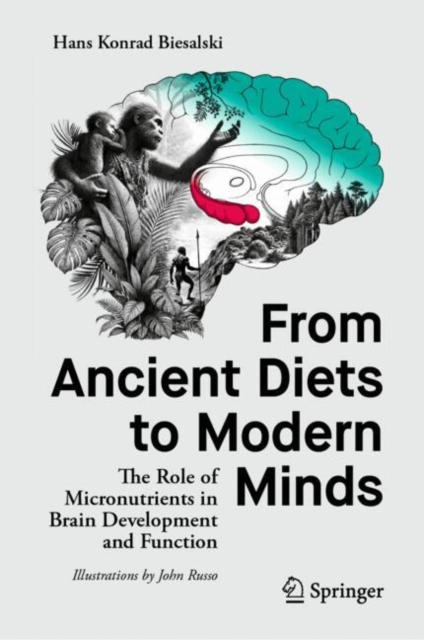
This book explores the evolution of the human brain, highlighting the critical role of diet, particularly micronutrients, in shaping our cognitive development.
This book explores the evolution of the human brain, highlighting the critical role of diet, particularly micronutrients, in shaping our cognitive development.
The use of natural catalysts - enzymes - for the transformation of non-natural man-made organic compounds is not at all new: they have been used for more than one hundred years, employed either as whole cells, cell organelles or isolated enzymes [1,2].
The use of natural catalysts - enzymes - for the transformation of non-natural man-made organic compounds is not at all new: they have been used for more than one hundred years, employed either as whole cells, cell organelles or isolated enzymes [1].
The book examines the cellular senescence in brain aging processes and its effects on three major neurodegenerative conditions: Alzheimer's disease, Parkinson's disease, and Huntington's disease.
This edited book provides a comprehensive exploration of ecological restoration in India, offering insights into the latest perspectives and practices.
This book provides a comprehensive overview of circular RNAs (circRNAs), a novel class of non-coding RNAs with diverse regulatory roles and clinical relevance.
The book examines the cellular senescence in brain aging processes and its effects on three major neurodegenerative conditions: Alzheimer's disease, Parkinson's disease, and Huntington's disease.
This edited book provides a comprehensive exploration of ecological restoration in India, offering insights into the latest perspectives and practices.
This book provides a comprehensive overview of circular RNAs (circRNAs), a novel class of non-coding RNAs with diverse regulatory roles and clinical relevance.
This volume includes revised versions of most of the presentations made at the International Conference Understanding the Earth Sys- tem: Compartments, Processes and Interactions"e; held on November 24-26, 1999 in Bonn.
Das Schreiben von wissenschaftlichen Texten geht den einen leicht von der Hand, doch für viele andere ist es eher ein Fluch und sie haben Angst, an der Abschlussarbeit zu scheitern.
With the availability of high speed computers and advances in computational techniques, the application of mathematical modeling to biological systems is expanding.
The computer unlike other inventions is universal; you can use a computer for many tasks: writing, composing music, designing buildings, creating movies, inhabiting virtual worlds, communicating.