Combining bold graphics with easy-to-understand text, this is the perfect introduction to the blueprint of life for those who are short on time but hungry for knowledge.
With a new wave of adult ADHD diagnoses sweeping the world, many are beginning to discover what it is that sets them apart, but few have learnt what it takes to thrive.
Transcranial stimulation encompasses noninvasive methods that transmit physical fields-such as magnetic, electric, ultrasound, and light-to the brain to modulate its function.
Inverse Projection is a method for estimating accurate demographic indicators of a population where vital registration data are available, but population censuses are lacking or unreliable.
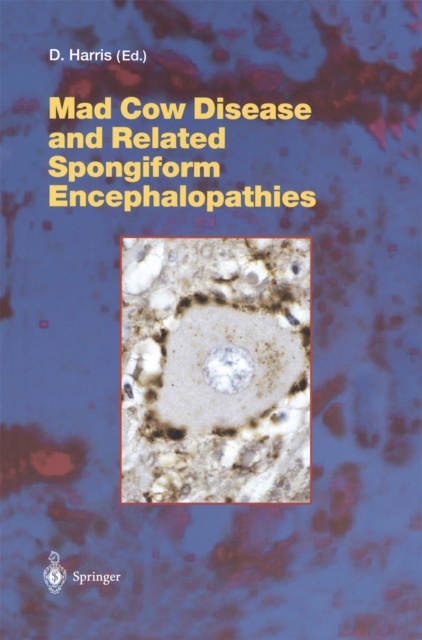
Bovine spongiform encephalopathy (BSE) has become the most publicly recognizable example of a group of fatal neurodegenerative diseases caused by proteinaceous infectious particles called prions.
Since the publication of the first edition of this book, professional and public concern for the well-being of animals has continued to increase throughout the world.
Cognitive Science and the Reconceptualization of Social Theory explores how core social science ideas can be naturalized and reconceptualized through the lens of cognitive science.
Foot-and-mouth disease (FMD) has been recognized in printed records dating from the sixteenth century, and since the eradication of rinderpest (cattle plague) in the early part of the twentieth century it has been rec- nized as the most important and feared disease of cattle and other dom- tic livestock.
Known for its discovery-based, student-centered approach, Scott Freeman's Biological Science emphasizes higher-order thinking, skill development and active learning.
People have been long-fascinated with birds, and their scientific study has been central to advances in evolution, animal behavior, biogeography, population dynamics, and community ecology.
Perception and Cognition of Music: The Sorbonne Lectures presents revised and updated materials delivered in four distinguished lectures at the Universite Paris-Sorbonne and the Universite de Montreal, originally published in French.
The Oxford Handbook of Developmental Cognitive Neuroscience brings together the leading developmental cognitive neuroscientists in the field that work on understanding human development, and the complex interplay of genetic, environmental, and brain maturational factors that shape social and cognitive functioning in development.
A lively guide to the fast-moving and fascinating debates on what is going on with the trillions of microorganisms that live on and around us, and what we need to know to keep ourselves healthy.
This book examines breeding approaches for plantation, spice, medicinal, and aromatic crops including coconut, arecanut, oil palm, cashew, coffee, tea, cocoa, rubber, cardamom, black pepper, turmeric, ginger, ashwagandha, lavender, and mint.
Computational neuroscience is the theoretical study of the brain to uncover the principles and mechanisms that guide the development, organization, information processing, and mental functions of the nervous system.
The Oxford Handbook of Philosophy of Medicine is a guide to areas of current activity and change, not only in philosophy of medicine, but also in medical science and practice.
Bioethicist Mark Navin and policy scholar Katie Attwell explore the evolution of American childhood vaccination policy through the prism of political history, contemporary parenthood, and diverse governance strategies.