This book overviews methods for the synthesis of metal-containing monomers with various types of metal bonds to the organic moiety of the molecule, such as ionic, covalent, donor-acceptor, and others.
Until recently the low-coordinate compounds of the heavier elements of group 14 were known only as transient, unstable species which were difficult to isolate.
Transition metals open up new opportunities for synthesis, because their means of bonding and their reaction mechanisms differ from those of the elements of the s and p blocks.
Provides vital information on organometallic compounds, their preparation, and use in synthesis, and explores the fundamentals of the field and its modern applications Fully updated and expanded to reflect recent advances, the new, seventh edition of this bestselling text presents students and professional chemists with a comprehensive introduction to the principles and general properties of organometallic compounds, as well as including practical information on reaction mechanisms and detailed descriptions of contemporary applications.
Provides vital information on organometallic compounds, their preparation, and use in synthesis, and explores the fundamentals of the field and its modern applications Fully updated and expanded to reflect recent advances, the new, seventh edition of this bestselling text presents students and professional chemists with a comprehensive introduction to the principles and general properties of organometallic compounds, as well as including practical information on reaction mechanisms and detailed descriptions of contemporary applications.
The only comprehensive book covering of advances in metallabenzene chemistry written by the leading experts in the field Metallabenzenes: An Expert View provides comprehensive coverage of all aspects of metallabenzene chemistry, including syntheses, reactions, physical properties, and theoretical treatments of metallabenzenes.
The only comprehensive book covering of advances in metallabenzene chemistry written by the leading experts in the field Metallabenzenes: An Expert View provides comprehensive coverage of all aspects of metallabenzene chemistry, including syntheses, reactions, physical properties, and theoretical treatments of metallabenzenes.
Fully updated and expanded to reflect recent advances, the sixth edition of this bestselling text provides students and professional chemists with a comprehensive introduction to the principles and general properties of organometallic compounds, as well as including practical information on reaction mechanisms and detailed descriptions of contemporary applications.
Fully updated and expanded to reflect recent advances, the sixth edition of this bestselling text provides students and professional chemists with a comprehensive introduction to the principles and general properties of organometallic compounds, as well as including practical information on reaction mechanisms and detailed descriptions of contemporary applications.
The Organometallic Chemistry of N-heterocyclic Carbenes describes various aspects of N-heterocyclic Carbenes (NHCs) and their transition metal complexes at an entry level suitable for advanced undergraduate students and above.
The Organometallic Chemistry of N-heterocyclic Carbenes describes various aspects of N-heterocyclic Carbenes (NHCs) and their transition metal complexes at an entry level suitable for advanced undergraduate students and above.
Endohedral Metallofullerenes: Fullerenes with Metal Inside presents a comprehensive survey of the current state of knowledge on endohedral metallofullerenes, from preparation to functionalization, reactivity and applications.
Endohedral Metallofullerenes: Fullerenes with Metal Inside presents a comprehensive survey of the current state of knowledge on endohedral metallofullerenes, from preparation to functionalization, reactivity and applications.
Provides detailed procedures and useful hints on organometallic reactions of Cu, Rh, Ni, and Au With contributions from leading organic chemists who specialize in the use of organometallics in organic synthesis, this acclaimed Manual offers an especially valuable resource for all synthetic chemists, providing a practical reference for conducting transition metal mediated synthetic reactions.
Provides detailed procedures and useful hints on organometallic reactions of Cu, Rh, Ni, and Au With contributions from leading organic chemists who specialize in the use of organometallics in organic synthesis, this acclaimed Manual offers an especially valuable resource for all synthetic chemists, providing a practical reference for conducting transition metal mediated synthetic reactions.
WINNER of the 2013 PROSE Award in Chemistry & Physics This latest edition enables readers to master new classes of organometallic compounds and syntheses A popular resource used by synthetic organic chemists around the world, this book enables readers to conduct seamless synthetic reactions involving key organometallics.
WINNER of the 2013 PROSE Award in Chemistry & Physics This latest edition enables readers to master new classes of organometallic compounds and syntheses A popular resource used by synthetic organic chemists around the world, this book enables readers to conduct seamless synthetic reactions involving key organometallics.
Transition metals open up new opportunities for synthesis, because their means of bonding and their reaction mechanisms differ from those of the elements of the s and p blocks.
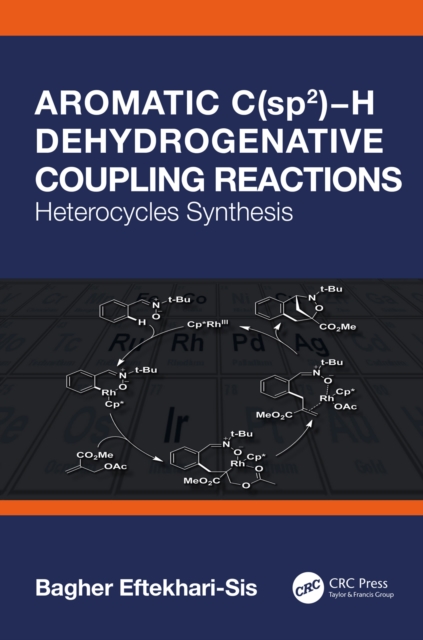
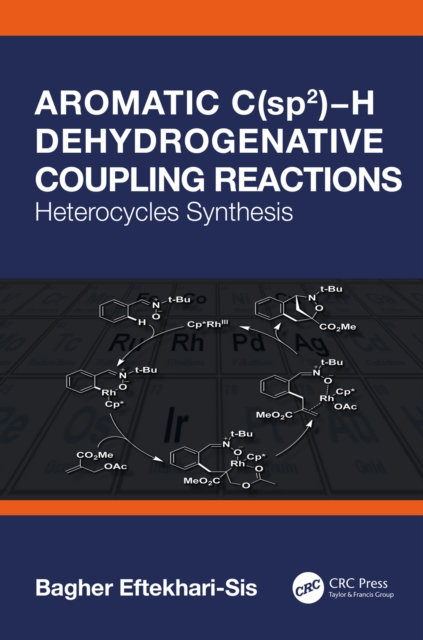
This comprehensive text covers the research and development trends in the growing field of aromatic C-H dehydrogenative coupling reactions, leading to different types of heterocycles.
This comprehensive text covers the research and development trends in the growing field of aromatic C-H dehydrogenative coupling reactions, leading to different types of heterocycles.
Activated Metals in Organic Synthesis discusses fundamental principles of the generation of activated, highly reactive metals, and their applications in organic synthesis.
Activated Metals in Organic Synthesis discusses fundamental principles of the generation of activated, highly reactive metals, and their applications in organic synthesis.
This volume is a collection of the papers presented at the Twelfth Conference on the Catalysis of Organic Reactions, where all phases of catalysis, including heterogeneous catalytic hydrogenation, catalytic oxidation, homogeneous catalysis, carbonylation, and amination have been discussed.
This volume is a collection of the papers presented at the Twelfth Conference on the Catalysis of Organic Reactions, where all phases of catalysis, including heterogeneous catalytic hydrogenation, catalytic oxidation, homogeneous catalysis, carbonylation, and amination have been discussed.
Until recently the low-coordinate compounds of the heavier elements of group 14 were known only as transient, unstable species which were difficult to isolate.
Supramolecular catalysis is involved in assimilation or growth of biological products and it has advantages over conventional catalysis in dealing with systems beyond molecules to mimic the biological catalytic processes.
Supramolecular catalysis is involved in assimilation or growth of biological products and it has advantages over conventional catalysis in dealing with systems beyond molecules to mimic the biological catalytic processes.
Over the past few decades, mankind has observed an unprecedented and remarkable growth in industry, resulting in a more prosperous lifestyle for peoples of many countries.
Since the discovery of ferrocene and the sandwich-type complexes, the development of organometallic chemistry took its course like an avalanche and became one of the scientific success stories of the second half of the twentieth century.
The fields of hydrodesulfurization (HDS) and hydrodenitrogenation (HDN) continue to attract the attention of researchers in the various disciplines connected to these fascinating problems that represent two of the key outstanding chemical challenges for the petroleum refining industry in view of their very strong environmental and commercial implications.
Over the past 20 years aqueous organometallic catalysis has found applications in small- scale organic synthesis in the laboratory, as well as in the industrial production of chemicals with a combined output close to one million tons per year.
This third edition retains the general level and scope of earlier editions, but has been substantially updated with over 900 new references covering the literature through 2005, and 140 more pages of text than the previous edition.