Describing the latest research advances in the science and technology of hydrocolloids that are used in food and related systems, this book captures the presentations of leading scientists from the Gums and Stabilisers for the Food Industry Conference: Hydrocolloid Functionality for Affordable and Sustainable Global Food Solutions held in June 2015.
Dieses umfangreiche Chemie Buch bietet eine strukturierte Einführung in die wichtigsten Bereiche der Chemie und eignet sich sowohl für Studienanfänger als auch fortgeschrittene Lernende.
"e;Describes preparation techniques of protein-based surfactants (PBS) in the laboratory by a variety of chemical and enzymatic means, production by using different types of amino acids, and marketplace applications of PBS in medical and personal care products, detergents, cosmetics, antimicrobial agents, and foods.
Its farming and fishing industries yield an impressive harvest of ingredients, so it is no surprise to discover that Sussex also boasts a rich culinary heritage.
Readers may be surprised to learn the real origins of Lancashire hotpot and discover that some of those all-time-favourites like Jelly Babies, Vimto, and Fox's biscuits all have their roots in the county.
Colloidal systems are important across a range of industries, such as the food, pharmaceutical, agrochemical, cosmetics, polymer, paint and oil industries, and form the basis of a wide range of products (eg cosmetics & toiletries, processed foodstuffs and photographic film).
Surfactant research explores the forces responsible for surfactant assembly and the critical industrial, medical, and personal applications, including viscosity control, microelectronics, drug stabilization, drug delivery, cosmetics, enhanced oil recovery, and foods.
The co-evolution of a strong theoretical framework alongside application of a range of sophisticated experimental tools engendered rapid advancement in the study ofgiant micelles.
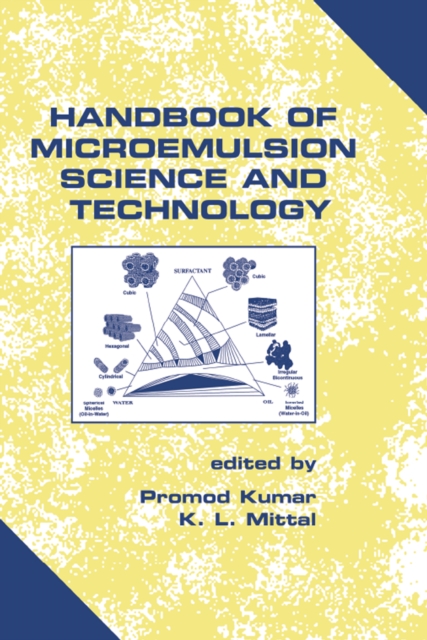
Demonstrating methods for overcoming stability issues in paints, wax dispersions, cosmetics, food products, and other industrial applications, this reference probes theoretical and practical issues surrounding microemulsion science and technology.
Demonstrating methods for overcoming stability issues in paints, wax dispersions, cosmetics, food products, and other industrial applications, this reference probes theoretical and practical issues surrounding microemulsion science and technology.
Certain small solid particles are surface-active at fluid interfaces and thus are able to stabilize materials previously considered impossible to stabilize in their absence.
Certain small solid particles are surface-active at fluid interfaces and thus are able to stabilize materials previously considered impossible to stabilize in their absence.
The co-evolution of a strong theoretical framework alongside application of a range of sophisticated experimental tools engendered rapid advancement in the study ofgiant micelles.
This reference features the latest findings surrounding the physicochemical aspects of surfactant and polymer systems to facilitate the design and understanding of novel and advanced drug delivery formulations.
The Comprehensive, Single-Source Reference on Multiple Emulsions In theory, multiple emulsions have significant potential for breakthrough applications in food, agricultural, pharmaceutical, nutraceutical, and cosmetic industries in which they can facilitate the sustained release and transport of active material.
This book provides a comprehensive account of the important field of aerosol sampling as it is applied to the measurement of aerosols that are ubiquitous in occupational and living environments, both indoor and outdoor.
Wetting and Spreading Dynamics explains how surface forces acting at the three-phase contact line determine equilibrium, hysteresis contact angles, and other equilibrium and kinetics features of liquids when in contact with solids or with other immiscible liquids.
Wetting and Spreading Dynamics explains how surface forces acting at the three-phase contact line determine equilibrium, hysteresis contact angles, and other equilibrium and kinetics features of liquids when in contact with solids or with other immiscible liquids.
Inorganic nanomaterials are an extremely broad and versatile class of materials and their enhanced chemical, thermal and mechanical stability with respect to their organic counterparts make them appealing candidates for a wide range of technological applications.
Bio-nanocomposites combine the enhanced properties of commercial polymer nanocomposites with the low environmental impact of biodegradable material, making them a topic of great current interest.
Bio-nanocomposites combine the enhanced properties of commercial polymer nanocomposites with the low environmental impact of biodegradable material, making them a topic of great current interest.
Chemistry on Modified Oxide and Phosphate Surfaces: Fundamentals and Applications is in the authoritative Interface Science and Technology Series and presents the key features and applications of modified oxide and phosphate surfaces.
Introduction to Molecular-Microsimulation for Colloidal Dispersions provides an introduction to molecular-microsimulation methods for colloidal dispersions and is suitable for both self-study and reference.
Nanocomposite Structures and Dispersions summarizes the fundamentals and mechanistic approaches in preparation and characterization of colloidal nanoparticles and dispersions, providing the readers a systematic and coherent picture of the field.
The Langevin and Generalised Langevin Approach To The Dynamics Of Atomic, Polymeric And Colloidal Systems is concerned with the description of aspects of the theory and use of so-called random processes to describe the properties of atomic, polymeric and colloidal systems in terms of the dynamics of the particles in the system.
Particles at Interfaces presents recent developments in this growing field and is devoted entirely to the subject of particle transport, deposition and structuring on boundary surfaces.