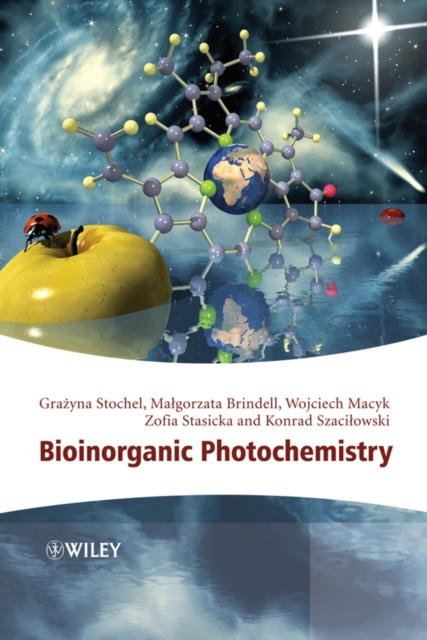
Different applications and uses of light energy have emerged over the last few years in many different fields such as in medicine, material science, energy and biochemistry.
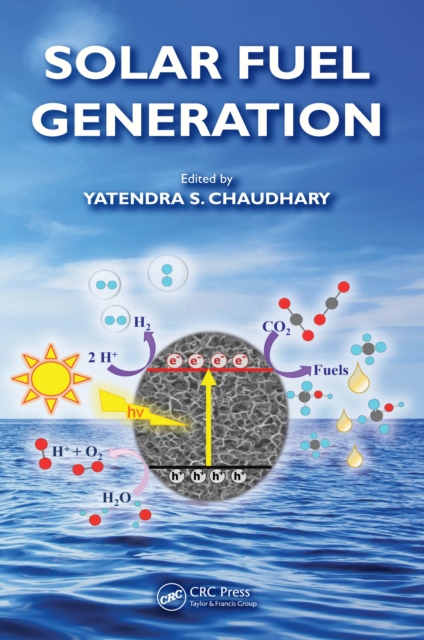
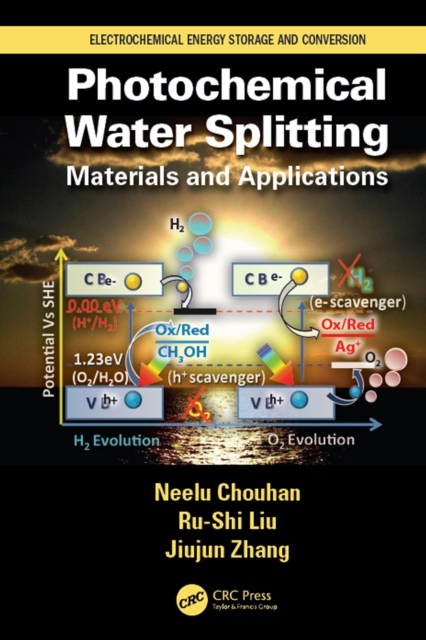
As the search for renewable sources of energy grows more urgent, more and more attention is focusing on the blueprint offered by biological photosynthesis for translating the energy of our Sun into energy rich molecules like H2 and carbohydrates, commonly known as "e;solar fuels.
Studies in Natural Products Chemistry, Volume 10: Stereoselective Synthesis (Part F) is a collection of articles about studies on important organic molecules.
Photodynamic therapy (PDT) is a ground breaking medical technique which uses lasers to activate light-sensitive chemicals to treat cancer and other diseases without resorting to surgery.
"e;Presents the most recent developments in the materials, properties, and performance characteristics of photographic, electrophotographic, electrostatic, diazo, and ink jet imaging processes.
Solar Energy Conversion and Storage: Photochemical Modes showcases the latest advances in solar cell technology while offering valuable insight into the future of solar energy conversion and storage.
Accurate uranium analysis, and particularly for isotope measurements, is essential in many fields, including environmental studies, geology, hydrogeology, the nuclear industry, health physics, and homeland security.
Isaiah 42:5 Thus saith God the Lord, he that created the heavens, and stretched them out; he that spread forth the earth, and that which cometh out of it; he that giveth breath unto the people upon it, and spirit to them that walk therein: 6 I the Lord have called thee in righteousness, and will hold thine hand and will keep thee, and give thee for a covenant of the people, for a light of the Gentiles; 7 To open the blind eyes, to bring out the prisoners from the prison, and them that sit in darkness out of the prison house.
Nuclear Analytical Methods in the Life Sciences *1994 is a forefront survey of key presentations from the 1993 International Conference on Nuclear Analytical Methods in the Life Sciences.
After the success of the previous summer schools organized by the Nuclear Physics Division of the Netherlands' Physical Society in 1975 and 1977, we thought it worthwhile to continue this tradition.
Researchers and engineers working in nuclear laboratories, nuclear electric plants, and elsewhere in the radiochemical industries need a comprehensive handbook describing all possible radiation-chemistry interactions between irradiation and materials, the preparation of materials under distinct radiation types, the possibility of damage of material
The 1982 summer school on nuclear physics, organized by the Nuclear Physics Division of the Netherlands' Physical Society, was the fifth in a series that started in 1963.
The present volume in our annual review series reviews a wide range of developments, giving a broad interpretation to the "e;technology"e; of our title.
With the resurgence of nuclear power around the world, and the increasingly important role of hydrogen as a clean energy carrier, the utilization of nuclear energy for large-scale hydrogen production will have a key role in a sustainable energy future.
Photochemistry of Organic Compounds: From Concepts to Practice provides a hands-on guide demonstrating the underlying principles of photochemistry and, by reference to a range of organic reaction types, its effective use in the synthesis of new organic compounds and in various applications.
Experiments in Nuclear Science is an introductory-level laboratory manual providing hands-on opportunities for developing insights into the origins and properties of nuclear radiations, their interactions with matter, their detection and measurement, and their applications in the physical and life sciences.
Now in its second edition, Nuclear Forensic Analysis provides a multidisciplinary reference for forensic scientists, analytical and nuclear chemists, and nuclear physicists in one convenient source.
Written for use as a text and reference for those interested in how new materials may be used to capture, store, and use solar energy for alternative energy resources in everyday life, Solar Fuels: Materials, Physics, and Applications discusses the fundamentals of new materials and the physical processes involved in their mechanisms and design.
The growth in the world's nuclear industry, motivated by peaking world oil supplies, concerns about the greenhouse effect, and domestic needs for energy independence, has resulted in a heightened focus on the need for next-generation nuclear fuel-cycle technologies.
Addressing critical aspects of computational modeling in photochemistry, Molecular Methods in Photochemistry is designed to familiarize researchers and practitioners with state-of-the-art computational methods to predict the reactivity of excited molecules.
Since the publication of the second edition of this handbook in 1993, the field of photochemical sciences has continued to expand across several disciplines including organic, inorganic, physical, analytical, and biological chemistries, and, most recently, nanosciences.
There is a significant number of nuclear and radiological sources in Central Asia, which have contributed, are still contributing, or have the potential to contribute to radioactive contamination in the future.
Developments in the title field have been greatly motivated by the studies of transactinoid elements; selected experiments and their results are presented for visualization.
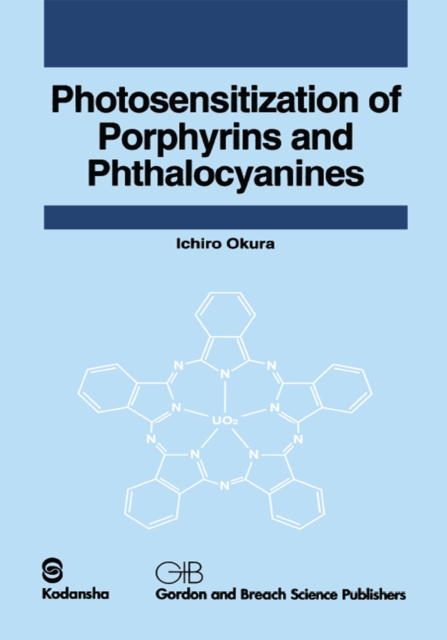
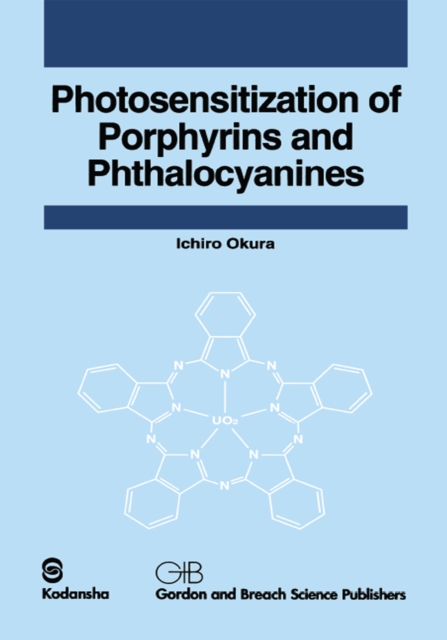
Photosensitization of Porphyrins and Phthalocyanines covers the scentific background to porphyrins and phthalocyanines, and applications of the compounds, especially for the application for photosensitization.
Photosensitization of Porphyrins and Phthalocyanines covers the scentific background to porphyrins and phthalocyanines, and applications of the compounds, especially for the application for photosensitization.
Organic photochemistry is the science arising from the application of photochemicalmethods to organic chemistry and organic chemical methods to photochemistry.
Organic photochemistry is the science arising from the application of photochemicalmethods to organic chemistry and organic chemical methods to photochemistry.
Written for use as a text and reference for those interested in how new materials may be used to capture, store, and use solar energy for alternative energy resources in everyday life, Solar Fuels: Materials, Physics, and Applications discusses the fundamentals of new materials and the physical processes involved in their mechanisms and design.
As the search for renewable sources of energy grows more urgent, more and more attention is focusing on the blueprint offered by biological photosynthesis for translating the energy of our Sun into energy rich molecules like H2 and carbohydrates, commonly known as "e;solar fuels.
Charged Particle and Photon Interactions with Matter offers in-depth perspectives on phenomena of ionization and excitation induced by charged particle and photon interactions with matter in vivo and in vitro.