Explores ancient Jewish beliefs in life after death as well as contemporary spiritual experiences*; Reveals clear references to the afterlife, heaven, and spiritual encounters in ancient Hebrew texts, including the Torah, the Zohar, and the Dead Sea Scrolls*; Shares profound stories from the author's clinical therapy practice to show how afterlife beliefs can heal destructive emotional patterns and ancestral trauma*; Describes the psychological parameters of trauma resolution, enabling long-term healing and spiritual advancementExploring afterlife theories from the ancient world as well as contemporary afterlife encounters, Carla Wills-Brandon, Ph.
This new approach introduces Kabbalah as a spiritual Jewish way of living, a practical wisdom for living, creativity and well being, and not merely a religious phenomenon or esoteric theology.
This new approach introduces Kabbalah as a spiritual Jewish way of living, a practical wisdom for living, creativity and well being, and not merely a religious phenomenon or esoteric theology.
The moral values and interpretive systems of religions are crucially involved in how people imagine the challenges of sustainability and how societies mobilize to enhance ecosystem resilience and human well-being.
The moral values and interpretive systems of religions are crucially involved in how people imagine the challenges of sustainability and how societies mobilize to enhance ecosystem resilience and human well-being.
The computer-aided drug design research field comprises several different knowledge areas, and often, researchers are only familiar or experienced with a small fraction of them.
This book, first published in 1958, examines the life and works of Avicenna, one of the most provocative figures in the history of thought in the East.
This book, first published in 1958, examines the life and works of Avicenna, one of the most provocative figures in the history of thought in the East.
The triple aim of Hamadhani in this work, first translated into English in 1915, appears to have been to amuse, to interest and to instruct; and this explains why, in spite of the inherent difficulty of a work of this kind composed primarily with a view to the rhetorical effect upon the learned and the great, there is scarcely a dull chapter in the fifty-one maqamat or discourses.
The triple aim of Hamadhani in this work, first translated into English in 1915, appears to have been to amuse, to interest and to instruct; and this explains why, in spite of the inherent difficulty of a work of this kind composed primarily with a view to the rhetorical effect upon the learned and the great, there is scarcely a dull chapter in the fifty-one maqamat or discourses.
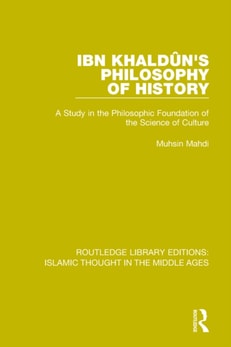
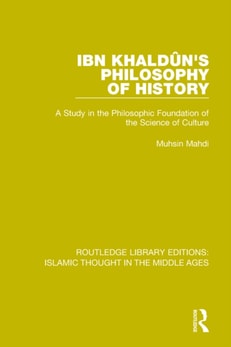
This book, first published in 1957, is the study of 14th-century Arab historian Ibn Khaldun, who founded a special science to consider history and culture, based on the philosophy of Plato and Aristotle and their Muslim followers.
This book, first published in 1957, is the study of 14th-century Arab historian Ibn Khaldun, who founded a special science to consider history and culture, based on the philosophy of Plato and Aristotle and their Muslim followers.
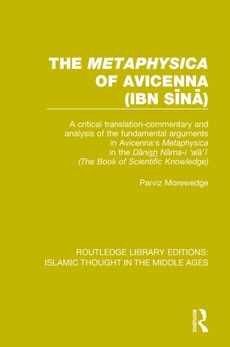
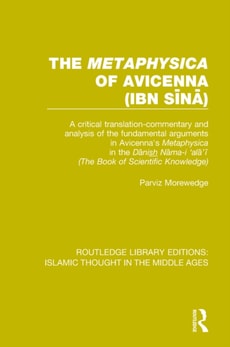
In this book, first published in 1973, Professor Parviz Morewedge, an expert on Islamic philosophy and mysticism, provides a critical exposition of one text of ibn Sina (Avicenna), the great Persian philosopher who lived from 980 to 1037.
In this book, first published in 1973, Professor Parviz Morewedge, an expert on Islamic philosophy and mysticism, provides a critical exposition of one text of ibn Sina (Avicenna), the great Persian philosopher who lived from 980 to 1037.
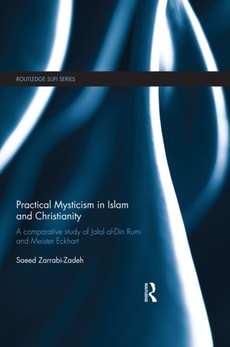
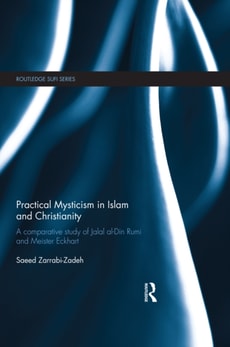
Practical Mysticism in Islam and Christianity offers a comparative study of the works of the Sufi-poet Jalal al-Din Rumi (1207-1273) and the practical teachings of the German Dominican, Meister Eckhart (c1260-1327/8).
Practical Mysticism in Islam and Christianity offers a comparative study of the works of the Sufi-poet Jalal al-Din Rumi (1207-1273) and the practical teachings of the German Dominican, Meister Eckhart (c1260-1327/8).
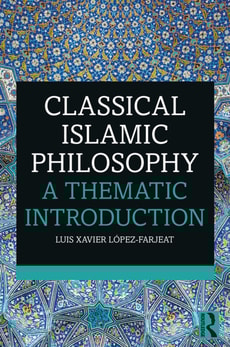
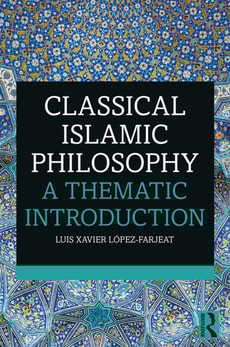
This thematic introduction to classical Islamic philosophy focuses on the most prevalent philosophical debates of the medieval Islamic world and their importance within the history of philosophy.
This thematic introduction to classical Islamic philosophy focuses on the most prevalent philosophical debates of the medieval Islamic world and their importance within the history of philosophy.
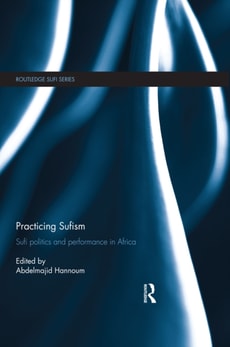
Sufism is often understood to be the mystical dimension of Islam, and many works have focused on the nature of "e;mystical experiences"e; and the relationship between man and God.
Sufism is often understood to be the mystical dimension of Islam, and many works have focused on the nature of "e;mystical experiences"e; and the relationship between man and God.
Purification of the soul is a principle that is central to understanding Islamic spirituality but despite this, relatively little has been written explicitly in the Islamic tradition regarding this discrete method of spiritual purification.
Purification of the soul is a principle that is central to understanding Islamic spirituality but despite this, relatively little has been written explicitly in the Islamic tradition regarding this discrete method of spiritual purification.