In "Schleier der Geheimnisse" entführt uns Rebecca Fuller auf eine faszinierende Reise durch die Jahrhunderte, um das oft übersehene Wirken von Frauen in den Schattenwelten der Geheimgesellschaften zu beleuchten.
This book started out as a guidebook on the Contemplative Living Experience program, a spiritual formation program in contemplative life offered by Contemplative Outreach.
The fundamental purpose of the soul is to grow and expand, but if we all just keep growing and expanding without direction, the universe will continue to explode into greater chaos than it already has.
Thermal Analysis and Thermodynamic Properties of Solids, Second Edition covers foundational principles and recent updates in the field, presenting an authoritative overview of theoretical knowledge and practical applications across several fields.
2023 Foreword INDIES Award Winner | Silver: TravelA pilgrimage-turned-adventure story in pursuit of a pagan mystery on the Camino de Santiago across France and SpainIn Beebe BahramisThe Way of the Wild Goose, a mystery, the wild feminine, and trail magic come together on the Camino de Santiago.
This concise volume examines the characteristic electronic parameters of semiconductor interfaces, namely the barrier heights of metal-semiconductor or Schottky contacts and the valence-band discontinuities of semiconductor-semiconductor interfaces or heterostructures.
When the Gnostic Gospels collide with new age spiritualism, the Oxford Happiness Test, and treatises on Buddhist practice, we know we're in the territory of a Bruce Beasley collection.
PRACTICAL TEACHINGS FOR PEACE AND FULFILLMENTIn this clear introduction to the Vedanta philosophy of India, youll discover a new perspective that can bring inner peace, inner strength and improve your relationships for a happier life.
New Edition: Understanding Voltammetry (3rd Edition)The power of electrochemical measurements in respect of thermodynamics, kinetics and analysis is widely recognized but the subject can be unpredictable to the novice even if they have a strong physical and chemical background, especially if they wish to pursue the study of quantitative measurements further.
This widely acclaimed text, now in its fifth edition and translated into many languages, continues to present a clear, simple and concise introduction to chemical thermodynamics.
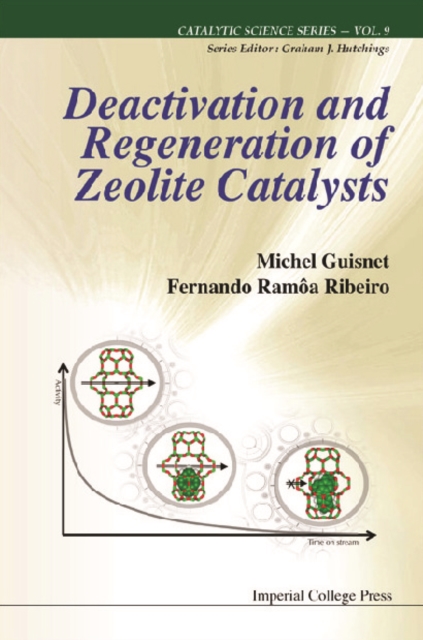
In chemical processes, the progressive deactivation of solid catalysts is a major economic concern and mastering their stability has become as essential as controlling their activity and selectivity.
This book is for any physicist interested in new vistas in the domain of non-crystalline condensed matter, aperiodic and quasi-crystalline networks and especially glass physics and chemistry.
To understand and improve the underlying principles that govern how organic reactions occur, A Foundation Course for College Organic Chemistry follows a brick-by-brick building approach.
With the central importance of electric polarizability and hyperpolarizability for a wide spectrum of activities, this book charts the trends in the accurate theoretical determination of these properties in specialized fields.
Since their discovery by Swiatoslaw Trofimenko in 1967, poly(pyrazol-1-yl)borates have been considered as one of the most useful ligands in modern coordination chemistry.
Fluorine chemistry is an expanding area of research that is attracting international interest, due to the impact of fluorine in drug discovery and in clinical and molecular imaging (e.
This book summarises approaches and current practices in actinide immobilisation using chemically-durable crystalline materials such as ceramics and monocrystals.
The modern electron microscope, as a result of recent revolutionary developments and many evolutionary ones, now yields a wealth of quantitative knowledge pertaining to structure, dynamics, and function barely matched by any other single scientific instrument.
Organic materials with extraordinary magnetic properties promise a wide range of light, flexible, and inexpensive alternatives to familiar metal-based magnets.
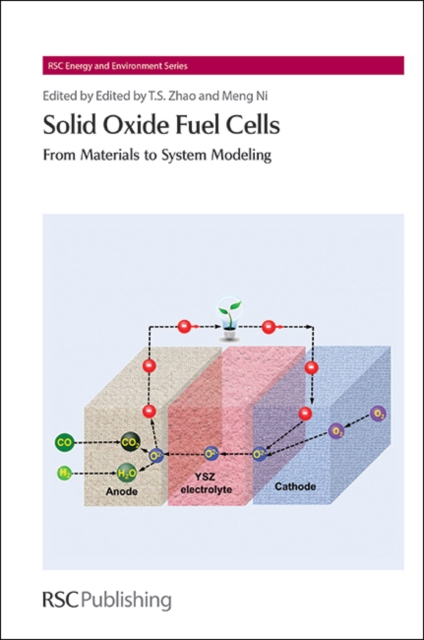
Solid oxide fuel cells (SOFCs) are promising electrochemical power generation devices that can convert chemical energy of a fuel into electricity in an efficient, environmental-friendly, and quiet manner.
Catalysis has always been part of the development of mankind; from the fermentation of alcoholic drinks, through the development of fertilisers in the agricultural revolution and production of bulk chemicals in the 20th Century.
Functional organic and organometallic polymers and materials have gained much attention as versatile materials for energy interconversions and optoelectronic/photonic applications, including electrical energy generation in photovoltaic cells and light generation in organic light-emitting diodes, as they offer a low cost, light weight and simple option for device fabrication.
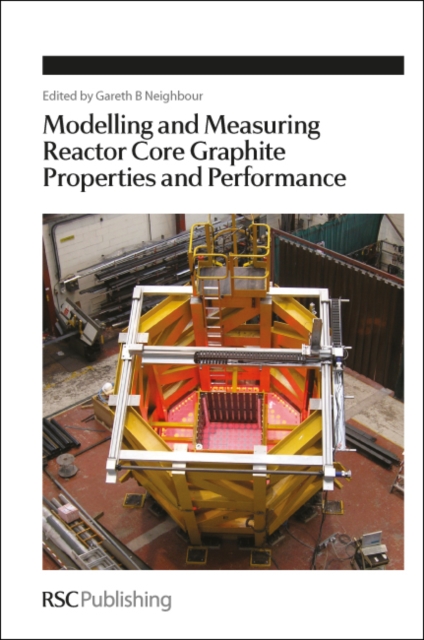
Gas-cooled, graphite-moderated nuclear reactors suffer ageing and degradation to the graphite during service posing a threat to the functionality of the core, and potentially, the safe operation of the reactor.
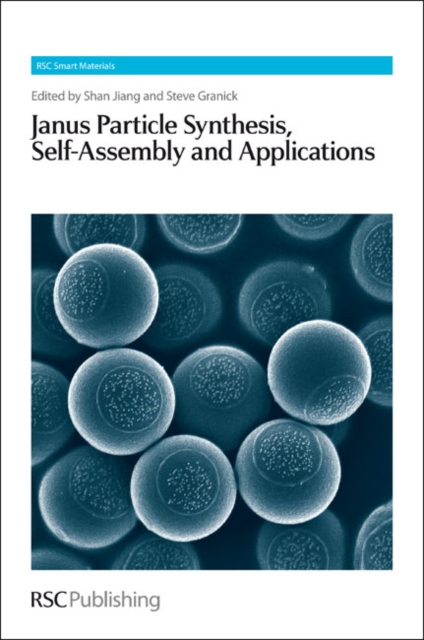
Named after the two-faced roman god, Janus particles have gained much attention due to their potential in a variety of applications, including drug delivery.