This book documents the latest research into the theory and application of force-fields, semi-empirical molecular orbital, density functional and ab initio calculations, Quantum Mechanical (QM) based modelling, Atoms in Molecules (AIM) approach, and biomolecular dynamics.
In recent years, several new concepts have emerged in the field of stratospheric ozone depletion, creating a need for a concise in-depth publication covering the ozone-climate issue.
Proton-coupled electron transfer (PCET) is emerging as an important new class of reactions and, over the past decade, great strides have been made in our understanding of them.
Incidents in the past have made scientists aware of the need for accurate methods of radionuclide analyses in order to estimate the risk to the public from released radioactivity .
P-stereogenic ligands were among the first to be used in asymmetric catalysis but synthetic difficulties and prejudices have hampered their development.
Carbon-carbon bond formations and functional group transformations are the most fundamental reactions for the construction of molecular frameworks and are at the forefront of organic chemistry research.
Cross-coupling reactions involving C-H and C-X bond functionalisation are commonplace in natural product synthesis and natural products, therapeutic agents, biological probes, and advanced materials.
Although ionic liquids have only been studied in depth during the last decades, the field is now maturing to such a degree that the focus is on larger scale applications for use in real processes such as catalysis.
Computational Quantum Chemistry presents computational electronic structure theory as practised in terms of ab initio waveform methods and density functional approaches.
RNA helicases and RNA helicase-like proteins are the largest group of enzymes in eukaryotic RNA metabolism and although they are subject to intense ongoing research there is much confusion about function and classification of these enzymes.
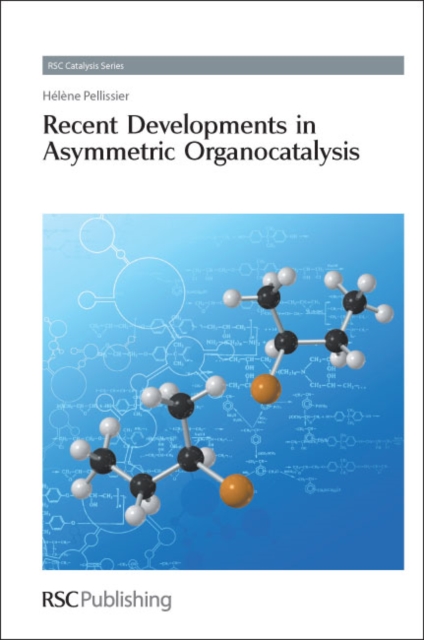
This book, unique in its field, is a comprehensive description of all the methodologies reported for carrying out conjugate addition reactions in a stereoselective way, using small chiral organic molecules as catalysts (organocatalysts).
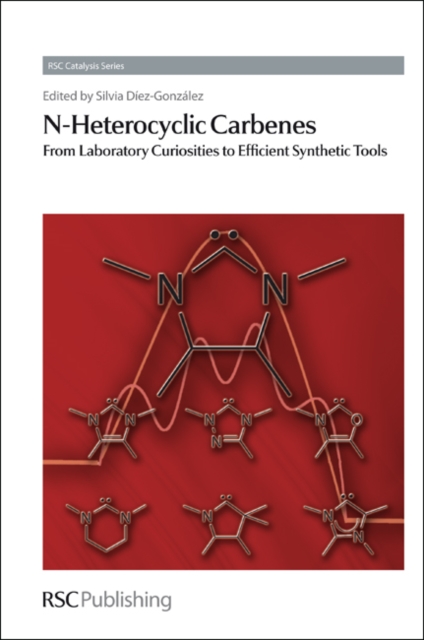
Over the last fifteen years, N-heterocyclic carbenes (NHCs) have mostly been used as ancillary ligands for the preparation of transition metal-based catalysts.
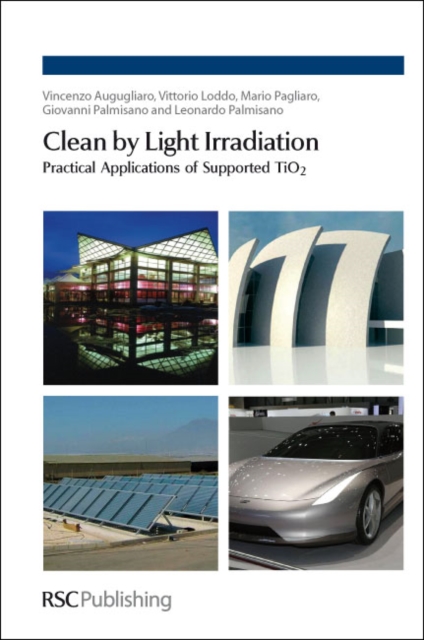
The book deals with the environmentally friendly cleaning materials functionalized with TiO2, a widely known semiconductor giving rise to redox reactions under artificial or solar irradiation.
In Silico methods to predict toxicity have become increasingly important recently, particularly in light of European legislation such as REACH and the Cosmetics Regulation.
Chromic phenomena, or those produced by materials which exhibit colour in response to a chemical or physical stimulus, have increasingly been at the heart of 'high-tec' developments in a variety of fields in the last decade.
Published under the auspices of both IUPAC and its affiliated body, the International Association of Chemical Thermodynamics (IACT), this book will serve as a guide to scientists or technicians who use equations of state for fluids.
'Love is the meaning' is the phrase chosen by the mystic 14th century writer Julian of Norwich to encapsulate all that had been revealed to her in the series of visions that led her to write one of world's greatest spiritual books, her Revelations of Divine Love which continues to inspire countless readers today.
The field of electrochemical measurement, with respect to thermodynamics, kinetics and analysis, is widely recognised but the subject can be unpredictable to the novice, even if they have a strong physical and chemical background, especially if they wish to pursue quantitative measurements.
With contributions from experts in supported metal catalysis from both the industry and academia, this book presents the latest developments in characterization and application of supported metals in heterogeneous catalysis.
For far too long chemists and industrialists have relied on the use of aggressive reagents such as nitric and sulphuric acids, permanganates and dichromates to prepare the massive quantities of both bulk and fine chemicals that are needed for the maintenance of civilised life - materials such as fuels, fabrics, foodstuffs, fertilisers and pharmaceuticals.
The computer-aided drug design research field comprises several different knowledge areas, and often, researchers are only familiar or experienced with a small fraction of them.
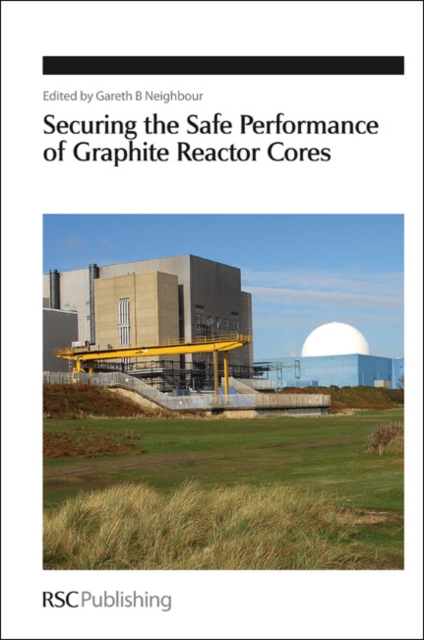
Nuclear power currently contributes some 20% of the electricity needs of the UK and is rising rapidly on the political agenda due to environmental and economic factors, and yet all but one of the UK's existing nuclear reactors is expected to close by 2023.
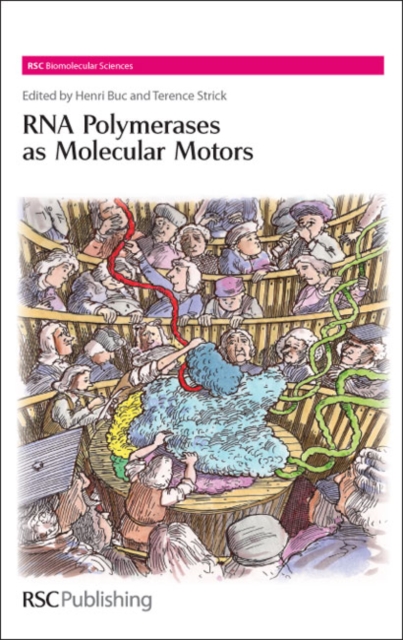
The cell can be viewed as a 'collection of protein machines' and understanding these molecular machines requires sophisticated cooperation between cell biologists, geneticists, enzymologists, crystallographers, chemists and physicists.
This book aims to understand the main aspects of non-covalent chemistry (mainly in the gas phase) and specifically compares the experimental and theoretical data available for non-covalent complexes and subsequent problems associated with this comparison.
The book gives a comprehensive up-to-date summary of the existing information on the structural/electronic properties, chemistry and catalytic properties of vanadium and molybdenum containing catalysts.
Nanochemistry offers the unique chance to work with almost all the elements of the periodic system to try to solve problems with new materials in architecture, medicine and electronics.
To appreciate the chemistry and physical properties of complexes of the transition series, an understanding of metal-ligand interactions applied to complexes of the d-block is needed.