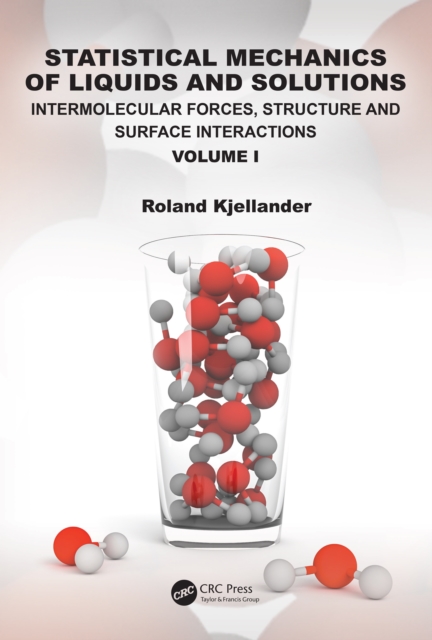
The statistical mechanical theory of liquids and solutions is a fundamental area of physical sciences with important implications for many industrial applications.
Fuel Cells: Principles, Design, and Analysis considers the latest advances in fuel cell system development and deployment, and was written with engineering and science students in mind.
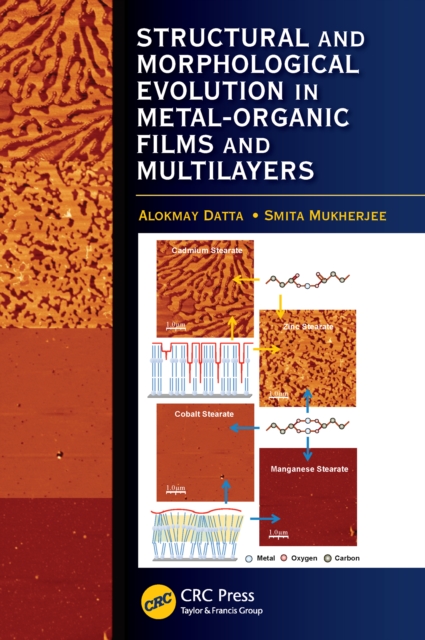
Structural and Morphological Evolution in Metal-Organic Films and Multilayers presents major results of the authors' work carried out on Langmuir monolayers and Langmuir-Blodgett multilayers.
Knowledge of thermodynamics is a necessary tool for describing and understanding the physical behavior of new polymers and polymer blends, for instance, compatibility of components, rheological properties, morphological features, and mechanical properties.
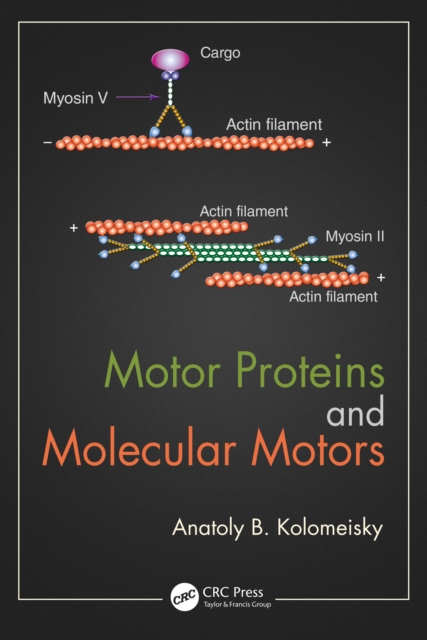
A Unified Microscopic Approach to Analyzing Complex Processes in Molecular MotorsMotor Proteins and Molecular Motors explores the mechanisms of cellular functioning associated with several specific enzymatic molecules called motor proteins.
Electrochemical Energy: Advanced Materials and Technologies covers the development of advanced materials and technologies for electrochemical energy conversion and storage.
Introduction to Solid State Ionics: Phenomenology and Applications presents a pedagogical, graduate-level treatment of the science and technology of superionic conductors, also known as fast ion conductors or solid electrolytes.
Green chemistry involves designing novel ways to create and synthesize products and implement processes that will eliminate or greatly reduce negative environmental impacts.
Accurate uranium analysis, and particularly for isotope measurements, is essential in many fields, including environmental studies, geology, hydrogeology, the nuclear industry, health physics, and homeland security.
Filling a longstanding gap for graduate courses in the field, Chemical Reaction Engineering: Beyond the Fundamentals covers basic concepts as well as complexities of chemical reaction engineering, including novel techniques for process intensification.
Filling a longstanding gap for graduate courses in the field, Chemical Reaction Engineering: Beyond the Fundamentals covers basic concepts as well as complexities of chemical reaction engineering, including novel techniques for process intensification.
In Silico Drug Discovery and Design: Theory, Methods, Challenges, and Applications provides a comprehensive, unified, and in-depth overview of the current methodological strategies in computer-aided drug discovery and design.
The field of bioscience methodologies in physical chemistry stands at the intersection of the power and generality of classical and quantum physics with the minute molecular complexity of chemistry and biology.
This book presents the current state of the art and future perspectives of the heterogeneous catalytic production of fuels, complete with reaction mechanism schemes, engineering solutions, and valuable industry insights.
Brings Readers from the Threshold to the Frontier of Modern Research Many-Body Methods for Atoms and Molecules addresses two major classes of theories of electron correlation: the many-body perturbation theory and coupled cluster methods.
For a chemist who is concerned with the synthesis of new energetic compounds, it is essential to be able to assess physical and thermodynamic properties, as well as the sensitivity, of possible new energetic compounds before synthesis is attempted.
Isaiah 42:5 Thus saith God the Lord, he that created the heavens, and stretched them out; he that spread forth the earth, and that which cometh out of it; he that giveth breath unto the people upon it, and spirit to them that walk therein: 6 I the Lord have called thee in righteousness, and will hold thine hand and will keep thee, and give thee for a covenant of the people, for a light of the Gentiles; 7 To open the blind eyes, to bring out the prisoners from the prison, and them that sit in darkness out of the prison house.
In the book Medium7, Canadian researcher and author Donna Smith-Moncrieffe shares insight from her journey to find truth about the nature of existence.
Miracle from the Heart shares the story of author Irene Sonja Fananes journey from a state of religious confusion to one of spiritual awakening and self-empowerment.
Although few of us know it, ancient tradition says that the Bibles first five books can be read as an extended parable describing the personal spiritual journey.
Merlin's War: The Battle between the Family of Light and the Family of Dark examines the fact that the history of the human race has been manipulated by a being so clever that we have had no idea he exists.
The Industry-University Cooperative Chemistry Program has sponsored seven previous international symposia covering a wide variety of topics of interest to industrial and academic chemists.
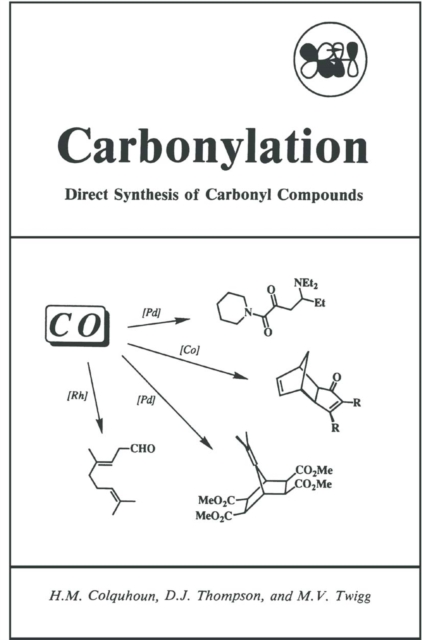
Since the publication of our earlier book on transition metal mediated organic synthesis, * there has been a widespread increase of interest in this topic, and transition metal based methodology has become firmly established in many areas of organic chemistry.
In this introductory chemical physics textbook, the authors discuss the interactions, bonding, electron density, and experimental techniques of free molecules, and apply spectroscopic methods to determine molecular parameters, dynamics, and chemical reactions.
The phenomenon of catalysis is found in many homogeneous and heterogeneous systems undergoing chemical change, where it effects the rates of approach to the equilibrium state in processes as diverse as those found in the stars, the earth's mantle, living organisms, and the various chemistries utilized by industry.
This series, Finite Systems and Multipartide Dynamics, is intended to provide timely reviews of current research topics, written in a style sufficient- ly pedagogic so as to allow a nonexpert to grasp the underlying ideas as well as understand technical details.
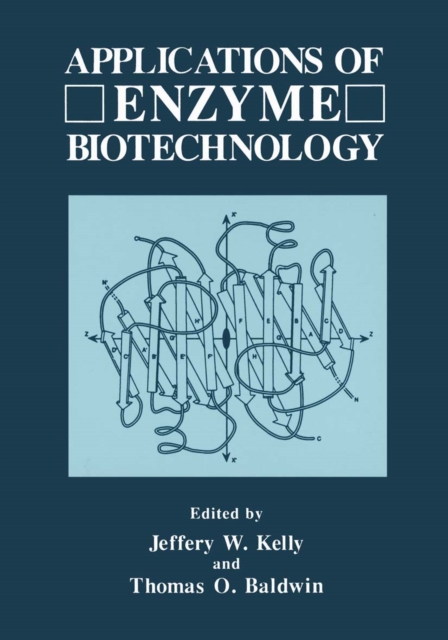
Some have predicted that the coming several decades will be the decades of "e;biotechnology,"e; wherein cancer, birth defects, life span increases, cosmetics, biodegradation, oil spills and exploration, solid waste disposal, and almost every aspect of our material life will be affected by this new area of science.
This book contains aseries of review papers related to the lectures given at the Third Course on Bioelectrochemistry held at Erice in November 1988, in the framework of the International School of Biophysics.
In response to the worldwide health problems caused by nutritional zinc deficiency, coupled with the remarkable advances in our knowledge of zinc metabolism, the author has written this monograph on the clinical effects of this important mineral.
In this timely monograph, the author summarizes the rapidly growing body of knowledge regarding nickel by providing a balanced discussion of its harmful and beneficial effects.
There has been a steady advance of the atomic and molecular many-body methodology over the last few years, with a concomitant development of versatile computer codes.
The Industry-University Cooperative Chemistry Program (IUCCP) has sponsored eight previous international symposia covering a range of topics of interest to industrial and academic chemists.
viii The experimental research presented at the conference and reported here deals mainly with the visible wavelength region and slight extensions to either side (roughly from 150 nrn to 1000 nrn, 8.