This monograph is devoted to long-range surface forces sig- nificant far beyond a single monolayer and felt over tens or even hundreds of molecular layers adjacent to an interface.
In 2001 Wyn Roberts celebrated both his 70th birthday and 50 years of working in surface science, to use the term "e;surface science"e; in its broadest meaning.
We now apply the algorithm above to find the 121 orbits of norm -2 vectors from the (known) nann 0 vectors, and then apply it again to find the 665 orbits of nann -4 vectors from the vectors of nann 0 and -2.
Since 1983 I have been delivering lectures at Budapest University that are mainly attended by chemistry students who have already studied quantum chem- istry in the amount required by the (undergraduate) chemistry curriculum of the University, and wish to acquire deeper insight in the field, possibly in prepara- tion of a master's or Ph.
Nuclear Analytical Methods in the Life Sciences *1994 is a forefront survey of key presentations from the 1993 International Conference on Nuclear Analytical Methods in the Life Sciences.
The contributions in this volume were first presented at a symposium organized by the editors and held at the 214th National Meeting of the American Chemical Society in Las Vegas in September, 1997.
One of the most important - and unfortunately scientific information of interest in our field least advertised - applications of nuclear gamma from ali over the world in many languages, and resonance spectroscopy is the organized indexing documented, evaluated, and presented this in- of scientific information.
'A comprehensive review of the current state of the theoretical development in this important area of potential application of conducting polymers, and is very timely.
The field of Very High Frequency EPR (VHF EPR) or sometimes called Very High Field EPR (conveniently, also abbreviated as VHF EPR) has blossomed during the past decade, especially after the original pioneering work of Ya.
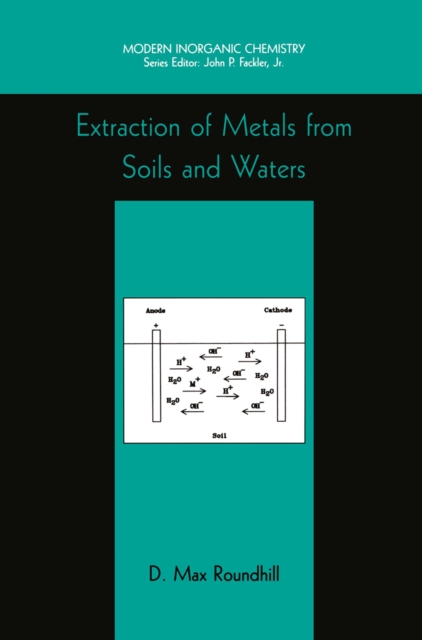
Extractions of Metals from Soils and Waters represents a new emphasis in the series Modern Inorganic Chemistry, namely the impact inorganic chemistry can have on the environment.
Biochemistry of Halogenated Organic Compounds has been written as a general reference source for researchers in several related areas, including organic chemists, medicinal chemists, pharmacologists, toxicologists, and medical researchers.
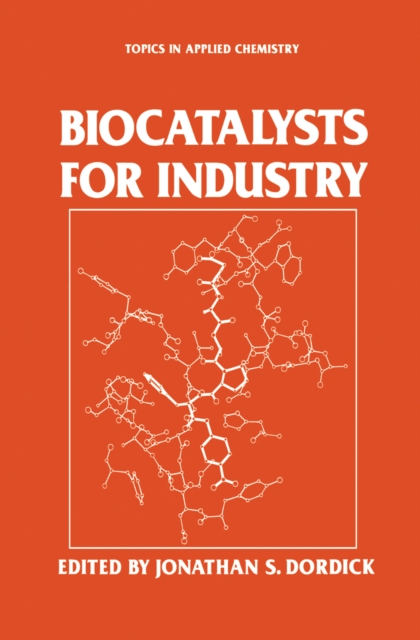
The application of enzymes or whole cells (fermentatively active or resting; microbial, plant, or animal) to carry out selective transformations of commercial importance is the central theme of industrial biocatalysis.
EPR of Free Radicals in Solids: Trends in Methods and Applications presents methods and applications of modern EPR for the study of free radical processes in solids, which so far are only available in the journal literature.
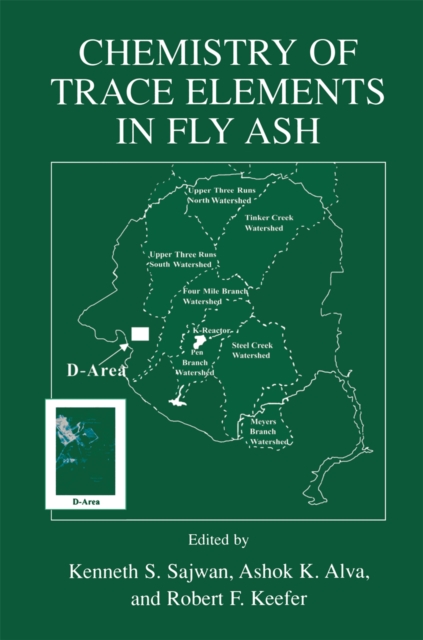
The accumulation of large amounts of ash from fossil fuel combustion for electric power plant generation is becoming a major environmental concern in the United States.
It was none other than Henri Poincare who at the turn of the last century, recognised that initial-value sensitivity is a fundamental source of random- ness.
Mathematical Methods of Environmental Risk Modeling provides a working introduction to both the general mathematical methods and specific models used for human health risk assessment.
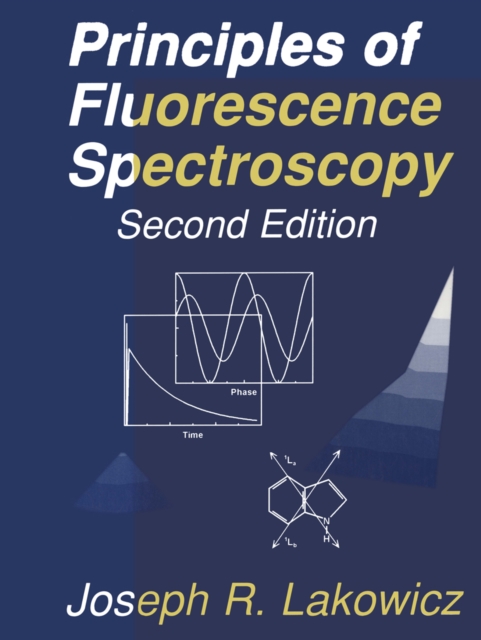
`In the second edition of Principles I have attempted to maintain the emphasis on basics, while updating the examples to include more recent results from the literature.
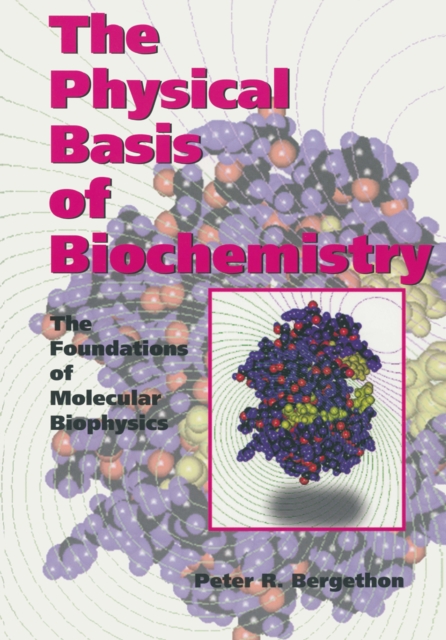
The objective of this book is to provide a unifying approach to the study of biophysical chemistry for the advanced undergraduate who has had a year of physics, organic chem- istry, calculus, and biology.
Mathematics is playing an ever more important role in the physical and biological sciences, provoking a blurring of boundaries between scientific disciplines and a resurgence of interest in the modem as well as the classical techniques of applied mathematics.
There has been an explosion of research related to free radicals and antioxidants in recent years, and hundreds of laboratories worldwide are actively involved in many as- pects of free radicals, oxidative stress, and antioxidants.
Auger electron spectroscopy (AES) is based on the Auger total secondary electron energy distribution, and an ion gun to process, which involves the core-level ionization of an atom with provide depth profiling capability.
The continued growth of Mossbauer effect methodology, and its virtuosity in encompassing new elements and new applications, are amply illustrated by the contents of this volume.