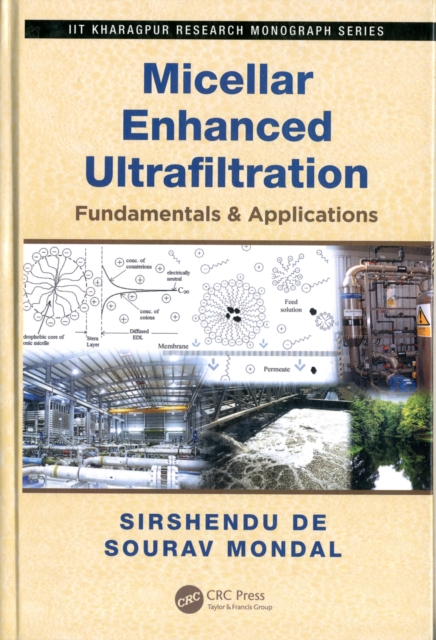
A response to increasingly stringent regulation of pollution and toxicity levels in industrial waste discharge, Micellar Enhanced Ultrafiltration: Fundamentals & Applications offers the most complete book available on the benefits and use of micellar-enhanced ultrafiltration (MEUF) to achieve continuous removal of organic and inorganic pollutan
Experiments in Nuclear Science is an introductory-level laboratory manual providing hands-on opportunities for developing insights into the origins and properties of nuclear radiations, their interactions with matter, their detection and measurement, and their applications in the physical and life sciences.
Continuously studied since its discovery, graphene offers truly unique opportunities, because unlike most semiconductor systems, its 2D electronic states are not buried deep under the surface and it can be easily accessed directly by tunneling or by other local probes.
Now in its second edition, Nuclear Forensic Analysis provides a multidisciplinary reference for forensic scientists, analytical and nuclear chemists, and nuclear physicists in one convenient source.
Written for use as a text and reference for those interested in how new materials may be used to capture, store, and use solar energy for alternative energy resources in everyday life, Solar Fuels: Materials, Physics, and Applications discusses the fundamentals of new materials and the physical processes involved in their mechanisms and design.
Even though time-dependent spectroscopic techniques continue to push the frontier of chemical physics, they receive scant mention in introductory courses and are poorly covered in standard texts.
Surfactant research explores the forces responsible for surfactant assembly and the critical industrial, medical, and personal applications, including viscosity control, microelectronics, drug stabilization, drug delivery, cosmetics, enhanced oil recovery, and foods.
Surface tension provides a thermodynamic avenue for analyzing systems in equilibrium and formulating phenomenological explanations for the behavior of constituent molecules in the surface region.
Cluster Ion-Solid Interactions: Theory, Simulation, and Experiment provides an overview of various concepts in cluster physics and related topics in physics, including the fundamentals and tools underlying novel cluster ion beam technology.
Spectroscopic Techniques and Hindered Molecular Motion presents a united, theoretical approach to studying classical local thermal motion of small molecules and molecular fragments in crystals by spectroscopic techniques.
Geochemical modeling is an important tool in environmental studies, and in the areas of subsurface and surface hydrology, pedology, water resources management, mining geology, geothermal resources, hydrocarbon geology, and related areas dealing with the exploration and extraction of natural resources.
Providing new insights into the molecular and electronic processes involved in the conversion of sunlight into chemical products, Photoelectrochemical Solar Conversion Systems: Molecular and Electronic Aspects begins with an historical overview and a survey of recent developments in the electrochemistry of semiconductors and spectroscopic technique
Polymer Brushes: Substrates, Technologies, and Properties covers various aspects of polymer brush technology, including synthesis, properties, performance, and applications.
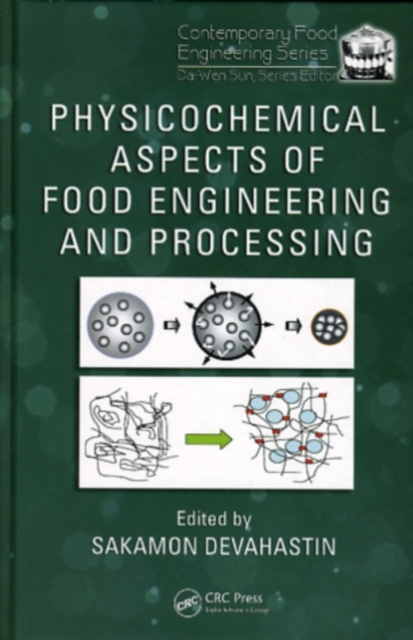
Physical and chemical interactions between various constituents of foods resulting from processing operations often lead to physical, sensory, and nutritional changes in the properties of foods.
Over the past four decades, notable advancements in the theory and application of ion exchange science uncovered a wealth of knowledge that fueled new scientific pursuits and created synergies with myriad scientific endeavors.
Ten years after the debut of the expansive CRC Handbook of Thermodynamic Data of Copolymer Solutions, The CRC Handbook of Phase Equilibria and Thermodynamic Data of Copolymer Solutions updates and expands the world's first comprehensive source of this vital data.
Written in a versatile, contemporary style that will benefit both novice and expert alike, Biological and Biomedical Coatings Handbook, Two-Volume Set covers the state of the art in the development and implementation of advanced thin films and coatings in the biological field.
Oxide semiconductors, including titanium dioxide (TiO2), are increasingly being considered as replacements for silicon in the development of the next generation of solar cells.
Principles of Chemical Engineering Processes: Material and Energy Balances continues to serve an essential text, guiding students on the basic principles and calculation techniques used in the field of chemical engineering and providing a solid understanding of the fundamentals of the application of material and energy balances.
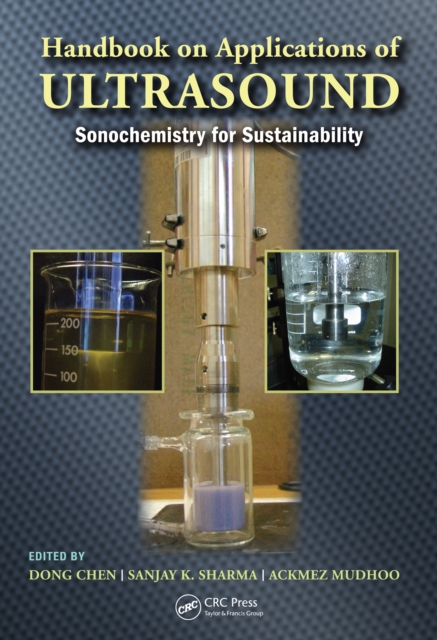
Ultrasonic irradiation and the associated sonochemical and sonophysical effects are complementary techniques for driving more efficient chemical reactions and yields.
For more than three decades the Electroanalytical Chemistry Series has delivered the most in-depth and critical research related to issues in electrochemistry.
The premier symposium on Surfactants in Tribology, held in Seoul in 2006, was an enormously successful event that generated a high level of interest in the topic, leading to the publication of the first volume in this series in 2008.
This book covers the basic structural, thermodynamic and kinetic principles are covered and molecular strategies for the adaptation to high temperatures revealed by structure analysis are delineated.
Colloids show great potential in a wide variety of applications, including drug delivery and medical imaging, and the design and fabrication of colloid systems has attracted considerable interest in the research community.
Polymer Thermodynamics: Blends, Copolymers and Reversible Polymerization describes the thermodynamic basis for miscibility as well as the mathematical models used to predict the compositional window of miscibility and construct temperature versus volume-fraction phase diagrams.
The application of quantum mechanics to many-particle systems has been an active area of research in recent years as researchers have looked for ways to tackle difficult problems in this area.
While the relevant features and properties of nanosystems necessarily depend on nanoscopic details, their performance resides in the macroscopic world.
The theoretical methods of quantum chemistry have matured to the point that accurate predictions can be made and experiments can be understood for a wide range of important gas-phase phenomena.
Photovoltaic technology has now developed to the extent that it is close to fulfilling the vision of a "e;solar-energy world,"e; as devices based on this technology are becoming efficient, low-cost and durable.
Providing a carefully developed and comprehensive overview of the corrosion chemistry of metallic materials, this book covers the principal methods of corrosion prevention.
The first two editions of Concise Chemical Thermodynamics proved to be a very popular introduction to a subject many undergraduate students perceive to be difficult due to the underlying mathematics.
The self-contained properties of discotic liquid crystals (DLCs) render them powerful functional materials for many semiconducting device applications and models for energy and charge migration in self-organized dynamic functional soft materials.