Having successfully replaced elements used in traditional, pollution-prone, energy-consuming separation processes, nanoporous materials play an important role in chemical processing.
With contributions from a community of experts, the book focuses on the use of ionic functions to define the principle of operation in polymer devices.
Despite the fact that crystals make up an estimated 80% of chemical and pharmaceutical products, few resources exist that provide practical guidance on achieving precision control of their size and size distribution.
In the 20 years since the pilot plant experiments used to develop the concept of electroviscoelasticity, inroads have been made in the understanding of its many related processes.
Hundreds of lubricant additives are available industry-wide to improve base stock properties and protect metal surfaces; however, the wrong combination of these commodities can result in substandard performance.
Over the years, researchers have reported solubility data in the chemical, pharmaceutical, engineering, and environmental literature for several thousand organic compounds.
"e;an impressive text that addresses a glaring gap in the teaching of physical chemistry, being specifically focused on biologically-relevant systems along with a practical focus.
Surface and colloid chemistry principles impact many aspects of our daily lives, ranging from the cleaners and cosmetics we use to combustion engines and cement.
Updated to include recent results from intensive worldwide research efforts in materials science, surface science, and corrosion science, Corrosion Mechanisms in Theory and Practice, Third Edition explores the latest advances in corrosion and protection mechanisms.
Electroanalytical chemists and others are concerned not only with the application of new and classical techniques to analytical problems, but also with the fundamental theoretical principles upon which these techniques are based.
Integrating fundamental research with the technical applications of this rapidly evolving field, Structure and Functional Properties of Colloidal Systems clearly presents the connections between structure and functional aspects in colloid and interface science.
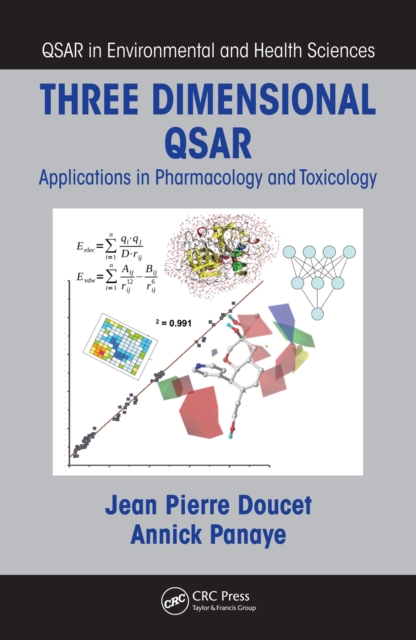
As a result of new statistical and mathematical approaches, improved visualization tools, and recognition by international regulatory groups, quantitative structure-activity relationships (QSARs) now play important roles in pharmacology for the design of new drugs as well as in toxicology and ecotoxicology for hazard identification and risk assessm
While modern computational methods can provide us with the wave function of a molecule in numerical form, most computer programs lack the sophisticated tools needed to extract chemical concepts from these wave functions.
The effective use of microemulsions has increased dramatically during the past few decades as major industrial applications have expanded in a variety of fields.
Unravels Complex Problems through Quantum Monte Carlo MethodsClusters hold the key to our understanding of intermolecular forces and how these affect the physical properties of bulk condensed matter.
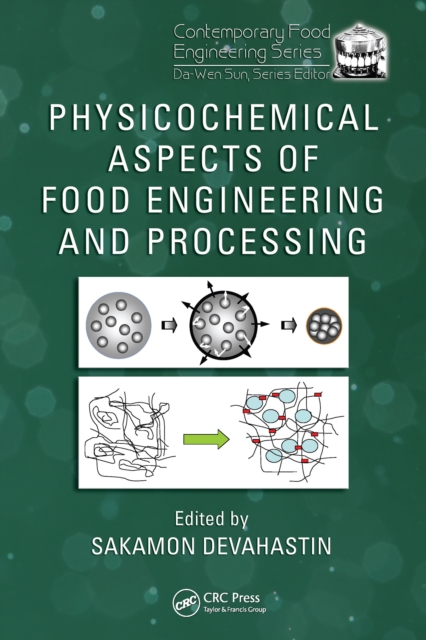
Physical and chemical interactions between various constituents of foods resulting from processing operations often lead to physical, sensory, and nutritional changes in the properties of foods.
In recent years, the area dealing with the physical chemistry of materials has become an emerging discipline in materials science that emphasizes the study of materials for chemical, sustainable energy, and pollution abatement applications.
Nanoporous materials are critical to various fields of research, including ion exchange, separation, catalysis, sensor applications, biological molecular isolation, and purification.
Molecular modeling is becoming an increasingly important part of chemical research and education as computers become faster and programs become easier to use.
Discusses the Structure and Properties of Materials and How These Materials Are Used in Diverse ApplicationsBuilding on undergraduate students' backgrounds in mathematics, science, and engineering, Introduction to the Physics and Chemistry of Materials provides the foundation needed for more advanced work in materials science.
Presents short topics tied to numerical or conceptual ideas, reinforced with worked examples and questions Retaining the user-friendly style of the first edition, this text is designed to eliminate the knowledge gap for those life sciences students who have not studied chemistry at an advanced level.
Thermodynamic data form the basis for separation processes used in different fields of science and industry, from specialty chemicals to foods and pharmaceuticals.
Used in the production of a wide number of fine chemicals and pharmaceuticals, the Friedel-Crafts acylation reaction represents a synthetic process of great interest to organic chemists of academia and industry.
During the upgrading of heavy petroleum, asphaltene is the most problematic impurity since it is the main cause of catalyst deactivation and sediments formation.
From the development of polymers that make cars lighter to fuels that make them run cleaner, the chemist's role in the automotive industry has evolved to be one that is more outside the laboratory than in it.
In the 20 years since the publication of the author's multi-contributor volume on defoaming, a vast amount of new work has been published and many new insights have been revealed.
The growth in the world's nuclear industry, motivated by peaking world oil supplies, concerns about the greenhouse effect, and domestic needs for energy independence, has resulted in a heightened focus on the need for next-generation nuclear fuel-cycle technologies.
This classic and bestselling landmark publication, originally published in 1965, examines the dynamic mechanisms, fundamental principles, and physical properties of various chromatographic procedures.
As carbons are widely used in energy storage and conversion systems, there is a rapidly growing need for an updated book that describes their physical, chemical, and electrochemical properties.
Electrocatalysis applications are employed in a large number of industries worldwide, ranging from old technologies such as galvanoplasty to the most up-to-date deployments involving ultracapacitators.
Touted as the new darling of the chemical industry, alkyl polyglycosides are gaining in popularity due to the fact that they are readily biodegradable, low-toxic, and made from renewable resources.
An In-Depth View of Hardware Issues, Programming Practices, and Implementation of Key MethodsExploring the challenges of parallel programming from the perspective of quantum chemists, Parallel Computing in Quantum Chemistry thoroughly covers topics relevant to designing and implementing parallel quantum chemistry programs.
Over the last decade, scientific and engineering interests have been shifting from conventional ion mobility spectrometry (IMS) to field asymmetric waveform ion mobility spectrometry (FAIMS).
With mounting pressure to extract petroleum from oil sands and other unconventional sources, oil refineries must adapt their processing methods to handle increasingly heavy crude oils.
The Handbook of Solid State Electrochemistry is a one-stop resource treating the two main areas of solid state electrochemistry: electrochemical properties of solids such as oxides, halides, and cation conductors; and electrochemical kinetics and mechanisms of reactions occurring on solid electrolytes, including gas-phase electrocatalysis.
The first book to present a detailed analysis of the electrochemistry, development, modeling, optimization, testing, and technology behind modern zirconia-based sensors, Electrochemistry of Zirconia Gas Sensors explores how to tailor these sensors to meet specific industrial needs.