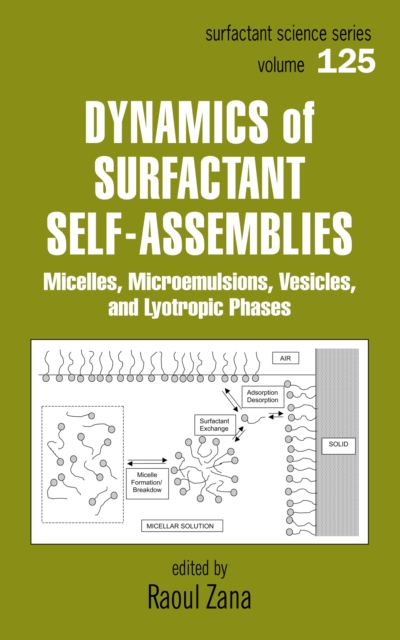
Dynamics of Surfactant Self-Assemblies explains the dynamics of micellar equilibria, tracking surfactant exchange, and micelle formation/breakdown processes.
This volume chronicles the proceedings of the Third International Symposium on Contact Angle, Wettability and Adhesion held in Providence, Rhode Island, May 20a 23, 2002.
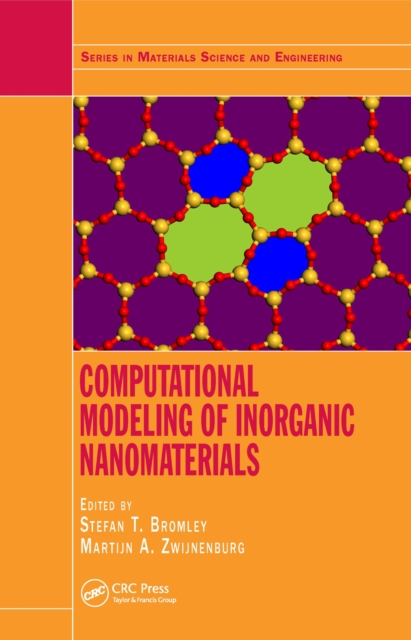
Computational Modeling of Inorganic Nanomaterials provides an accessible, unified introduction to a variety of methods for modeling inorganic materials as their dimensions approach the nanoscale.
Discusses the Structure and Properties of Materials and How These Materials Are Used in Diverse ApplicationsBuilding on undergraduate students' backgrounds in mathematics, science, and engineering, Introduction to the Physics and Chemistry of Materials provides the foundation needed for more advanced work in materials science.
Concepts and Methods in Modern Theoretical Chemistry: Statistical Mechanics, the second book in a two-volume set, focuses on the dynamics of systems and phenomena.
The first book to present a detailed analysis of the electrochemistry, development, modeling, optimization, testing, and technology behind modern zirconia-based sensors, Electrochemistry of Zirconia Gas Sensors explores how to tailor these sensors to meet specific industrial needs.
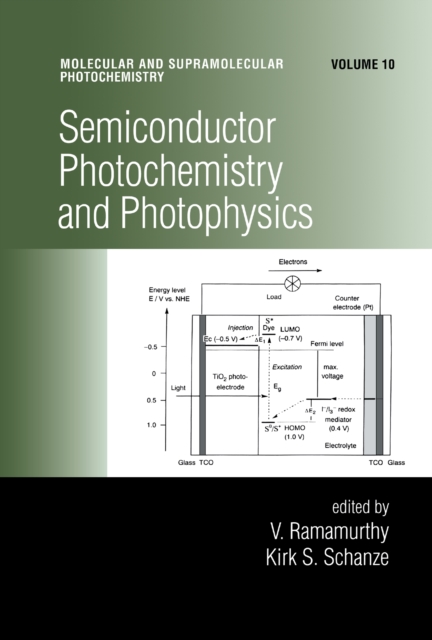
Answering the need for information that could revolutionize the development of alternate solar energy sources and the reduction of atmospheric contaminants, Semiconductor Photochemistry and Photophysics reflects renewed interest inspired by the unique properties of nanocrystalline semiconductor particles.
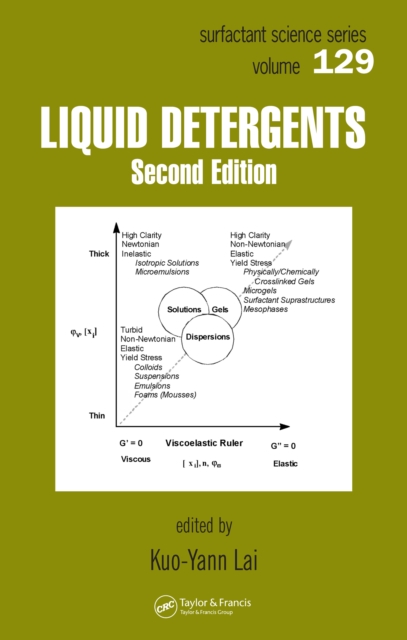
A best-seller in its first edition, Liquid Detergents, Second Edition captures the most significant advances since 1996, maintaining its reputation as a first-stop reference in all fundamental theories, practical applications, formulation technologies and manufacturing aspects of liquid detergents.
This work provides a how-to approach to the fundamentals, methodologies and dynamics of computational organometallic chemistry, including classical and molecular mechanics (MM), quantum mechanics (QM), and hybrid MM/QM techniques.
Virtual screening can reduce costs and increase hit rates for lead discovery by eliminating the need for robotics, reagent acquisition or production, and compound storage facilities.
This book reviews the fundamentals of electrochemical sensors, the preparation of electrodes, potential materials for sensing applications, and different analytical methods used for electrochemical sensing applications.
The application of quantum mechanics to many-particle systems has been an active area of research in recent years as researchers have looked for ways to tackle difficult problems in this area.
Unravels Complex Problems through Quantum Monte Carlo MethodsClusters hold the key to our understanding of intermolecular forces and how these affect the physical properties of bulk condensed matter.
This book chronicles the proceedings of the First International Symposium on Adhesion Aspects of Thin Films, held in Newark, New Jersey, October 28-29, 1999.
Colloids show great potential in a wide variety of applications, including drug delivery and medical imaging, and the design and fabrication of colloid systems has attracted considerable interest in the research community.
Processes of Formation of Micro- and Nanodispersed Systems is a comprehensive analysis and presentation of the physical processes and phenomena that lead to the formation of disperse materials.
As carbons are widely used in energy storage and conversion systems, there is a rapidly growing need for an updated book that describes their physical, chemical, and electrochemical properties.
Dieser Band gibt einen Überblick über die Anwendungen der metallorganischen Chemie in der Prozesschemie, die für die aktuellen Themen der synthetischen Chemie relevant sind.
The book offers detailed progress and challenges in energy storage technologies with respect to various electrolyte chemistries including energy storage devices such as batteries and supercapacitors.
"e;Describes preparation techniques of protein-based surfactants (PBS) in the laboratory by a variety of chemical and enzymatic means, production by using different types of amino acids, and marketplace applications of PBS in medical and personal care products, detergents, cosmetics, antimicrobial agents, and foods.
The Institute of Chemical Physics of the Russian Academy of Sciences has become one of the world's premiere centers for studies of polymeric materials; in use, during processing, and in harsh environments.
Hundreds of lubricant additives are available industry-wide to improve base stock properties and protect metal surfaces; however, the wrong combination of these commodities can result in substandard performance.
The Institute of Chemical Physics of the Russian Academy of Sciences has become one of the world's premiere centers for studies of polymeric materials; in use, during processing, and in harsh environments.
The science of ceramic interfaces is multidisciplinary, overlapping several existing, well-established disciplines such as solid-state chemistry, high-temperature chemistry, solid-state electrochemistry, surface science, catalysis and metallurgy.
The quantum transport theory, which dates back to the time of the Landauer theory in the field of mesoscopic physics, is now expanding its power on materials science and chemistry by earning chemical accuracy and physical reality and has become a new subject of non-equilibrium quantum transport theory for charge and heat at nanoscale.
Transition metal complexes as catalysts play an indispensable role in transformation of chemical substances to value-added products using less energy-consuming processes and with high selectivity and efficiency.