Ultrafast Dynamics at the Nanoscale provides a combined experimental and theoretical insight into the molecular-level investigation of light-induced quantum processes in biological systems and nanostructured (bio)assemblies.
Discussing the electrospinning process, the book covers in great depth the current research interest in nanoscience and nanotechnology, especially electrospinning of polymer nanofibers.
With the phenomenal development of electromagnetic wave communication devices and stealth technology, electromagnetic wave absorbing materials have been attracting attention as antielectromagnetic interference slabs, stealth materials, self-concealing technology, and microwave darkrooms.
Plasmonic resonators, composed of metallic micro- and nanostructures, belong to the category of excited-state physics on resonances from gigahertz to petahertz.
The use of microwaves has gradually democratized itself in several scientific areas and is now a common methodology in domains as different as chemistry, protein digestion, mining, and metallurgy.
Direct alcohol fuel cells (DAFCs), such as methanol and ethanol ones, are very promising advanced power systems that may considerably reduce dependence on fossil fuels and are, therefore, attracting increased attention worldwide.
This new volume documents the transition from the development of electrochemical monitoring of brain function, now more than 40 years old, to fundamental neuroscience.
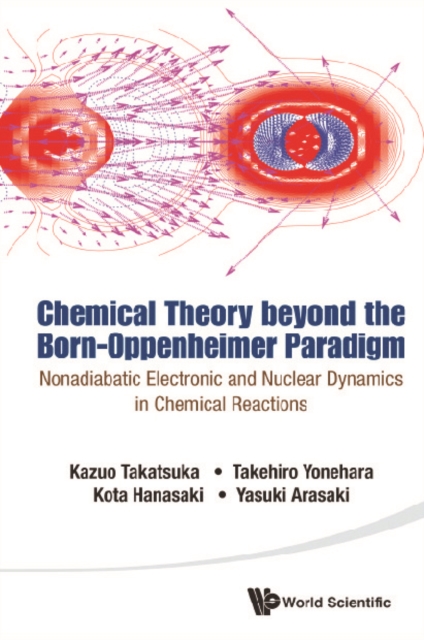
This unique volume offers a clear perspective of the relevant methodology relating to the chemical theory of the next generation beyond the Born-Oppenheimer paradigm.
As computational hardware continues to develop at a rapid pace, quantitative computations are playing an increasingly essential role in the study of biomolecular systems.
Hydrogels are an emerging area of interest in medicine as well as pharmaceutics, and their physico-chemical characterization is fundamental to their practical applications.
Conjugated polymer composites with high dielectric constants are being developed by the electronics industry in response to the need for power-grounded decoupling to secure the integrity of high-speed signals and to reduce electromagnetic interference.
This book bridges the gap between life sciences and physical sciences by providing several perspectives on cellular and molecular mechanics on a fundamental level.
This book consists of lectures presented by international authorities in the field, at a course on Oxidation Catalysis organized by the Dutch Research School in Catalysis at Rolduc in June 1994.
This volume contains contributions which are largely focused on strong coupling gauge theories and the search of theories beyond the standard model, as well as new aspects in hot and dense QCD - particularly in view of the LHC experiments and the lattice studies of conformal fixed point.
Specialists in the technical components of a synchrotron light source are usually well versed in their field and in the associated technical literature.
The workshop organized by the international centre for science and technology provided an occasion for researchers active both in homogeneous and heterogeneous catalysis to meet and look for common interpretations and a common language.
The Fourth International Conference on the Structure of Surfaces provides a forum for the report of new results and less the review of the status of surface structure and the relationship between surface and interface structure and physical or chemical properties of interest.
Combustion science in general and combustion chemistry in particular, have seen a resurgence of interest in recent years due to the importance of energy and pollution problems in modern society.
This book provides an in-depth understanding of the nature of surface states and, in particular, their relevance to the physics and chemistry of metallic surfaces.
This book highlights the latest experimental and theoretical developments in the field of femtochemistry, with papers describing the physics and chemistry of ultrafast processes in small molecules, complex molecular systems, clusters, biological systems, solids, matrices, liquids and at surfaces and interfaces.
This book of proceedings contains contributions of about 30 prominent scientists who were or are associated with the awardee, Prof J B Natowitz, and are working in the field of heavy-ion reactions.
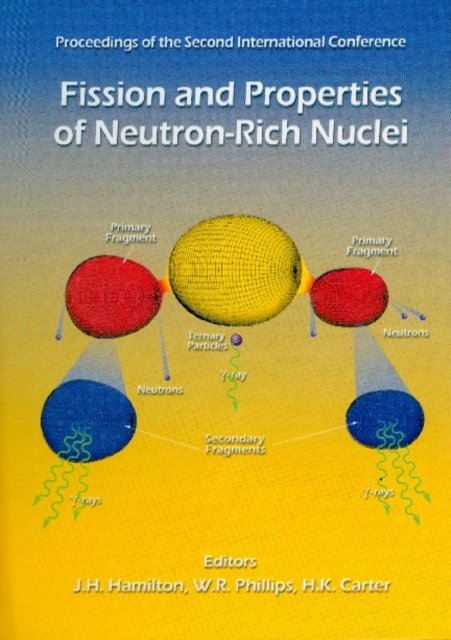
The Second International Conference on Fission and Properties of Neutron-Rich Nuclei continued the emphasis on fission models, fission processes, properties of neutron-rich nuclei and new directions.
Technologies for hazardous waste destruction (including nuclear, hospital and chemical waste) based on thermal plasma processes: state of the art and perspectives.
This volume concentrates on the controversy within the scientific community over how to explain, understand and describe the photophysics/photochemistry of this class of materials.
This first volume of this two-volume set deals with the important recent discovery of the photomagneton of electromagnetic radiation, a discovery which is fundamental in quantum field theory and in quantum mechanics in matter.
True deterministic chaos is characterized by unpredictable, apparently random motion in a dynamical system completely described by a deterministic dynamic law, usually a nonlinear differential equation, with no stochastic component.
This is the first book covering an interdisciplinary field between microwave spectroscopy of electron paramagnetic resonance (EPR) or electron spin resonance (ESR) and chronology science, radiation dosimetry and ESR (EPR) imaging in material sciences.
In view of the rapid growth in both experimental and theoretical studies of multiphoton processes and multiphoton spectroscopy of atoms, ions and molecules in many interdisciplinary fields, an Advanced Series that contains review papers readable not only to active researchers in these areas but also to those who are not experts in the field but intend to enter the field is very necessary.