This volume contains a range of topics such as the activation and manipulation of pyrroles, the synthesis of annelated pyrroles using acylation reactions and the synthesis of kainoids, a family of highly biologically active nitrogen heterocycles.
Advances in Quantum Chemistry presents surveys of current developments in this rapidly developing field that falls between the historically established areas of mathematics, physics, and chemistry.
Written by established authorities in the field, the comprehensive reviews combine descriptive chemistry and mechanistic insight and yield an understanding of how the chemistry drives the properties.
This volume presents a comprehensive review of key aspects of polyester film technology, ranging from first principles to practical applications Bringing together world-class experts to review the state-of-the-art of key materials and processing elements of polyester film technology, Polyester Films covers a wide range of topics with direct utility to students, practitioners, business managers and researchers, in academia and industry.
Evolution is nature's most fascinating process, the possibility given sufficient time to combine simple inorganic compounds to more and more complex biochemical compounds, which make up more and more complex organisms.
Spectroscopy and Modeling of Biomolecular Building Blocks presents an overview of recent advances in the intertwining of the following research fields: photon and electron spectroscopy, quantum chemistry, modelling and mass-spectrometry.
In the last couple of decades, high-performance electronic and optoelectronic devices based on semiconductor heterostructures have been required to obtain increasingly strict and well-defined performances, needing a detailed control, at the atomic level, of the structural composition of the buried interfaces.
The finding by Emil Fischer that glucose and fructose on treatment with phenylhydrazine gave the identical osazone led him to the elucidation of stereochemistry of carbohydrates.
The catalytic epoxidation of olefins plays an important role in the industrial production of several commodity compounds, as well as in the synthesis of many intermediates, fine chemicals, and pharmaceuticals.
Macromolecules in Solution and Brownian Relativity illustrates the recent picture of statistical physics of polymers and polymer solutions that emerges from some paradigms of contemporary science joint together.
Of the thousands of novel compounds that a drug discovery project team invents and that bind to the therapeutic target, typically only a fraction of these have sufficient ADME/Tox properties to become a drug product.
Capillary electrophoresis (CE) is a powerful analytical technique that is widely used in research and development and in quality control of pharmaceuticals.
Adsorption by Carbons covers the most significant aspects of adsorption by carbons, attempting to fill the existing gap between the fields of adsorption and carbonaceous materials.
A classic in the area of organic synthesis, Strategies and Tactics in Organic Synthesis provides a forum for investigators to discuss their approach to the science and art of organic.
This book is aimed at researchers who are working in a field of quasicrystals to provide a reference to recent developments and ideas in the field and also at graduate students, who intend to study quasicrystals, to provide introduction of ideas.
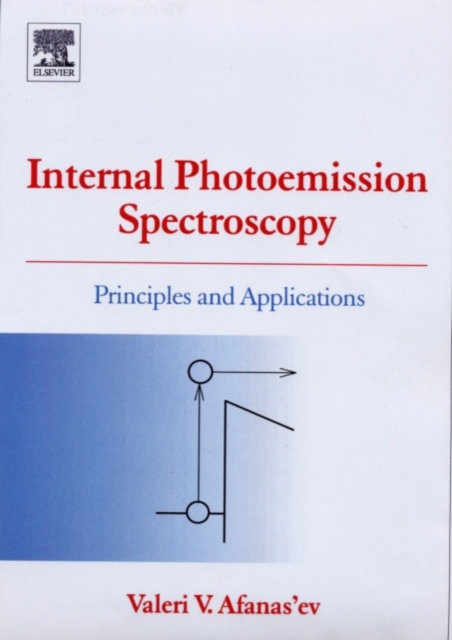
The monographic book addresses the basics of the charge carrier photoemission from one solid to another - the internal photoemission, (IPE) - and different spectroscopic applications of this phenomenon to solid state heterojunctions.
An expert resource for chemists using stereochemical analysis methods In Chiral Separations and Stereochemical Elucidation: Fundamentals, Methods, and Applications, a team of distinguished researchers delivers a robust and authoritative discussion of the theoretical fundamentals of chiral separation, the most commonly used chiral selectors, and stereochemical elucidation methods.
Crystallisable polymers represent a large share of the polymers used for manufacturing a wide variety of objects, and consequently have received continuous attention from scientists these past 60 years.
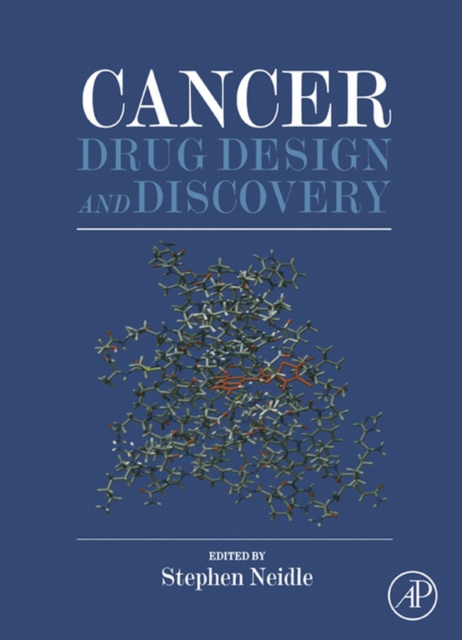
The ultimate source of information on the design of new anticancer agents, emphasizing small molecules, this newest work covers recent notable successes resulting from the human genome and cancer genomics projects.
Annual Reports in Medicinal Chemistry provides timely and critical reviews of important topics in medicinal chemistry together with an emphasis on emerging topics in the biological sciences, which are expected to provide the basis for entirely new future therapies.
This series is designed to provide a vehicle in which investigators, who have demonstrated a high degree of competence in some aspect of free radical chemistry, can present a particular area of interest.
This book is an undertaking of a pioneering work of uniting three vast fields of interfacial phenomena, rheology and fluid mechanics within the framework of solid-liquid two phase flow.
Almost all branches of chemistry and material science now interface with organometallic chemistry - the study of compounds containing carbon-metal bonds.
Since its inception in 1945, this serial has provided critical and integrating articles written by research specialists that integrate industrial, analytical, and technological aspects of biochemistry, organic chemistry, and instrumentation methodology in the study of carbohydrates.
The aim of this text is to provide reviews and monographs on topics involving molecular similarity, ranging from the fundamental physical properties underlying molecular behaviour to applications in industrially important fields such as pharmaceutical drug design and molecular engineering.