Advances in Quantum Chemistry presents surveys of current developments in this rapidly developing field that falls between the historically established areas of mathematics, physics, and chemistry.
Vaso-occlusive disorders including unstable angina, myocardial infarction, transient ischemic attacks, stroke and peripheral artery disease remain the major sources of morbidity and mortality in western civilization.
The purpose of this book is to bring together current scientific understanding of wetting behaviour that has been gained from theoretical models and quantitative experimental observations.
Beginning as chemical curiosities, carbenes are now solidly established as reactive intermediates with fascinating and productive research areas of their own.
Annual Reports in Organic Synthesis 2004 provides an organized annual review of synthetically useful information that proves beneficial to organic chemists, both specialists and nonspecialists in synthesis.
With the explosion of combinatorial solid-phase methods, access to information has become one of the main barriers facing a synthetic chemist who is contemplating a combinatorial approach to a medicinal chemistry problem.
A classic in the area of organic synthesis, Strategies and Tactics in Organic Synthesis provides a forum for investigators to discuss their approach to the science and art of organic synthesis.
This revised and updated Second Edition of the best-selling reference/text is essential reading for students and scientists who seek a thorough and practical introduction to the field of polymer spectroscopy.
Solid State Chemistry is a general textbook, composed for those with little background knowledge of the subject, but who wish to learn more about the various segments of solid state theory and technology.
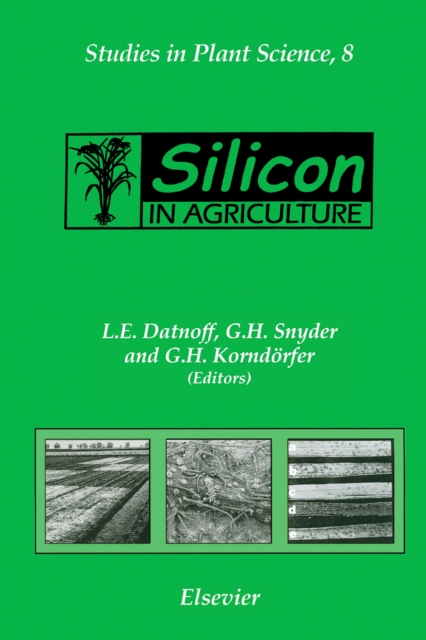
Presenting the first book to focus on the importance of silicon for plant health and soil productivity and on our current understanding of this element as it relates to agriculture.
Accidents involving reactive chemicals can often be prevented, or their effects alleviated, if those handling them have a sound knowledge both of their hazardous properties and of appropriate handling methods.
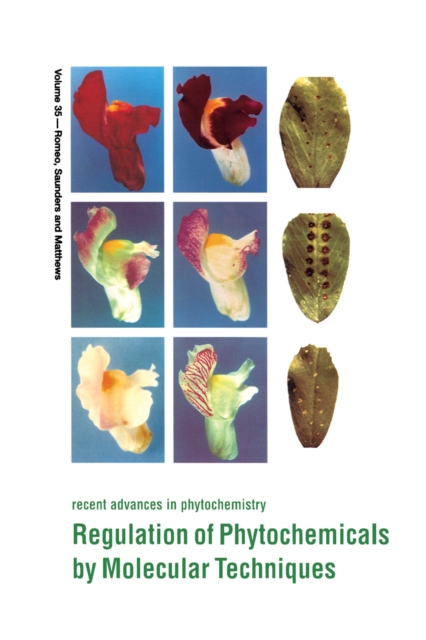
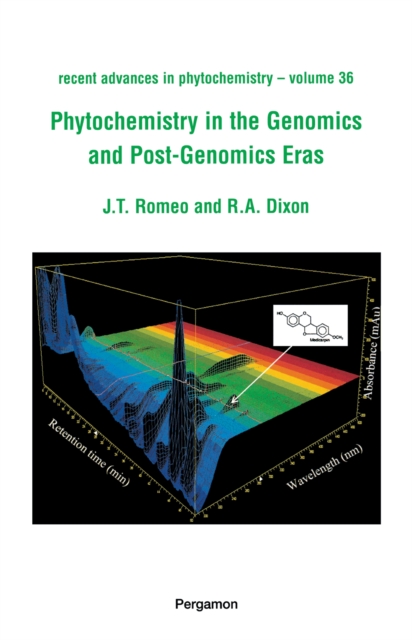
The papers assembled in this volume were originally presented at the joint meeting of the Phytochemical Society of North America and the Mid-Atlantic Plant Molecular Biology Society, in August 2000.
One of the first books devoted entirely to the subject of Raman microscopy, Raman Microscopy addresses issues of great interest to engineers working in Raman-microscope development and researchers concerned with areas ofapplication for this science.
To achieve successful solutions to the problems resulting from local, distant and global radioactive fallout after nuclear explosions and accidents and to achieve successful retrospective analyses of the radiation conditions from recent observations, certain information is needed: the distribution of the exposure dose rate in the atmosphere and in a country; the distribution of radionuclides in natural environments and the nuclide composition of the radioactive fallout; the features of formation of the aerosol particle-carriers of the radioactivity and of the nuclide distribution of the particles of different sizes formed under different conditions; the processes involved in the migration of radioactive products in different zones and environments; the external and internal effects of nuclear radiation on human beings.
This is the sixteenth annual volume of Progress in Heterocyclic Chemistry, and covers the literature published during 2003 on most of the important heterocyclic ring systems.
This volume of Progress in Heterocyclic Chemistry(PHC) is the thirteenth annual review of the literature, covering the work published on important heterocyclic ring systems during 2000.
This volume of Progress in Heterocyclic Chemistry (PHC) is the twelfth annual review of the literature, covering the work published on most of the important heterocyclic ring systems during 1999, with inclusions of earlier material as appropriate.
This volume of Progress in Heterocyclic Chemistry (PHC) is the eleventh annual review of the literature, covering the work published on most of the important heterocyclic ring systems during 1998, with inclusions of earlier materials as appropriate.
"e;Spillover and Mobility of Species and Solid Surfaces"e; collects the papers which were presented at the Fifth International Conference Spillover, either as oral or poster contributions, as well as the summaries of the invited lectures.
Designed for easy use by both beginning and experienced protein crystallographers, the second edition of Practical Protein Crystallography is an essential handbook for any scientist interested in solving a protein structure.
Poroelasticity is a continuum theory for the analysis of a porous media consisting of an elastic matrix containing interconnected fluid-saturated pores.
This laboratory manual covers important techniques for polymer synthesis and characterization, and provides newcomers with a comprehensive introduction to the basic principles of highlighted techniques.
Drug Development for Gene Therapy Industry-centric perspective on translational and bioanalytical challenges and best practices for gene therapies Drug Development for Gene Therapy focuses on the translational and bioanalytical challenges and best practices for gene therapy modalities, presenting a significant body of data, including information related to safety and efficacy, necessary to advance through the development pipeline into clinical use.
Drug Development for Gene Therapy Industry-centric perspective on translational and bioanalytical challenges and best practices for gene therapies Drug Development for Gene Therapy focuses on the translational and bioanalytical challenges and best practices for gene therapy modalities, presenting a significant body of data, including information related to safety and efficacy, necessary to advance through the development pipeline into clinical use.