This book constitutes the thoroughly refereed post-conference proceedings of the 9th International Conference on Numerical Methods and Applications, NMA 2018, held in Borovets, Bulgaria, in August 2018.
This book constitutes the proceedings of the 13th International Conference and Workshop on Algorithms and Computation, WALCOM 2019, held in Guwahati, India, in February/ March 2019.
This book constitutes the refereed proceedings of the 11th International Workshop on Hybrid Metaheuristics, HM 2019, held in Concepcion, Chile, in January 2019.
This volume gathers papers presented at the Workshop on Computational Diffusion MRI (CDMRI'18), which was held under the auspices of the International Conference on Medical Image Computing and Computer Assisted Intervention in Granada, Spain on September 20, 2018.
This book describes a recent effort combining interdisciplinary expertise within the Collaborative Research Centre "e;Energy transfers in atmosphere and ocean"e; (TRR-181), which was funded by the German Research Foundation (DFG).
This book constitutes the thoroughly refereed post-conference proceedings of the 12th International Conference on Learning and Intelligent Optimization, LION 12, held in Kalamata, Greece, in June 2018.
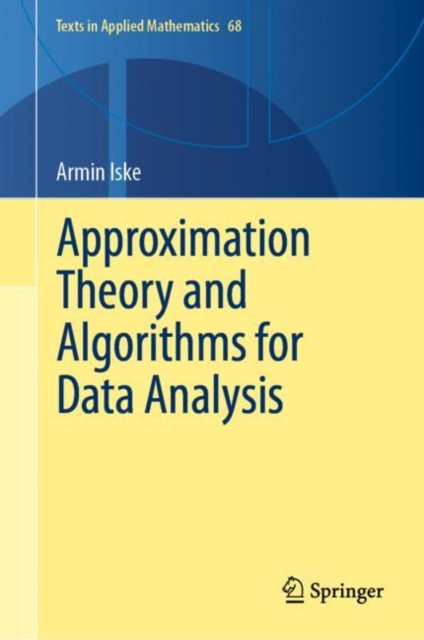
This textbook offers an accessible introduction to the theory and numerics of approximation methods, combining classical topics of approximation with recent advances in mathematical signal processing, and adopting a constructive approach, in which the development of numerical algorithms for data analysis plays an important role.
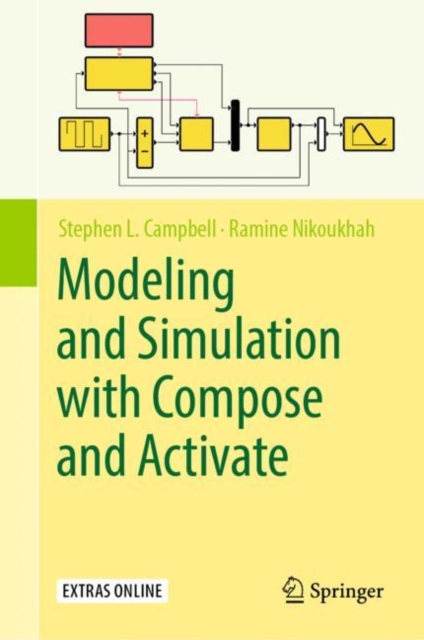
This book provides a tutorial in the use of Altair Compose and Altair Activate, software packages that provide system modeling and simulation facilities.
This book constitutes the thoroughly refereed workshop post-proceedings of the 16th International Workshop on Approximation and Online Algorithms, WAOA 2018, held in Helsinki, Finland, in August 2018 as part of ALGO 2018.
The conference proceeding LNCS 11346 constitutes the refereed proceedings of the 12th International Conference on Combinatorial Optimization and Applications, COCOA 2018, held in Atlanta, GA, USA, in December 2018.
This volume constitutes the proceedings of the 12th International Conference on Algorithmic Aspects in Information and Management, AAIM 2018, held in Dallas, Texas, USA, in December 2018.
This book offers a unified presentation of Fourier theory and corresponding algorithms emerging from new developments in function approximation using Fourier methods.
This book gathers selected contributions presented at the INdAM Meeting Structured Matrices in Numerical Linear Algebra: Analysis, Algorithms and Applications, held in Cortona, Italy on September 4-8, 2017.
This self-contained book addresses the three most popular computational methods in CAE (finite elements, boundary elements, collocation methods) in a unified way, bridging the gap between CAD and CAE.
This volume encompasses prototypical, innovative and emerging examples and benchmarks of Differential-Algebraic Equations (DAEs) and their applications, such as electrical networks, chemical reactors, multibody systems, and multiphysics models, to name but a few.
This book offers a user friendly, hands-on, and systematic introduction to applied and computational harmonic analysis: to Fourier analysis, signal processing and wavelets; and to their interplay and applications.
This book offers a thorough guide starting from fundamental functional analysis leading to the coupling of Stokes and Darcy equations, including numerical analysis and scientific computing.
This book highlights the latest advances in stochastic processes, probability theory, mathematical statistics, engineering mathematics and algebraic structures, focusing on mathematical models, structures, concepts, problems and computational methods and algorithms important in modern technology, engineering and natural sciences applications.
This book constitutes the refereed joint proceedings of the First International Workshop on Machine Learning in Clinical Neuroimaging, MLCN 2018, the First International Workshop on Deep Learning Fails, DLF 2018, and the First International Workshop on Interpretability of Machine Intelligence in Medical Image Computing, iMIMIC 2018, held in conjunction with the 21st International Conference on Medical Imaging and Computer-Assisted Intervention, MICCAI 2018, in Granada, Spain, in September 2018.
This book focuses on the spatio-temporal patterns generated by two classes of mathematical models (of hyperbolic and kinetic types) that have been increasingly used in the past several years to describe various biological and ecological communities.
Based on the authors' research experience, this two-volume reference textbook focuses on the theory of generalized locally Toeplitz sequences and its applications.
This book constitutes the proceedings of the 17th International Conference on Relational and Algebraic Methods in Computer Science, RAMiCS 2018, held in Groningen, The Netherlands, in October/November 2018.
This work presents recent mathematical methods in the area of optimal control with a particular emphasis on the computational aspects and applications.
This book offers a user friendly, hands-on, and systematic introduction to applied and computational harmonic analysis: to Fourier analysis, signal processing and wavelets; and to their interplay and applications.
This thesis is a tour-de-force combination of analytic and computational results clarifying and resolving important questions about the nature of quantum phase transitions in one- and two-dimensional magnetic systems.
The objective of this book is to navigate beginning graduate students in mathematics and engineering through a mature field of multiscale problems in homogenization theory and to provide an idea of its broad scope.
This book constitutes the refereed proceedings of the 11th Brazilian Symposium on Bioinformatics, BSB 2018, held in Rio de Janeiro, Brazil, in October/November 2018.
The Abel Symposia volume at hand contains a collection of high-quality articles written by the world's leading experts, and addressing all mathematicians interested in advances in deterministic and stochastic dynamical systems, numerical analysis, and control theory.
This book provides essential lecture notes on solving large linear saddle-point systems, which arise in a wide range of applications and often pose computational challenges in science and engineering.
This volume resulted from presentations given at the international "e;Brainstorming Workshop on New Developments in Discrete Mechanics, Geometric Integration and Lie-Butcher Series"e;, that took place at the Instituto de Ciencias Matematicas (ICMAT) in Madrid, Spain.
Based on the third International Conference on Symmetries, Differential Equations and Applications (SDEA-III), this proceedings volume highlights recent important advances and trends in the applications of Lie groups, including a broad area of topics in interdisciplinary studies, ranging from mathematical physics to financial mathematics.
This volume is the first of two containing selected papers from the International Conference on Advances in Mathematical Sciences (ICAMS), held at the Vellore Institute of Technology in December 2017.
This book constitutes the refereed proceedings of the 9th International Conference on Computational Logistics, ICCL 2018, held in Vietri sul Mare, Italy, in October 2018.
This book constitutes revised selected papers from the 21st International Conference on Applications of Declarative Programming and Knowledge Management, INAP 2017, the 31st Workshop on Logic Programming, WLP 2017, and the 25th Workshop on Functional and (Constraint) Logic Programming, WFLP 2017.
This volume, which brings together research presented at the IUTAM Symposium Intelligent Multibody Systems - Dynamics, Control, Simulation, held at Sozopol, Bulgaria, September 11-15, 2017, focuses on preliminary virtual simulation of the dynamics of motion, and analysis of loading of the devices and of their behaviour caused by the working conditions and natural phenomena.
This book presents appealing contributions on computational intelligence and mathematics, connecting both areas and offering solutions to a number of interesting, real-world problems.
This book gathers the contributions of the international conference "e;Optimization and Decision Science"e; (ODS2018), which was held at the Hotel Villa Diodoro, Taormina (Messina), Italy on September 10 to 13, 2018, and was organized by AIRO, the Italian Operations Research Society, in cooperation with the DMI (Department of Mathematics and Computer Science) of the University of Catania (Italy).
This work gathers a selection of outstanding papers presented at the 25th Conference on Differential Equations and Applications / 15th Conference on Applied Mathematics, held in Cartagena, Spain, in June 2017.
This book constitutes the refereed proceedings of the 12th International Conference on Reachability Problems, RP 2018, held in Marseille, France, in September 2018.