Discrete Event Systems: Analysis and Control is the proceedings of WODES2000 (the 5th Workshop on Discrete Event Systems, held in Ghent, Belgium, on August 21-23, 2000).
Error Coding for Engineers provides a useful tool for practicing engineers, students, and researchers, focusing on the applied rather than the theoretical.
Convexity of sets in linear spaces, and concavity and convexity of functions, lie at the root of beautiful theoretical results that are at the same time extremely useful in the analysis and solution of optimization problems, including problems of either single objective or multiple objectives.
Foreword by Dieter Jungnickel Finite Commutative Rings and their Applications answers a need for an introductory reference in finite commutative ring theory as applied to information and communication theory.
Mathematical Properties of Sequences and Other Combinatorial Structures is an excellent reference for both professional and academic researchers working in telecommunications, cryptography, signal processing, discrete mathematics, and information theory.
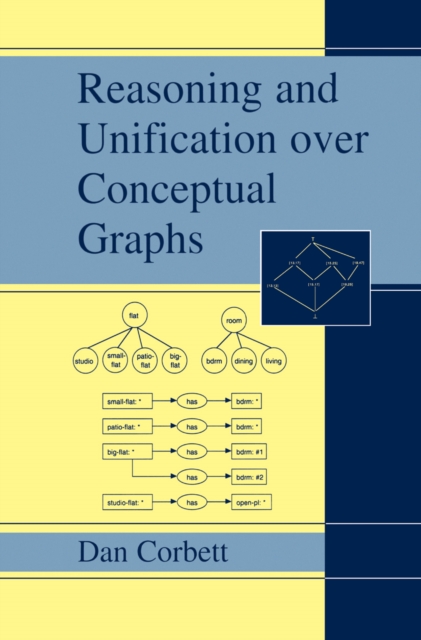
Reasoning and Unification over Conceptual Graphs is an exploration of automated reasoning and resolution in the expanding field of Conceptual Structures.
This monograph gives a short introduction to the relevant modern parts of discrete geometry, in addition to leading the reader to the frontiers of geometric research on sphere arrangements.
This volume contains two types of papers-a selection of contributions from the "e;Second International Conference in Network Analysis"e; held in Nizhny Novgorod on May 7-9, 2012, and papers submitted to an "e;open call for papers"e; reflecting the activities of LATNA at the Higher School for Economics.
This is the most comprehensive survey of the mathematical life of the legendary Paul Erdos (1913-1996), one of the most versatile and prolific mathematicians of our time.
Asymptotic Geometric Analysis is concerned with the geometric and linear properties of finite dimensional objects, normed spaces, and convex bodies, especially with the asymptotics of their various quantitative parameters as the dimension tends to infinity.
Written by one of the foremost experts in the field, Algebraic Combinatorics is a unique undergraduate textbook that will prepare the next generation of pure and applied mathematicians.
Digital Functions and Data Reconstruction: Digital-Discrete Methods provides a solid foundation to the theory of digital functions and its applications to image data analysis, digital object deformation, and data reconstruction.
Lectures on Finitely Generated Solvable Groups are based on the "e;Topics in Group Theory"e; course focused on finitely generated solvable groups that was given by Gilbert G.
Traditionally, Lorentzian geometry has been used as a necessary tool to understand general relativity, as well as to explore new genuine geometric behaviors, far from classical Riemannian techniques.
As a student moves from basic calculus courses into upper-division courses in linear and abstract algebra, real and complex analysis, number theory, topology, and so on, a "e;bridge"e; course can help ensure a smooth transition.
The study of combinatorial block designs is a vibrant area of combinatorial mathematics with connections to finite geometries, graph theory, coding theory and statistics.
The Kepler conjecture, one of geometry's oldest unsolved problems, was formulated in 1611 by Johannes Kepler and mentioned by Hilbert in his famous 1900 problem list.
Partitions, q-Series, and Modular Forms contains a collection of research and survey papers that grew out of a Conference on Partitions, q-Series and Modular Forms at the University of Florida, Gainesville in March 2008.
The main object of this book is to reorient and revitalize classical geometry in a way that will bring it closer to the mainstream of contemporary mathematics.
This IMA Volume in Mathematics and its Applications Coding Theory and Design Theory Part I: Coding Theory is based on the proceedings of a workshop which was an integral part of the 1987-88 IMA program on APPLIED COMBINATORICS.
Computer science seeks to provide a scientific basis for the study of inform a- tion processing, the solution of problems by algorithms, and the design and programming of computers.