This book looks at graph theory as it connects to linear algebra, parallel computing, data structures, geometry, and both numerical and discrete algorithms.
Techniques and principles of minimax theory play a key role in many areas of research, including game theory, optimization, and computational complexity.
Although the monograph Progress in Optimization I: Contributions from Aus- tralasia grew from the idea of publishing a proceedings of the Fourth Optimiza- tion Day, held in July 1997 at the Royal Melbourne Institute of Technology, the focus soon changed to a refereed volume in optimization.
Designs and Finite Geometries brings together in one place important contributions and up-to-date research results in this important area of mathematics.
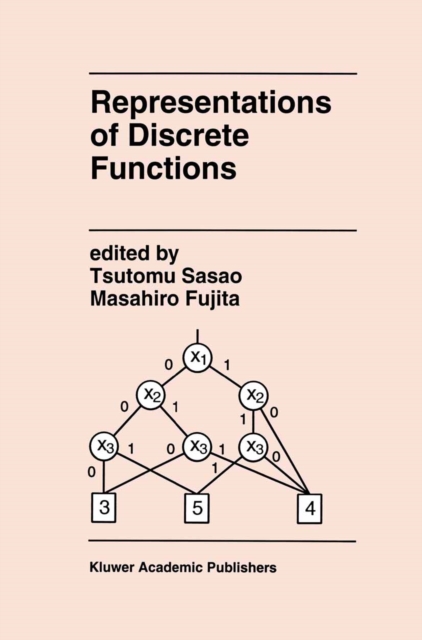
Representations of Discrete Functions is an edited volume containing 13 chapter contributions from leading researchers with a focus on the latest research results.
With the rapid growth of bandwidth demand from network users and the advances in optical technologies, optical networks with multiterabits- per-second capacity has received significant interest from both researchers and practitioners.
The analysis of orthogonal polynomials associated with general weights was a major theme in classical analysis in the twentieth century, and undoubtedly will continue to grow in importance in the future.
It is not a large overstatement to claim that mathematics has traditionally arisen from attempts to understand quite concrete events in the physical world.
From the reviews: "e;Bela Bollobas introductory course on graph theory deserves to be considered as a watershed in the development of this theory as a serious academic subject.
These are the proceedings of the conference "e;Symbolic Computation, Number Theory, Special Functions, Physics and Combinatorics"e; held at the Department of Mathematics, University of Florida, Gainesville, from November 11 to 13, 1999.
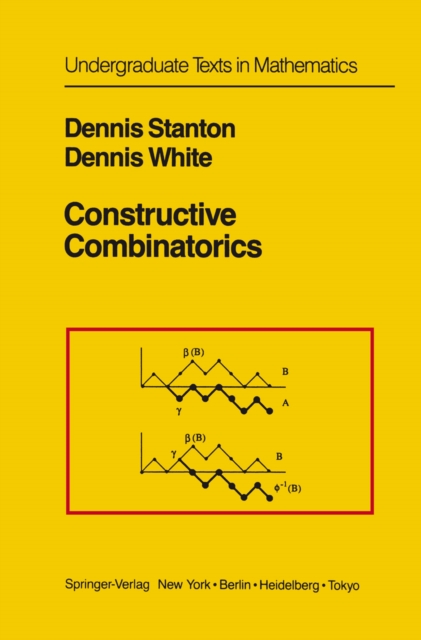
The notes that eventually became this book were written between 1977 and 1985 for the course called Constructive Combinatorics at the University of Minnesota.
Intended for first- or second-year undergraduates, this introduction to discrete mathematics covers the usual topics of such a course, but applies constructivist principles that promote - indeed, require - active participation by the student.
Algorithms for Games aims to provide a concrete example of the programming of a two-person game with complete information, and to demonstrate some of the methods of solutions; to show the reader that it is profitable not to fear a search, but rather to undertake it in a rational fashion, make a proper estimate of the dimensions of the "e;catastrophe"e;, and use all suitable means to keep it down to a reasonable size.
Two of the most exciting topics of current research in stochastic networks are the complementary subjects of stability and rare events - roughly, the former deals with the typical behavior of networks, and the latter with significant atypical behavior.
In April of 1996 an array of mathematicians converged on Cambridge, Massachusetts, for the Rotafest and Umbral Calculus Workshop, two con- ferences celebrating Gian-Carlo Rota's 64th birthday.
Combinatory logic started as a programme in the foundation of mathematics and in an historical context at a time when such endeavours attracted the most gifted among the mathematicians.
Mathematical Foundations of Computer Science, Volume I is the first of two volumes presenting topics from mathematics (mostly discrete mathematics) which have proven relevant and useful to computer science.
[UPDATED 6/6/2000] Group actions on trees furnish a unified geometric way of recasting the chapter of combinatorial group theory dealing with free groups, amalgams, and HNN extensions.
This volume contains papers which are based primarily on talks given at an inter- national conference on Algorithmic Problems in Groups and Semigroups held at the University of Nebraska-Lincoln from May ll-May 16, 1998.
Taking into account the various criss-crossing among mathematical subject, Physical Combinatorics presents new results and exciting ideas from three viewpoints; representation theory, integrable models, and combinatorics.
This IMA Volume in Mathematics and its Applications TOPOLOGY AND GEOMETRY IN POLYMER SCIENCE is based on the proceedings of a very successful one-week workshop with the same title.
Goals of the Book Overthelast thirty yearsthere has been arevolutionindiagnostic radiology as a result oftheemergenceofcomputerized tomography (CT), which is the process of obtaining the density distribution within the human body from multiple x-ray projections.
This IMA Volume in Mathematics and its Applications GRID GENERATION AND ADAPTIVE ALGORITHMS is based on the proceedings of a workshop with the same title.