The articles collected in this volume represent the contributions presented at the IMA workshop on "e;Dynamics of Algorithms"e; which took place in November 1997.
The articles in this volume present the state of the art in a variety of areas of discrete probability, including random walks on finite and infinite graphs, random trees, renewal sequences, Stein's method for normal approximation and Kohonen-type self-organizing maps.
The time has now come when graph theory should be part of the education of every serious student of mathematics and computer science, both for its own sake and to enhance the appreciation of mathematics as a whole.
Over the last 30 years graph theory has evolved into an important math- ematical tool in the solution of a wide variety of problems in many areas of society.
Discrete probability theory and the theory of algorithms have become close partners over the last ten years, though the roots of this partnership go back much longer.
Structured adaptive mesh refinement (SAMR) methods have matured over the past 20 years and are now the method of choice for certain difficult problems, such as compressible flow.
A transfinite graph or electrical network of the first rank is obtained conceptually by connecting conventionally infinite graphs and networks together at their infinite extremities.
Developments in mathematical physics during the second half of the 20th century influenced a number of mathematical areas, among the more significant being representation theory, differential equations, combinatorics, and algebraic geometry.
This work is an introduction to the basic tools of the theory of (partially) ordered sets such as visualization via diagrams, subsets, homomorphisms, important order-theoretical constructions, and classes of ordered sets.
Graph theory is a very popular area of discrete mathematics with not only numerous theoretical developments, but also countless applications to prac- tical problems.
Computer and Information Security Handbook, Fourth Edition offers deep coverage of an extremely wide range of issues in computer and cybersecurity theory, along with applications and best practices, offering the latest insights into established and emerging technologies and advancements.
Lagrange and penalty function methods provide a powerful approach, both as a theoretical tool and a computational vehicle, for the study of constrained optimization problems.
In the spectrum of mathematics, graph theory which studies a mathe- matical structure on a set of elements with a binary relation, as a recognized discipline, is a relative newcomer.
The computation of invariants of algebraic number fields such as integral bases, discriminants, prime decompositions, ideal class groups, and unit groups is important both for its own sake and for its numerous applications, for example, to the solution of Diophantine equations.
A Course in Topological Combinatorics is the first undergraduate textbook on the field of topological combinatorics, a subject that has become an active and innovative research area in mathematics over the last thirty years with growing applications in math, computer science, and other applied areas.
A study of topology and geometry, beginning with a comprehensible account of the extraordinary and rather mysterious impact of mathematical physics, and especially gauge theory, on the study of the geometry and topology of manifolds.
"e;Proofs and Fundamentals: A First Course in Abstract Mathematics"e; 2nd edition is designed as a "e;transition"e; course to introduce undergraduates to the writing of rigorous mathematical proofs, and to such fundamental mathematical ideas as sets, functions, relations, and cardinality.
Emphasizes a Problem Solving ApproachA first course in combinatoricsCompletely revised, How to Count: An Introduction to Combinatorics, Second Edition shows how to solve numerous classic and other interesting combinatorial problems.
Originally written to define the relation between the theories of transfinite numbers and mathematical games, the resulting work is a mathematically sophisticated but eminently enjoyable guide to game theory.
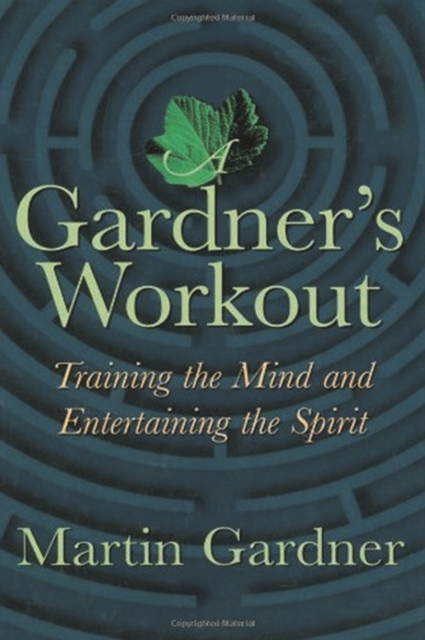
For many decades, Martin Gardner, the Grand Master of mathematical puzzles, has provided the tools and projects to furnish our all-too-sluggish minds with an athletic workout.
Taking an approach to the subject that is suitable for a broad readership, Discrete Mathematics: Proofs, Structures, and Applications, Third Edition provides a rigorous yet accessible exposition of discrete mathematics, including the core mathematical foundation of computer science.
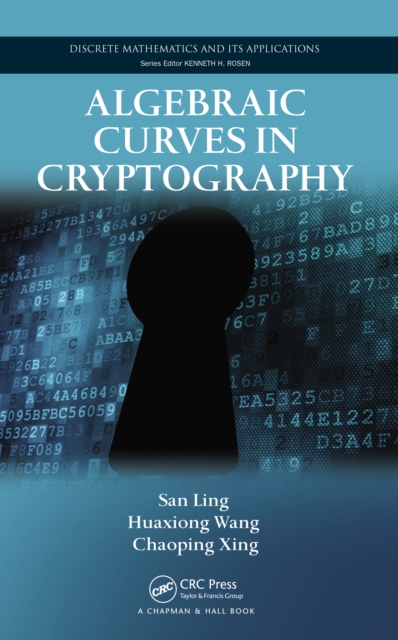
The reach of algebraic curves in cryptography goes far beyond elliptic curve or public key cryptography yet these other application areas have not been systematically covered in the literature.
Tsutomu Sasao - Kyushu Institute of Technology, Japan The material covered in this book is quite unique especially for p- ple who are reading English, since such material is quite hard to ?
The problem of counting the number of self-avoiding polygons on a square grid, - therbytheirperimeterortheirenclosedarea,is aproblemthatis soeasytostate that, at ?
Stochastic geometry, based on current developments in geometry, probability and measure theory, makes possible modeling of two- and three-dimensional random objects with interactions as they appear in the microstructure of materials, biological tissues, macroscopically in soil, geological sediments etc.
This is a comprehensive overview of the basics of fuzzy control, which also brings together some recent research results in soft computing, in particular fuzzy logic using genetic algorithms and neural networks.
Real-Time Applications with Stochastic Task Execution Times presents three approaches to the analysis of the deadline miss ratio of applications with stochastic task execution times.