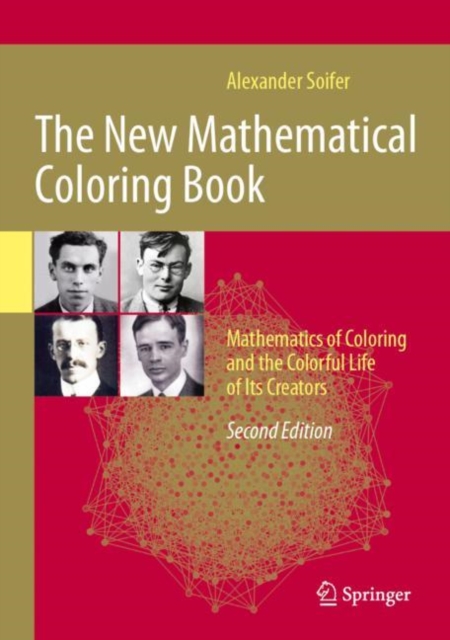
The New Mathematical Coloring Book (TNMCB) includes striking results of the past 15-year renaissance that produced new approaches, advances, and solutions to problems from the first edition.
The New Mathematical Coloring Book (TNMCB) includes striking results of the past 15-year renaissance that produced new approaches, advances, and solutions to problems from the first edition.
Thales the Measurer offers a comprehensive and iconoclastic account of Thales of Miletus, considering the full extent of our evidence to build a new picture of his intellectual interests and activity.
Thales the Measurer offers a comprehensive and iconoclastic account of Thales of Miletus, considering the full extent of our evidence to build a new picture of his intellectual interests and activity.
The studies brought together in this second collection of articles by Paul Kunitzsch continue the lines of research evident in his previous volume (The Arabs and the Stars).
This book offers a plurality of perspectives on the historical origins of logicism and on contemporary developments of logicist insights in philosophy of mathematics.
This book offers a plurality of perspectives on the historical origins of logicism and on contemporary developments of logicist insights in philosophy of mathematics.
The development of a coherent, cohesive visual system of mathematics brought about a seminal shift in approaches towards abstract thinking in western Europe.
The development of a coherent, cohesive visual system of mathematics brought about a seminal shift in approaches towards abstract thinking in western Europe.
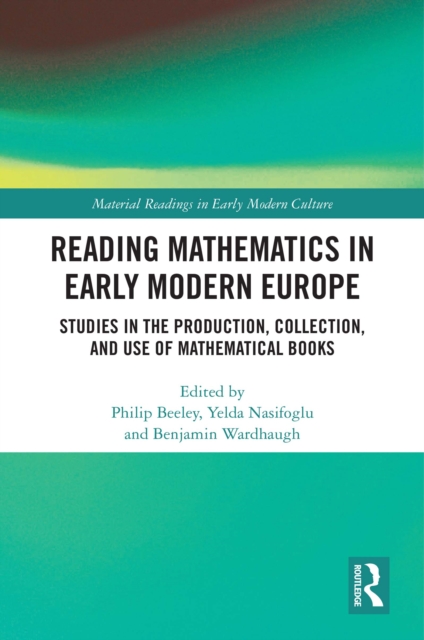
Libraries and archives contain many thousands of early modern mathematical books, of which almost equally many bear readers' marks, ranging from deliberate annotations and accidental blots to corrections and underlinings.
Libraries and archives contain many thousands of early modern mathematical books, of which almost equally many bear readers' marks, ranging from deliberate annotations and accidental blots to corrections and underlinings.
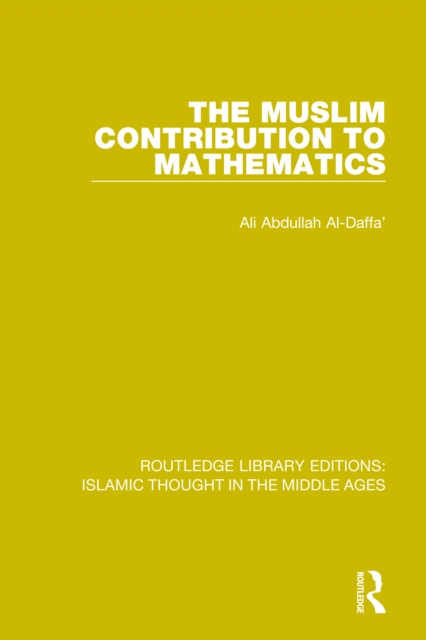
This book, first published in 1977, discusses the Muslim contribution to mathematics during the golden age of Muslim learning from the seventh to the thirteenth century.
This book, first published in 1977, discusses the Muslim contribution to mathematics during the golden age of Muslim learning from the seventh to the thirteenth century.
This book presents eight papers about important historiographical issues as debated in the history of science in Islamicate societies, the history of science and philosophy of medieval Latin Europe and the history of mathematics as an academic discipline.
Sofia Kovalevskaya was a brilliant and determined young Russian woman of the 19th century who wanted to become a mathematician and who succeeded, in often difficult circumstances, in becoming arguably the first woman to have a professional university career in the way we understand it today.
Indiscrete Thoughts gives a glimpse into a world that has seldom been described that of science and technology as seen through the eyes of a mathematician.
This book presents contributions of mathematicians covering topics from ancient India, placing them in the broader context of the history of mathematics.