by Ivor Grattan-Guinness One of the distortions in most kinds of history is an imbalance between the study devoted to major figures and to lesser ones, concerning both achievements and influence: the Great Ones may be studied to death while the others are overly ignored and thereby remain underrated.
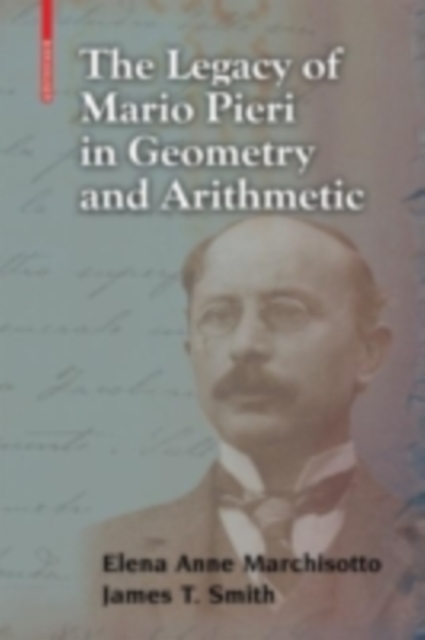
The Italian mathematician Mario Pieri (1860-1913) played a major role in the development of algebraic geometry and foundations of mathematics around the turn of the twentieth century.
This book traces the history of approximation theory from Leonhard Euler's cartographic investigations at the end of the 18th century to the early 20th century work of Sergei Bernstein defining a new branch of function theory.
In A Total Science, Jean-Guy Prevost charts how Italian statistics emerged as a full-fledged discipline, giving rise to a network of university chairs, journals, and other institutions.
This lively collection of lectures presented at the symposium by prominent scholars was collected and edited by Marcia Stayer with the assistance of Boris Castel.
How playwrights from Alfred Jarry and Samuel Beckett to Tom Stoppard and Simon McBurney brought the power of mathematics to life on the stageThe discovery of alternate geometries, paradoxes of the infinite, incompleteness, and chaos theory revealed that, despite its reputation for certainty, mathematical truth is not immutable, perfect, or even perfectible.
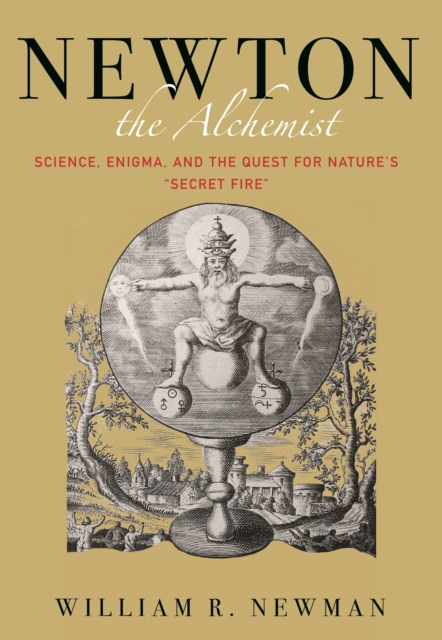
A book that finally demystifies Newton's experiments in alchemyWhen Isaac Newton's alchemical papers surfaced at a Sotheby's auction in 1936, the quantity and seeming incoherence of the manuscripts were shocking.
A meticulously researched history on the development of American mathematics in the three decades following World War IAs the Roaring Twenties lurched into the Great Depression, to be followed by the scourge of Nazi Germany and World War II, American mathematicians pursued their research, positioned themselves collectively within American science, and rose to global mathematical hegemony.
An engrossing look at the history and importance of a centuries-old but still unanswered math problemFor centuries, mathematicians the world over have tried, and failed, to solve the zeta-3 problem.
Fifty years ago when Jacques Hadamard set out to explore how mathematicians invent new ideas, he considered the creative experiences of some of the greatest thinkers of his generation, such as George Polya, Claude Levi-Strauss, and Albert Einstein.
An essential work on the origins of statisticsThe Rise of Statistical Thinking, 1820-1900 explores the history of statistics from the field's origins in the nineteenth century through to the factors that produced the burst of modern statistical innovation in the early twentieth century.
How a simple equation reshaped mathematicsLeonhard Euler's polyhedron formula describes the structure of many objects-from soccer balls and gemstones to Buckminster Fuller's buildings and giant all-carbon molecules.
The genesis of the digital idea and why it transformed civilizationA few short decades ago, we were informed by the smooth signals of analog television and radio; we communicated using our analog telephones; and we even computed with analog computers.
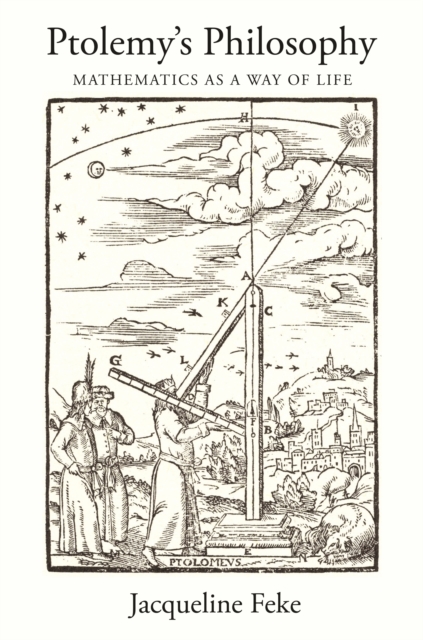
A stimulating intellectual history of Ptolemy's philosophy and his conception of a world in which mathematics reigns supremeThe Greco-Roman mathematician Claudius Ptolemy is one of the most significant figures in the history of science.
A book that finally demystifies Newton's experiments in alchemyWhen Isaac Newton's alchemical papers surfaced at a Sotheby's auction in 1936, the quantity and seeming incoherence of the manuscripts were shocking.
A stimulating intellectual history of Ptolemy's philosophy and his conception of a world in which mathematics reigns supremeThe Greco-Roman mathematician Claudius Ptolemy is one of the most significant figures in the history of science.
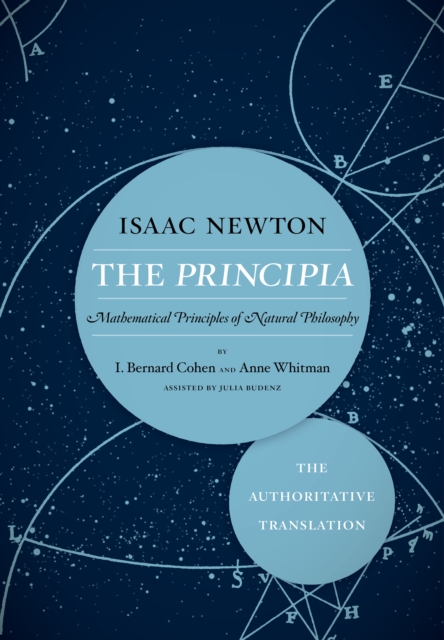
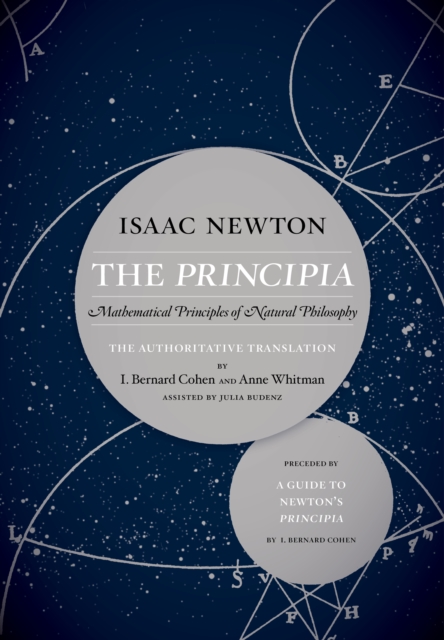
In his monumental 1687 work, Philosophiae Naturalis Principia Mathematica, known familiarly as thePrincipia, Isaac Newton laid out in mathematical terms the principles of time, force, and motion that have guided the development of modern physical science.
In his monumental 1687 work,Philosophiae Naturalis Principia Mathematica, known familiarly as thePrincipia, Isaac Newton laid out in mathematical terms the principles of time, force, and motion that have guided the development of modern physical science.
In his monumental 1687 work, Philosophiae Naturalis Principia Mathematica, known familiarly as thePrincipia, Isaac Newton laid out in mathematical terms the principles of time, force, and motion that have guided the development of modern physical science.
An engrossing look at the history and importance of a centuries-old but still unanswered math problemFor centuries, mathematicians the world over have tried, and failed, to solve the zeta-3 problem.
An almost entirely self-taught mathematical genius, George Green (1793 1841) is best known for Green's theorem, which is used in almost all computer codes that solve partial differential equations.
The numbers that we call Arabic are so familiar throughout Europe and the Americas that it can be difficult to realize that their general acceptance in commercial transactions is a matter of only the last four centuries and they still remain unknown in parts of the world.
More than a history of mathematics, this lively book traces mathematical ideas and processes to their sources, stressing the methods used by the masters of the ancient world.
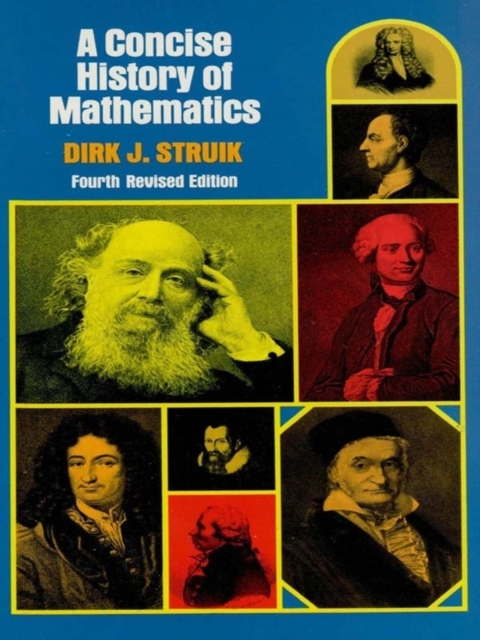
This compact, well-written history first published in 1948, and now in its fourth revised edition describes the main trends in the development of all fields of mathematics from the first available records to the middle of the 20th century.
WILEY-INTERSCIENCE PAPERBACK SERIES The Wiley-Interscience Paperback Series consists of selected books that have been made more accessible to consumers in an effort to increase global appeal and general circulation.
The updated new edition of the classic and comprehensive guide to the history of mathematics For more than forty years, A History of Mathematics has been the reference of choice for those looking to learn about the fascinating history of humankind s relationship with numbers, shapes, and patterns.
The updated new edition of the classic and comprehensive guide to the history of mathematics For more than forty years, A History of Mathematics has been the reference of choice for those looking to learn about the fascinating history of humankind s relationship with numbers, shapes, and patterns.
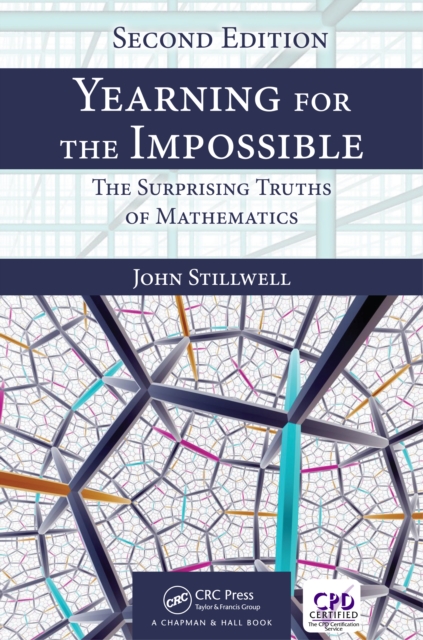
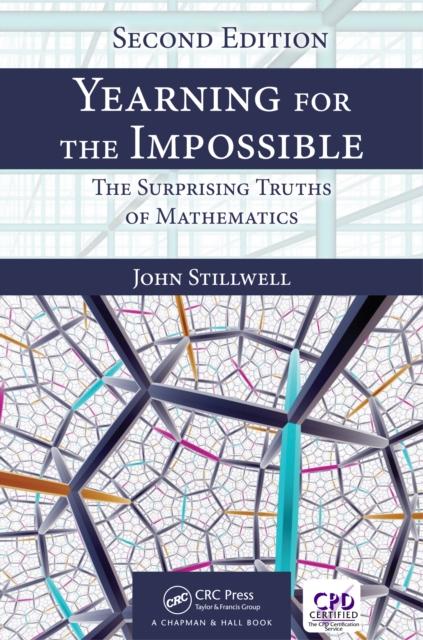
Yearning for the Impossible: The Surprising Truth of Mathematics, Second Edition explores the history of mathematics from the perspective of the creative tension between common sense and the "e;impossible"e; as the author follows the discovery or invention of new concepts that have marked mathematical progress.
Yearning for the Impossible: The Surprising Truth of Mathematics, Second Edition explores the history of mathematics from the perspective of the creative tension between common sense and the "e;impossible"e; as the author follows the discovery or invention of new concepts that have marked mathematical progress.
Published in 1938: The new volume presents a full and profusely illustrated account of progress made during the eighteenth century in Mathematics, Mechanics, Astronomy, Physics, Meteorology, Geography, Chemistry, Biology, Medicine, Psychology, Demography, Economics, Philosophy, and Technology.
Published in 1938: The new volume presents a full and profusely illustrated account of progress made during the eighteenth century in Mathematics, Mechanics, Astronomy, Physics, Meteorology, Geography, Chemistry, Biology, Medicine, Psychology, Demography, Economics, Philosophy, and Technology.