This volume is based on the talks given at the Workshop on Infinity and Truth held at the Institute for Mathematical Sciences, National University of Singapore, from 25 to 29 July 2011.
This book, for a first undergraduate course in Discrete Mathematics, systematically exploits the relationship between discrete mathematics and computer programming.
Although this book deals with basic set theory (in general, it stops short of areas where model-theoretic methods are used) on a rather advanced level, it does it at an unhurried pace.
This book offers an original contribution to the foundations of logic and mathematics and focuses on the internal logic of mathematical theories, from arithmetic or number theory to algebraic geometry.
This edited work presents contemporary mathematical practice in the foundational mathematical theories, in particular set theory and the univalent foundations.
In the last 25 years, the fuzzy set theory has been appliedin many disciplines such as operations research, managementscience, control theory,artificial intelligence/expertsystem, etc.
Dieses Lehrbuch behandelt verständlich, umfassend und modern die Theorie der Berechenbarkeit, ein klassisches Gebiet der Mathematischen Logik, das als Grundlagengebiet auch für die Informatik von höchster Bedeutung ist.
This book offers an introduction to artificial adaptive systems and a general model of the relationships between the data and algorithms used to analyze them.
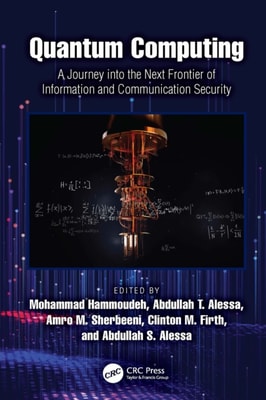
This book explores the exciting world of quantum computing, from its theoretical foundations to its practical applications, offering both non-technical and expert readers a comprehensive and accessible introduction to this cutting-edge technology that has the potential to revolutionize the way we process and transmit information.
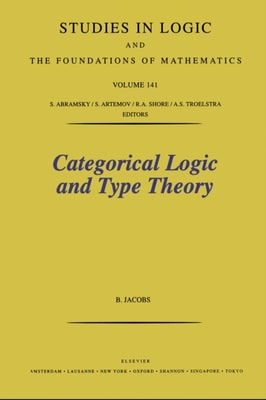
This book is an attempt to give a systematic presentation of both logic and type theory from a categorical perspective, using the unifying concept of fibred category.
This second volume continues Richard Routley's explorations of an improved Meinongian account of non-referring and intensional discourse (including joint work with Val Routley, later Val Plumwood).
This book gathers invited, peer-reviewed works presented at the 2021 edition of the Classical and Constructive Nonassociative Algebraic Structures: Foundations and Applications-CaCNAS: FA 2021, virtually held from June 30 to July 2, 2021, in dedication to the memory of Professor Nebojsa Stevanovic (1962-2009).
Senza richiedere prerequisiti il testo si propone di fornire una dimostrazione dei fondamentali teoremi della logica matematica (compattezza, completezza di Gödel, Löwenheim-Skolem) introducendo i concetti sintattici e semantici in modo progressivo, dalla logica booleana a quella predicativa.
This book is intended to serve as an advanced text and reference work on modal logic, a subject of growing importance which has applications to philosophy and linguistics.
The Only Undergraduate Textbook to Teach Both Classical and Virtual Knot TheoryAn Invitation to Knot Theory: Virtual and Classical gives advanced undergraduate students a gentle introduction to the field of virtual knot theory and mathematical research.
The book is intended for students of graduate and postgraduate level, researchers in mathematical sciences as well as those who want to apply the spectral theory of second order differential operators in exterior domains to their own field.