This modem introduction to the foundations of logic, mathematics, and computer science answers frequent questions that mysteriously remain mostly unanswered in other texts: * Why is the truth table for the logical implication so unintuitive?
This work is an introduction to the basic tools of the theory of (partially) ordered sets such as visualization via diagrams, subsets, homomorphisms, important order-theoretical constructions, and classes of ordered sets.
Lewis Carroll the author of the world famous Alice in Wonderland is well known even today for his fiction, but his tenure as professor of mathematics at Oxford university is less well known as is his love of logic problems.
Calculus Made Easy by Silvanus Phillips Thompson is an accessible and engaging introduction to the fundamental principles of calculus, offering readers a clear and simplified approach to understanding this essential branch of mathematics.
A step-by-step guide to calculus featuring practice questions and exercises to help people improve their understanding of the mathematical study of change.
Since 1909, when my Differential Geometry of Curves and Surfaces was published, the tensor calculus, which had previously been invented by Ricci, was adopted by Einstein in his General Theory of Relativity, and has been developed further in the study of Riemannian Geometry and various generalizations of the latter.
Berto's highly readable and lucid guide introduces students and the interested reader to G del's celebrated Incompleteness Theorem, and discusses some of the most famous - and infamous - claims arising from G del's arguments.
Berto's highly readable and lucid guide introduces students and the interested reader to G del's celebrated Incompleteness Theorem, and discusses some of the most famous - and infamous - claims arising from G del's arguments.
Collected here for the first time, this series of lectures delivered by Lonergan at Boston College in 1957 illustrates a pivotal time in Lonergan's intellectual history, marking both the transition from the faculty psychology still present in his work Insight to intentionality analysis and his initial differentiation of the existential level of consciousness.
This book, which is based on Polya's method of problem solving, aids students in their transition from calculus (or precalculus) to higher-level mathematics.
Adaptive Resonance Theory Microchips describes circuit strategies resulting in efficient and functional adaptive resonance theory (ART) hardware systems.
Fuzzy Logic in Management demonstrates that difficult problems and changes in the management environment can be more easily handled by bringing fuzzy logic into the practice of management.
"e;Proofs and Fundamentals: A First Course in Abstract Mathematics"e; 2nd edition is designed as a "e;transition"e; course to introduce undergraduates to the writing of rigorous mathematical proofs, and to such fundamental mathematical ideas as sets, functions, relations, and cardinality.
The importance of having ef cient and effective methods for data mining and kn- ledge discovery (DM&KD), to which the present book is devoted, grows every day and numerous such methods have been developed in recent decades.
Design for security and meet real-time requirements with this must-have book covering basic theory, hardware design and implementation of cryptographic algorithms, and side channel analysis.
Using mathematical tools from number theory and finite fields, Applied Algebra: Codes, Ciphers, and Discrete Algorithms, Second Edition presents practical methods for solving problems in data security and data integrity.
From Zero to Infinity is a combination of number lore, number history, and sparkling descriptions of the simply stated but exceedingly difficult problems posed by the most ordinary numbers that first appeared in 1955 and has been kept in print continuously ever since.
Keith Devlin and Jonathan Borwein, two well-known mathematicians with expertise in different mathematical specialties but with a common interest in experimentation in mathematics, have joined forces to create this introduction to experimental mathematics.
Poised to become the leading reference in the field, the Handbook of Finite Fields is exclusively devoted to the theory and applications of finite fields.
Exploring the intersection of ethics and statistics, this comprehensive guide illustrates the proper use of probabilistic and statistical reasoning in the behavioral, social, and biomedical sciences.
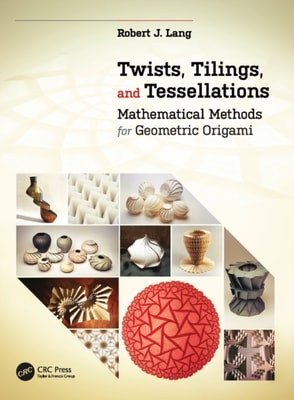
Twists, Tilings, and Tessellation describes the underlying principles and mathematics of the broad and exciting field of abstract and mathematical origami, most notably the field of origami tessellations.
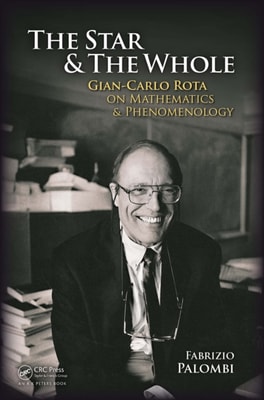
The Star and the Whole: Gian-Carlo Rota on Mathematics and Phenomenology, authored by Fabrizio Palombi, is the first book to study Rota's philosophical reflection.
Origami5 continues in the excellent tradition of its four previous incarnations, documenting work presented at an extraordinary series of meetings that explored the connections between origami, mathematics, science, technology, education, and other academic fields.
Gottfried Wilhelm Leibniz: The Polymath Who Brought Us Calculus focuses on the life and accomplishments of one of the seventeenth century's most influential mathematicians and philosophers.
It is well known that Einstein founded twentieth-century physics with his work on relativity and quanta, but what do we really know about these ground breaking ideas?