This introductory graduate text covers modern mathematical logic from propositional, first-order and infinitary logic and Godel's Incompleteness Theorems to extensive introductions to set theory, model theory and recursion (computability) theory.
Reverse Mathematics is a program of research in the foundations of mathematics, motivated by the foundational questions of what are appropriate axioms for mathematics, and what are the logical strengths of particular axioms and particular theorems.
For many decades, Martin Gardner, the Grand Master of mathematical puzzles, has provided the tools and projects to furnish our all-too-sluggish minds with an athletic workout.
In this charming memoir, a renowned mathematician and winner of the American Book Award traces his career in mathematics from early lessons in horse racing and the realities of life to his adventures on the lecture circuit.
Saunders Mac Lane was an extraordinary mathematician, a dedicated teacher, and a good citizen who cared deeply about the values of science and education.
In this exciting novel, an unsuspecting cardiologist becomes embroiled in a plot involving pharmaceuticals, international espionage, and the Neo-Nazi movement.
This research level monograph reflects the current state of the field and provides a reference for graduate students entering the field as well as for established researchers.
The magnum opus of one of the world's leading origami artists, the second edition of Origami Design Secrets reveals the underlying concepts of origami and how to create original origami designs.
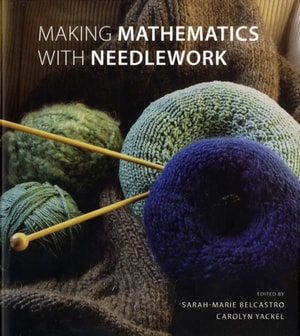
From the editors of the popular Making Mathematics with Needlework, this book presents projects that highlight the relationship between types of needlework and mathematics.
Unexpected Expectations: The Curiosities of a Mathematical Crystal Ball explores how paradoxical challenges involving mathematical expectation often necessitate a reexamination of basic premises.
A dissection involves cutting a polygon into pieces in such a way that those pieces form another polygon; for a hinged dissection, the pieces must be attached by hinges.
Drawing primarily from historical examples, this book explains the tremendous role that numbers and, in particular, mathematics play in all aspects of our civilization and culture.
Artificial Intelligence has already pervaded our lives in so many subtle ways, but how will humans react to the creation of a completely sentient super computer: a hyper-intelligent brain without a body who is as omniscient and omnipresent as the internet itself?
Extensively researched, this book traces the life and work of Abraham De Moivre as well as the state of probability and statistics in eighteenth-century Britain.
This compilation of papers presented at the 2000 European Summer Meeting of the Association for Symbolic Logic marks the centenial anniversery of Hilbert's famous lecture.
Consider this: Robots will one day be able to write poetry and prose so touching that it will make men weep; compose dozens or even hundreds of symphonies that will rival the work of Mozart; judge a court case with absolute impartiality and fairness; or even converse with the natural ease of your best friend.
This book traces the history of the MIT Department of Mathematics-one of the most important mathematics departments in the world-through candid, in-depth, lively conversations with a select and diverse group of its senior members.
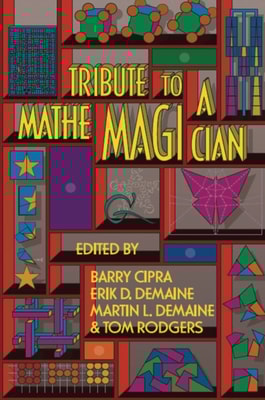
In this volume, world-leading puzzle designers, puzzle collectors, mathematicians, and magicians continue the tradition of honoring Martin Gardner, who inspired them to enter mathematics, to enter magic, to bring magic into their mathematics, or to bring mathematics into their magic.
This book features a unique approach to the teaching of mathematical logic by putting it in the context of the puzzles and paradoxes of common language and rational thought.
A symbol of the Divine, a good luck charm, a cosmogram of the world order, a template for fengshui-through the ages, the luoshu, or magic squre of order three, has fascinated people of many different cultures.
This unique collection contains extensive and in-depth interviews with mathematicians who have shaped the field of mathematics in the twentieth century.
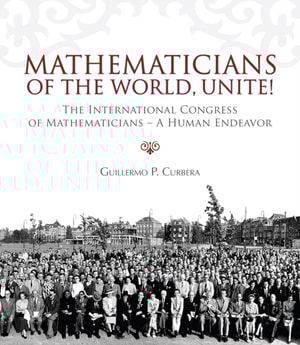
This vividly illustrated history of the International Congress of Mathematicians- a meeting of mathematicians from around the world held roughly every four years- acts as a visual history of the 25 congresses held between 1897 and 2006, as well as a story of changes in the culture of mathematics over the past century.
The tradition of honoring Martin Gardner continues with this edited collection of articles by those who have been inspired by Gardner to enter mathematics, to enter magic, to bring magic into their mathematics, or to bring mathematics into their magic.
The tradition of a publication based on the Gathering for Gardner continues with this new carefully selected and edited collection in which Martin Gardner and friends inspire and entertain.
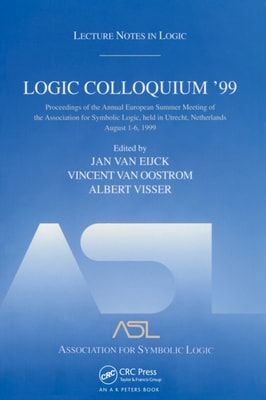
A compilation of papers presented at the 1999 European Summer Meeting of the Association for Symbolic Logic, Logic Colloquium '99 includes surveys and research articles from some of the world's preeminent logicians.
The model theory of fields is a fascinating subject stretching from Tarski's work on the decidability of the theories of the real and complex fields to Hrushovksi's recent proof of the Mordell-Lang conjecture for function fields.
Logicism, as put forward by Bertrand Russell, was predicated on a belief that all of mathematics can be deduced from a very small number of fundamental logical principles.
This book unravels the mystery of Geometry in Origami with a unique approach: 64 Polyhedra designs, each made from a single square sheet of paper, no cuts, no glue; each polyhedron the largest possible from the starting size of square and each having an ingenious locking mechanism to hold its shape.
This handsome book is aimed towards those with an intermediate skill level, but the origami basics included at the start of the book make it accessible to beginners.