There has been a great deal of excitement in the last ten years over the emer- gence of new mathematical techniques for the analysis and control of nonlinear systems: Witness the emergence of a set of simplified tools for the analysis of bifurcations, chaos, and other complicated dynamical behavior and the develop- ment of a comprehensive theory of geometric nonlinear control.
Since I started working in the area of nonlinear programming and, later on, variational inequality problems, I have frequently been surprised to find that many algorithms, however scattered in numerous journals, monographs and books, and described rather differently, are closely related to each other.
Mathematics is playing an ever more important role in the physical and biological sciences, provoking a blurring of boundaries between scientific disciplines and a resurgence of interest in the modem as well as the classical techniques of applied mathematics.
Though the volume covers 22 papers by 36 authors from 12 countries, the history in the background is bound to Hungary where, in 1973 Andras Pnkopa started to lay the foundation of a scientific forum, which can be a regular meeting spot for experts of the world in the field.
In the early fifties, applied mathematicians, engineers and economists started to pay c10se attention to the optimization problems in which another (lower-Ievel) optimization problem arises as a side constraint.
Due to the general complementary convex structure underlying most nonconvex optimization problems encountered in applications, convex analysis plays an essential role in the development of global optimization methods.
Computer Science and Operations Research continue to have a synergistic relationship and this book - as a part of the Operations Research and Computer Science Interface Series - sits squarely in the center of the confluence of these two technical research communities.
Targeted audience * Specialists in numerical computations, especially in numerical optimiza- tion, who are interested in designing algorithms with automatie result ver- ification, and who would therefore be interested in knowing how general their algorithms caIi in principle be.
In recent years global optimization has found applications in many interesting areas of science and technology including molecular biology, chemical equilibrium problems, medical imaging and networks.
As its title implies, Advances in Multicriteria Analysis presents the most recent developments in multicriteria analysis and in some of its principal areas of application, including marketing, research and development evaluation, financial planning, and medicine.
In science, engineering and economics, decision problems are frequently modelled by optimizing the value of a (primary) objective function under stated feasibility constraints.
The central question I pose in this book is: If there existed a supe- rior being who possessed the supernatural qualities of omni- science, omnipotence, immortality, and incomprehensibility, how would he/she act differently from us, and would these differences be knowable?
This book provides models and methods for the optimal management of electrical vehicles through an interdisciplinary approach that brings together knowledge from the sectors of transportation, manufacturing and smart grids.
This textbook provides researchers, post-graduate students, and practitioners with a systematic framework for coping with uncertainty when making facility location decisions.
This book provides a direct and comprehensive introduction to theoretical and numerical concepts in the emerging field of optimal control of partial differential equations (PDEs) under uncertainty.
This volume consists of six essays that develop and/or apply "e;rational expectations equilibrium inventory models"e; to study the time series behavior of production, sales, prices, and inventories at the industry level.
This book deals with a very important problem in power system planning for countries in which hydrogeneration accounts for the greatest part of the system power production.
Mathematics is playing an ever more important role in the physical and biologi- cal sciences, provoking a blurring of boundaries between scientific disciplines and a resurgence of interest in the modem as well as the classical techniques of applied mathematics.
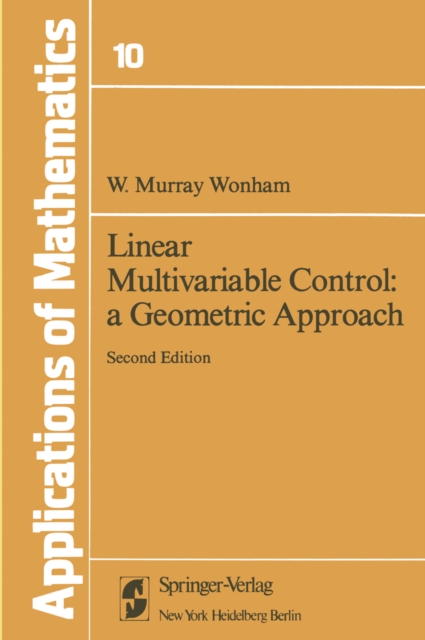
In writing this monograph my aim has been to present a "e;geometric"e; approach to the structural synthesis of multivariable control systems that are linear, time-invariant and of finite dynamic order.
Our rapidly changing world has forced business practitioners, in corporation with academic researchers, to respond quickly and develop effective solution methodologies and techniques to handle new challenges in supply chain systems.
The engineering and business problems the world faces today have become more impenetrable and unstructured, making the design of a satisfactory problem-specific algorithm nontrivial.
Due to the increased capability, reliability, robustness, and survivability of systems with multiple distributed sensors, multi-source information fusion has become a crucial technique in a growing number of areas-including sensor networks, space technology, air traffic control, military engineering, agriculture and environmental engineering, and i
Introduction to the Calculus of Variations and Control with Modern Applications provides the fundamental background required to develop rigorous necessary conditions that are the starting points for theoretical and numerical approaches to modern variational calculus and control problems.
Multi-objective programming (MOP) can simultaneously optimize multi-objectives in mathematical programming models, but the optimization of multi-objectives triggers the issue of Pareto solutions and complicates the derived answers.
Multivariate Bonferroni-Type Inequalities: Theory and Applications presents a systematic account of research discoveries on multivariate Bonferroni-type inequalities published in the past decade.
After the IUTAM Symposium on Optimization in Structural Design held in Warsaw in 1973, it was clear to me that the time had come for organizing into a consistent body of thought the enormous quantity of results obtained in this domain, studied from so many different points of view, with so many different methods, and at so many levels of practical applicability.
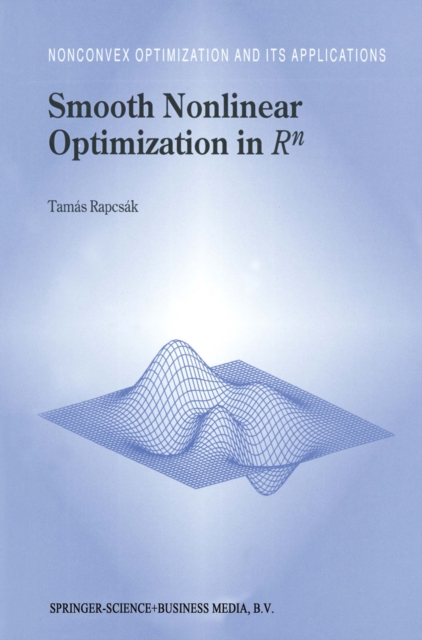
Experience gained during a ten-year long involvement in modelling, program- ming and application in nonlinear optimization helped me to arrive at the conclusion that in the interest of having successful applications and efficient software production, knowing the structure of the problem to be solved is in- dispensable.