In recent years there have been a number of books-both anthologies and monographs-that have focused on the Liar Paradox and, more generally, on the semantic paradoxes, either offering proposed treatments to those paradoxes or critically evaluating ones that occupy logical space.
The term "e;fuzzy logic,"e; as it is understood in this book, stands for all aspects of representing and manipulating knowledge based on the rejection of the most fundamental principle of classical logic---the principle of bivalence.
The biological and social sciences often generalize causal conclusions from one context or location to others that may differ in some relevant respects, as is illustrated by inferences from animal models to humans or from a pilot study to a broader population.
With a never-before published paper by Lord Henry Cavendish, as well as a biography on him, this book offers a fascinating discourse on the rise of scientific attitudes and ways of knowing.
If we must take mathematical statements to be true, must we also believe in the existence of abstracta eternal invisible mathematical objects accessible only by the power of pure thought?
Mathematics plays a central role in much of contemporary science, but philosophers have struggled to understand what this role is or how significant it might be for mathematics and science.
The term "e;fuzzy logic,"e; as it is understood in this book, stands for all aspects of representing and manipulating knowledge based on the rejection of the most fundamental principle of classical logic---the principle of bivalence.
This book, following the three published volumes of the book, provides the main purpose to collect research papers and review papers to provide an overview of the main issues, results, and open questions in the cutting-edge research on the fields of modeling, optimization, and dynamics and their applications to biology, economy, energy, industry, physics, psychology and finance.
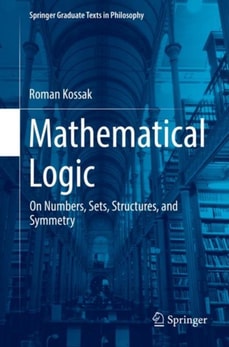
This book, presented in two parts, offers a slow introduction to mathematical logic, and several basic concepts of model theory, such as first-order definability, types, symmetries, and elementary extensions.
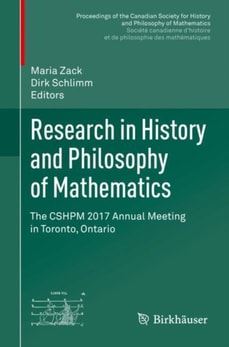
This volume contains thirteen papers that were presented at the 2017 Annual Meeting of the Canadian Society for History and Philosophy of Mathematics/Societe canadienne d'histoire et de philosophie des mathematiques, which was held at Ryerson University in Toronto.
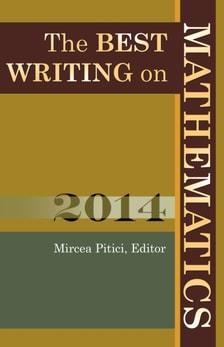
The year's finest writing on mathematics from around the worldThis annual anthology brings together the year's finest mathematics writing from around the world.
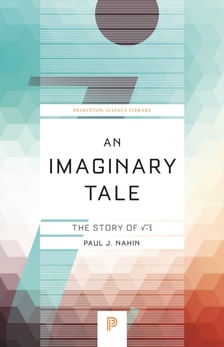
Today complex numbers have such widespread practical use--from electrical engineering to aeronautics--that few people would expect the story behind their derivation to be filled with adventure and enigma.
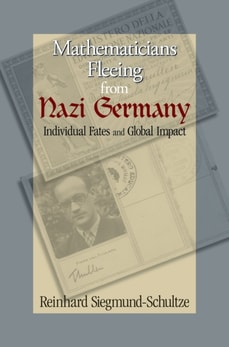
The emigration of mathematicians from Europe during the Nazi era signaled an irrevocable and important historical shift for the international mathematics world.
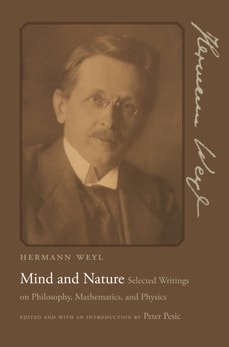
Hermann Weyl (1885-1955) was one of the twentieth century's most important mathematicians, as well as a seminal figure in the development of quantum physics and general relativity.
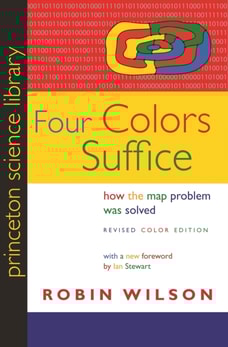
On October 23, 1852, Professor Augustus De Morgan wrote a letter to a colleague, unaware that he was launching one of the most famous mathematical conundrums in history--one that would confound thousands of puzzlers for more than a century.
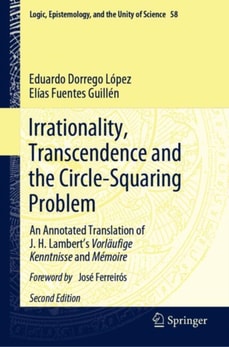
This publication, now in its second edition, includes an unabridged and annotated translation of two works by Johann Heinrich Lambert (1728-1777) written in the 1760s: Vorlaufige Kenntnisse fur die, so die Quadratur und Rectification des Circuls suchen and Memoire sur quelques proprietes remarquables des quantites transcendentes circulaires et logarithmiques.
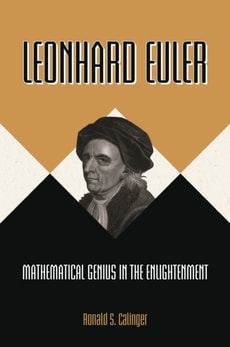
An acclaimed biography of the Enlightenment's greatest mathematicianThis is the first full-scale biography of Leonhard Euler (1707-83), one of the greatest mathematicians and theoretical physicists of all time.
A NEW YORK TIMES BESTSELLERThe official book behind the Academy Award-winning film The Imitation Game, starring Benedict Cumberbatch and Keira KnightleyIt is only a slight exaggeration to say that the British mathematician Alan Turing (19121954) saved the Allies from the Nazis, invented the computer and artificial intelligence, and anticipated gay liberation by decadesall before his suicide at age forty-one.
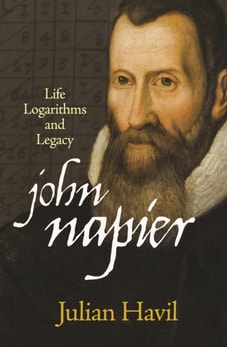
The most comprehensive account of the mathematician's life and workJohn Napier (1550-1617) is celebrated today as the man who invented logarithms-an enormous intellectual achievement that would soon lead to the development of their mechanical equivalent in the slide rule: the two would serve humanity as the principal means of calculation until the mid-1970s.
An entertaining and informative anthology of popular math writing from the Renaissance to cyberspaceDespite what we may sometimes imagine, popular mathematics writing didn't begin with Martin Gardner.
La obra plantea la naturaleza compleja y transdisciplinar de los problemas en la educación matemática, afirmando la necesidad de adoptar una posición epistemológica explícita y militante.
Over the last ten years, elements of the formalism of quantum mechanics have been successfully applied beyond physics in areas such as psychology (especially cognition), economics and finance (especially in the formalization of so-called 'decision making'), political science, and molecular biology.
This book offers a historical explanation of important philosophical problems in logic and mathematics, which have been neglected by the official history of modern logic.