If you've ever struggled to understand mathematics or wondered how you would ever apply what you've learned in your math courses, Gustafson/Hughes' popular COLLEGE ALGEBRA, 13th Edition is for you.
Overcome any apprehension you may have as you master statistics with Brase/Brase/Seibert/Dolor's UNDERSTANDABLE STATISTICS: CONCEPTS AND METHODS, 13th Edition.
PRESTATISTICS prepares students for statistics with a three-step problem-solving process that shows them how to identify the method needed to solve a given problem, use mathematics to find a numerical result and interpret that result.
Prepare for success in precalculus as Larson's PRECALCULUS WITH LIMITS, 5th Edition provides specially developed ongoing review in addition to clear explanations, real examples, exercises that relate to everyday life and innovative online support.
DISCRETE MATHEMATICS WITH APPLICATIONS, 5th Edition, Metric Edition explains complex, abstract concepts with clarity and precision and provides a strong foundation for computer science and upper-level mathematics courses of the computer age.
In the Sixth Edition of Tussy/Koenig's PREALGEBRA, new Look Alikes help you compare and contrast problem types to help you understand the correct meaning of the questions and determine the necessary steps to work the problem.
Discover how statistical information impacts decisions in today's business world as Anderson/Sweeney/Williams/Camm/Cochran/Fry/Ohlmann's leading ESSENTIALS OF STATISTICS FOR BUSINESS AND ECONOMICS, 9E connects concepts in each chapter to real-world practice.
Develop a strong conceptual understanding of statistics as ESSENTIALS OF MODERN BUSINESS STATISTICS WITH MICROSOFT(R) EXCEL(R), 8E balances real-world applications with an integrated focus on the latest version of Microsoft(R) Excel(R).
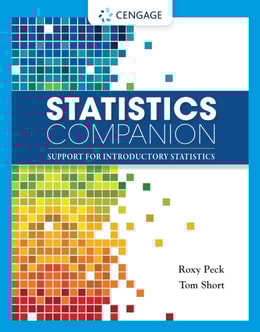
Roxy Peck and Tom Short's STATISTICS COMPANION supports your success in Statistics by providing a review of the necessary Statistics-specific mathematics, study skills, and Statistics-language content.
ELEMENTARY GEOMETRY FOR COLLEGE STUDENTS, 7th Edition, is designed to help students develop a comprehensive vocabulary of geometry, an intuitive and inductive approach to the development of principles, and strong deductive skills to solve geometry-based real-world applications.
Theoretische und praktische TippsGanz egal ob in Studium und Forschung, in Verwaltungen oder in Unternehmen - Onlineumfragen helfen dabei, wichtige Erkenntnisse zu gewinnen.
The theory of plasticity is a branch of solid mechanics that investigates the relationship between permanent deformation and load, and the distribution of stress and strains of materials and structures beyond their elastic limit.
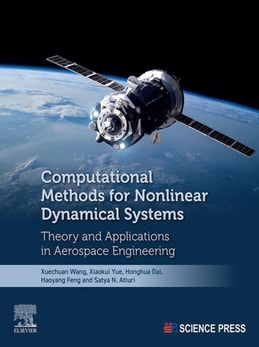
Computational Methods for Nonlinear Dynamical Systems: Theory and Applications in Aerospace Engineering proposes novel ideas and develops highly-efficient and accurate methods for solving nonlinear dynamic systems, drawing inspiration from the weighted residual method and the asymptotic method.
Simulation, Sixth Edition continues to introduce aspiring and practicing actuaries, engineers, computer scientists and others to the practical aspects of constructing computerized simulation studies to analyze and interpret real phenomena.
Computational Methods for Nonlinear Dynamical Systems: Theory and Applications in Aerospace Engineering proposes novel ideas and develops highly-efficient and accurate methods for solving nonlinear dynamic systems, drawing inspiration from the weighted residual method and the asymptotic method.
A Discrete-Time Approach for System Analysis is a five-chapter text that considers the underlying principles and application of a discrete-time approach to system analysis.
Introduction to Singular Perturbations provides an overview of the fundamental techniques for obtaining asymptomatic solutions to boundary value problems.
Applied Mathematics and Mechanics, Volume 5: Boundary Value Problems: For Second Order Elliptic Equations is a revised and augmented version of a lecture course on non-Fredholm elliptic boundary value problems, delivered at the Novosibirsk State University in the academic year 1964-1965.
Stochastic Tools in Turbulence discusses the available mathematical tools to describe stochastic vector fields to solve problems related to these fields.
Brownian Motion and Classical Potential Theory is a six-chapter text that discusses the connection between Brownian motion and classical potential theory.
Nuclear Science and Technology, Volume 3: Numerical Methods of Reactor Analysis presents the numerical analysis frequently used in the nuclear reactor field.
Methods of Modern Mathematical Physics, Volume I: Functional Analysis discusses the fundamental principles of functional analysis in modern mathematical physics.
Partial Differential Equations in Physics: Lectures on Theoretical Physics, Volume VI is a series of lectures in Munich on theoretical aspects of partial differential equations in physics.
Group Theory: And Its Application To The Quantum Mechanics Of Atomic Spectra aims to describe the application of group theoretical methods to problems of quantum mechanics with specific reference to atomic spectra.
Information Linkage between Applied Mathematics and Industry II presents the proceedings of the Second Annual Workshop on the Information Linkage between Applied Mathematics and Industry, held in Monterey, California on February 22-24, 1979.
Interactive Systems for Experimental Applied Mathematics is a collection of papers presented at the 1967 Association for Computing Machinery (ACM) Inc.
The Mathematics of Finite Elements and Applications V is the summary of invited papers and the abstracts of the poster papers in the fifth conference on The Mathematics of Finite Elements and Applications, MAFELAP 1984, held at Brunei University in May 1984.
Mathematical Techniques and Physical Applications provides a wide range of basic mathematical concepts and methods, which are relevant to physical theory.
Information Linkage Between Applied Mathematics and Industry is a collection of papers dealing with mathematics in engineering context and applications.
Topics in Numerical Analysis II contains in complete form, the papers given by the invited speakers to the Conference on Numerical Analysis held under the auspices of the National Committee for Mathematics of the Royal Irish Academy at University College, Dublin from 29th July to 2nd August, 1974.
An Introduction to Numerical Classification describes the rationale of numerical analyses by means of geometrical models or worked examples without possible extensive algebraic symbolism.
This book was written with two main objectives in mind - to summarize and organize the vast material of vacuum technology in sets of useful formulas, and to provide a collection of worked out exercises showing how to use these formulas for solving technological problems.