This volume provides an up-to-date picture of the current status of theoretical and empirical developments in the application of fuzzy sets in psychology.
This book provides in a concise, yet detailed way, the bulk of the probabilistic tools that a student working toward an advanced degree in statistics,probability and other related areas, should be equipped with.
Building on previous texts in the Modular Mathematics series, in particular 'Vectors in Two or Three Dimensions' and 'Calculus and ODEs', this book introduces the student to the concept of vector calculus.
This English version of the path-breaking French book on this subject gives the definitive treatment of the revolutionary approach to measure theory, geometry, and mathematical physics developed by Alain Connes.
A lucid presentation of statistical physics and thermodynamics which develops from the general principles to give a large number of applications of the theory.
Advanced Statistics from an Elementary Point of View is a highly readable text that communicates the content of a course in mathematical statistics without imposing too much rigor.
Starting at the very beginning with Aristotle's founding contributions, logic has been graced by several periods in which the subject has flourished, attaining standards of rigour and conceptual sophistication underpinning a large and deserved reputation as a leading expression of human intellectual effort.
The book is designed for researchers, students and practitioners interested in using fast and efficient iterative methods to approximate solutions of nonlinear equations.
Aimed at starting researchers in the field, Realizability gives a rigorous, yet reasonable introduction to the basic concepts of a field which has passed several successive phases of abstraction.
Quantum Mechanics of Non-Hamiltonian and Dissipative Systems is self-contained and can be used by students without a previous course in modern mathematics and physics.
Energy Optimization in Process Systems and Fuel Cells, Second Edition covers the optimization and integration of energy systems, with a particular focus on fuel cell technology.
The present volume of the Handbook of the History of Logic is designed to establish 19th century Britain as a substantial force in logic, developing new ideas, some of which would be overtaken by, and other that would anticipate, the century's later capitulation to the mathematization of logic.
This handbook is the fourth volume in a series of volumes devoted to self-contained and up-to-date surveys in the theory of ordinary differential equations, with an additional effort to achieve readability for mathematicians and scientists from other related fields so that the chapters have been made accessible to a wider audience.
This is a comprehensive exposition of topics covered by the American Mathematical Society's classification "e;Global Analysis, dealing with modern developments in calculus expressed using abstract terminology.
Advanced Mathematical Tools for Control Engineers: Volume 1 provides a blend of Matrix and Linear Algebra Theory, Analysis, Differential Equations, Optimization, Optimal and Robust Control.
This monograph presents mathematical theory of statistical models described by the essentially large number of unknown parameters, comparable with sample size but can also be much larger.
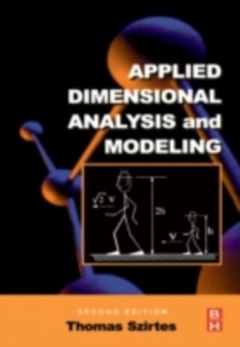
Applied Dimensional Analysis and Modeling provides the full mathematical background and step-by-step procedures for employing dimensional analyses, along with a wide range of applications to problems in engineering and applied science, such as fluid dynamics, heat flow, electromagnetics, astronomy and economics.
This volume, representing a compilation of authoritative reviews on a multitude of uses of statistics in epidemiology and medical statistics written by internationally renowned experts, is addressed to statisticians working in biomedical and epidemiological fields who use statistical and quantitative methods in their work.
This volume contains extended abstracts outlining selected presentations given by participants of the joint international multidisciplinary workshop MURPHYS-HSFS-2016 (MUltiRate Processes and HYSteresis; Hysteresis and Slow-Fast Systems), which was dedicated to the mathematical theory and applications of multiple scale systems and systems with hysteresis, and held at the Centre de Recerca Matematica (CRM) in Barcelona from June 13th to 17th, 2016.
This book offers a user friendly, hands-on, and systematic introduction to applied and computational harmonic analysis: to Fourier analysis, signal processing and wavelets; and to their interplay and applications.
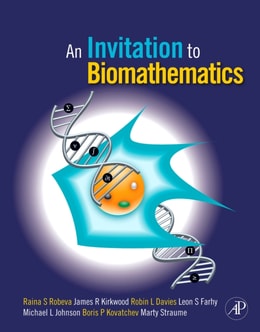
Essential for all biology and biomathematics courses, this textbook provides students with a fresh perspective of quantitative techniques in biology in a field where virtually any advance in the life sciences requires a sophisticated mathematical approach.
Data Engineering has become a necessary and critical activity for business, engineering, and scientific organizations as the move to service oriented architecture and web services moves into full swing.
Introductory Analysis addresses the needs of students taking a course in analysis after completing a semester or two of calculus, and offers an alternative to texts that assume that math majors are their only audience.