Like its wildly popular predecessors Cabinet of Mathematical Curiosities and Hoard of Mathematical Treasures, Professor Stewart's brand-new book is a miscellany of over 150 mathematical curios and conundrums, packed with trademark humour and numerous illustrations.
There are some mathematical problems whose significance goes beyond the ordinary - like Fermat's Last Theorem or Goldbach's Conjecture - they are the enigmas which define mathematics.
A new partnership of biologists and mathematicians is picking apart the hidden complexity of animals and plants to throw fresh light on the behaviour of entire organisms, how they interact and how changes in biological diversity affect the planet's ecological balance.
Ian Stewart, author of the bestselling Professor Stewart's Cabinet of Mathematical Curiosities, presents a new and magical mix of games, puzzles, paradoxes, brainteasers, and riddles.
The International Bestseller by 'The Galileo of number crunchers' (Independent)Every time we choose a route to work, decide whether to go on a second date, or set aside money for a rainy day, we are making a prediction about the future.
In this scientific tour de force, world-class physicist Frank Wilczek argues that beauty is at the heart of the logic of the universe, a principle that has guided his pioneering work in quantum physics.
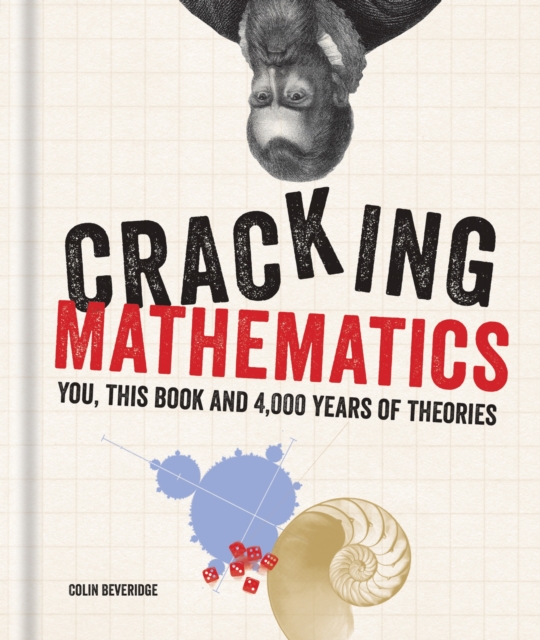
This comprehensive guide covers the history and development of mathematics, from the Ancient Egyptians and Pythagoreans to key figures such as Galileo, Dodgson, Babbage and Lovelace through to contemporary work of the 21st century.
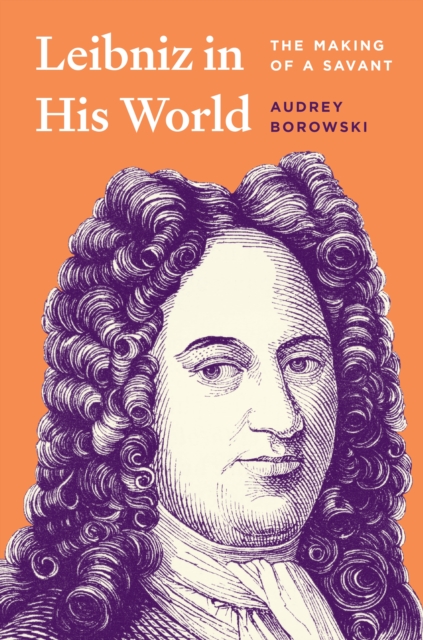
A sweeping intellectual biography that restores the Enlightenment polymath to the intellectual, scientific, and courtly worlds that shaped his early life and thoughtDescribed by Voltaire as ';perhaps a man of the most universal learning in Europe,' Gottfried Wilhelm Leibniz (16461716) is often portrayed as a rationalist and philosopher who was wholly detached from the worldly concerns of his fellow men.
Scottish Rugby 101 is a compendium of fascinating facts, quotes, stats, stories, personalities and trivia - a perfect stocking-filler for all fans of Scottish rugby.
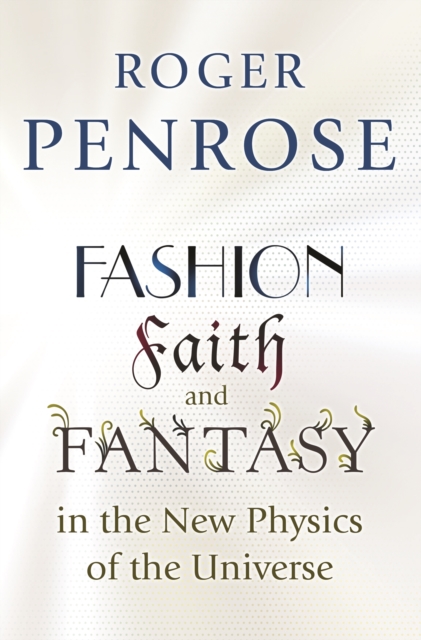
Nobel Prize-winning physicist Roger Penrose questions some of the most fashionable ideas in physics today, including string theoryWhat can fashionable ideas, blind faith, or pure fantasy possibly have to do with the scientific quest to understand the universe?
Ian Stewart, author of the bestselling Professor Stewart's Cabinet of Mathematical Curiosities, presents a new and magical mix of games, puzzles, paradoxes, brainteasers, and riddles.
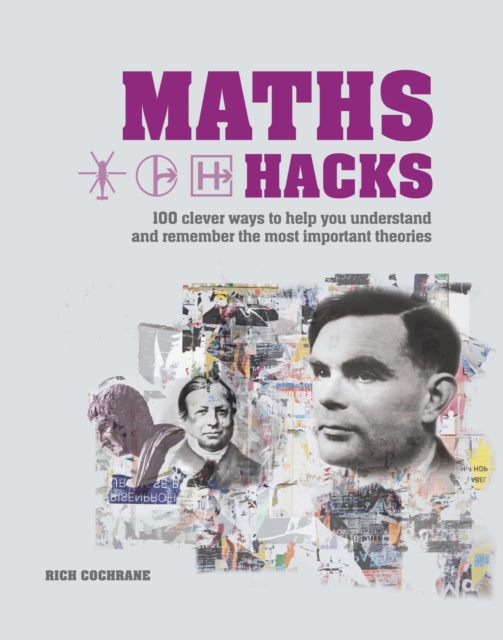
Everything you need to know about 100 key mathematical concepts condensed into easy-to-understand sound bites designed to stick in your memory and give you an instant grasp of the concept.
Comprehensive textbook examining meaningful connections between the subjects of Lie theory, differential geometry, and signal analysis A Bridge Between Lie Theory and Frame Theory serves as a bridge between the areas of Lie theory, differential geometry, and frame theory, illustrating applications in the context of signal analysis with concrete examples and images.
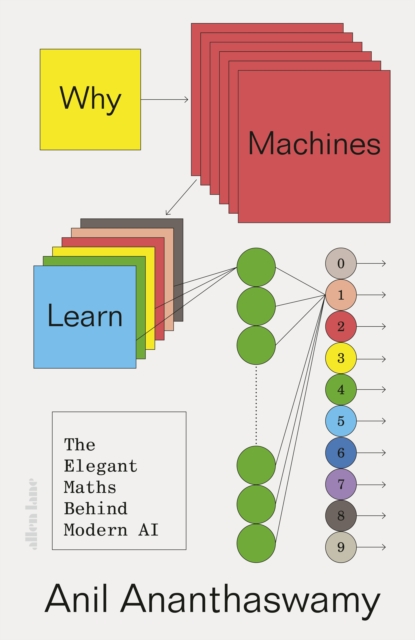
'An invaluable companion for anyone who wants a deep understanding of what s under the hood of often inscrutable machines' Melanie Mitchell A rich, narrative explanation of the mathematics that has brought us machine learning and the ongoing explosion of artificial intelligenceMachine-learning systems are making life-altering decisions for us: approving mortgage loans, determining whether a tumour is cancerous, or deciding whether someone gets bail.
Sacred Geometry exists all around us in the natural world, from the unfurling of a rose bud to the pattern of a tortoise shell, the sub-atomic to the galactic.
Gamblers have been trying to figure out how to game the system since our ancestors first made wagers over dice fashioned from knucklebones: in revolutionary Paris, the 'martingale' strategy was rumoured to lead to foolproof success at roulette ; today, professional gamblers are using cutting-edge techniques to tilt the odds in their favour.
Ian Stewart explores the astonishing properties of numbers from 1 to 10 to zero and infinity, including one figure that, if you wrote it out, would span the universe.
'Stewart is Britain's most brilliant and prolific populariser of maths' Alex Bellos'The instructive equivalent of a Michelin-starred tasting menu' Tim RadfordMany people think mathematics is useless.
SHORTLISTED FOR THE 2017 ROYAL SOCIETY SCIENCE BOOK PRIZE Even small children know there are infinitely many whole numbers - start counting and you'll never reach the end.
Numericon tells the stories of the numbers, mathematical discoveries, oddities and personalities that have shaped the way we understand the world around us.
On August 10, 1632, five leading Jesuits convened in a sombre Roman palazzo to pass judgment on a simple idea: that a continuous line is composed of distinct and limitlessly tiny parts.
A mathematical sightseeing tour of the natural world from the author of THE MAGICAL MAZEWhy do many flowers have five or eight petals, but very few six or seven?
Detailed review of optimization from first principles, supported by rigorous math and computer science explanations and various learning aids Supported by rigorous math and computer science foundations, Combinatorial and Algorithmic Mathematics: From Foundation to Optimization provides a from-scratch understanding to the field of optimization, discussing 70 algorithms with roughly 220 illustrative examples, 160 nontrivial end-of-chapter exercises with complete solutions to ensure readers can apply appropriate theories, principles, and concepts when required, and Matlab codes that solve some specific problems.
Si como programador de back end quiere evolucionar al mismo tiempo que aprovechar todo su código en Java, sin duda, debe empezar por adoptar Kotlin, un nuevo lenguaje de programación, equiparado a Java en el mundo Android.
DATA ENGINEERING and DATA SCIENCE Written and edited by one of the most prolific and well-known experts in the field and his team, this exciting new volume is the one-stop shop for the concepts and applications of data science and engineering for data scientists across many industries.
Mathematics for Engineers serves as a comprehensive guide on the basics of mathematics and their applications in engineering for students and seasoned professionals alike.
Multivariate Analysis Comprehensive Reference Work on Multivariate Analysis and its Applications The first edition of this book, by Mardia, Kent and Bibby, has been used globally for over 40 years.
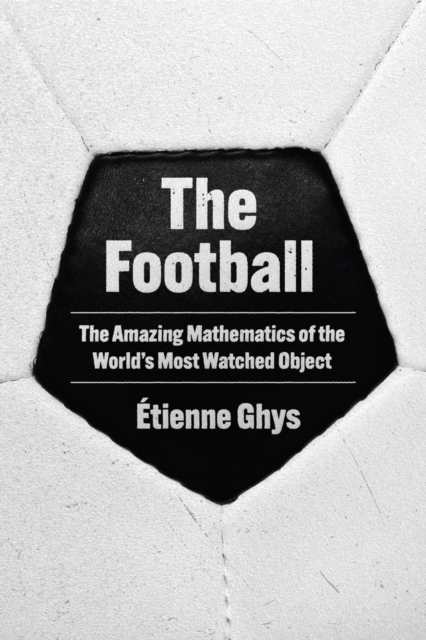
An illustration-packed dive into the geometry, engineering, and physics of soccer ballsThe Football takes readers on an entertaining and fact-filled exploration of the mathematical secrets of the most popular spherical object on the planet.
El propósito de este estudio es la de presentar un formato más amigable en el estudio de la Estadística si se compara con otros textos con la utilización de un lenguaje formal pero sencillo de entender y evitando un nivel de desarrollo matemático muy elevado.