This famous book was the first treatise on Lie groups in which a modern point of view was adopted systematically, namely, that a continuous group can be regarded as a global object.
In this renowned volume, Hermann Weyl discusses the symmetric, full linear, orthogonal, and symplectic groups and determines their different invariants and representations.
Kenneth Brakke studies in general dimensions a dynamic system of surfaces of no inertial mass driven by the force of surface tension and opposed by a frictional force proportional to velocity.
The present volume reflects both the diversity of Bochner's pursuits in pure mathematics and the influence his example and thought have had upon contemporary researchers.
The classical uniformization theorem for Riemann surfaces and its recent extensions can be viewed as introducing special pseudogroup structures, affine or projective structures, on Riemann surfaces.
An exciting look at the world of elementary mathematicsElements of Mathematics takes readers on a fascinating tour that begins in elementary mathematics-but, as John Stillwell shows, this subject is not as elementary or straightforward as one might think.
Because estimation involves inferring information about an unknown quantity on the basis of available data, the selection of an estimator is influenced by its ability to perform well under the conditions that are assumed to underlie the data.
Written by Arthur Ogus on the basis of notes from Pierre Berthelot's seminar on crystalline cohomology at Princeton University in the spring of 1974, this book constitutes an informal introduction to a significant branch of algebraic geometry.
In 1920, Pierre Fatou expressed the conjecture that--except for special cases--all critical points of a rational map of the Riemann sphere tend to periodic orbits under iteration.
The authors, leading researchers in the fields of mathematical economics and methodology, present the first comprehensive synthesis of literature on qualitative and other nonparametric techniques, which are important elements of comparative statics and stability analysis in economic theory.
Genomic signal processing (GSP) can be defined as the analysis, processing, and use of genomic signals to gain biological knowledge, and the translation of that knowledge into systems-based applications that can be used to diagnose and treat genetic diseases.
Princeton University's Elias Stein was the first mathematician to see the profound interconnections that tie classical Fourier analysis to several complex variables and representation theory.
Formal verification increasingly has become recognized as an answer to the problem of how to create ever more complex control systems, which nonetheless are required to behave reliably.
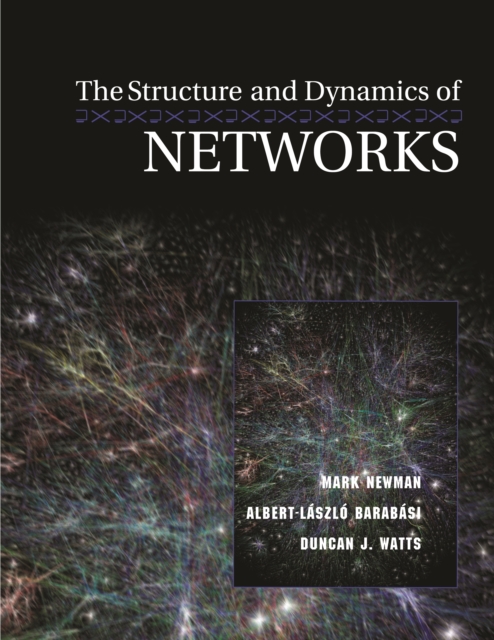
From the Internet to networks of friendship, disease transmission, and even terrorism, the concept--and the reality--of networks has come to pervade modern society.
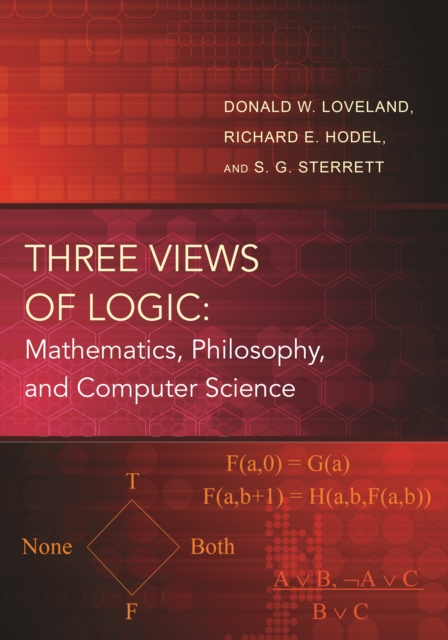
The first interdisciplinary textbook to introduce students to three critical areas in applied logicDemonstrating the different roles that logic plays in the disciplines of computer science, mathematics, and philosophy, this concise undergraduate textbook covers select topics from three different areas of logic: proof theory, computability theory, and nonclassical logic.
This book presents an overview of recent developments in the area of localization for quasi-periodic lattice Schrodinger operators and the theory of quasi-periodicity in Hamiltonian evolution equations.
This book proves an analogue of William Thurston's celebrated hyperbolic Dehn surgery theorem in the context of complex hyperbolic discrete groups, and then derives two main geometric consequences from it.
This classic book is an introduction to dynamic programming, presented by the scientist who coined the term and developed the theory in its early stages.
This book introduces a comprehensive methodology for adaptive control design of parabolic partial differential equations with unknown functional parameters, including reaction-convection-diffusion systems ubiquitous in chemical, thermal, biomedical, aerospace, and energy systems.
Ramsey theory is a fast-growing area of combinatorics with deep connections to other fields of mathematics such as topological dynamics, ergodic theory, mathematical logic, and algebra.
This book explores the most recent developments in the theory of planar quasiconformal mappings with a particular focus on the interactions with partial differential equations and nonlinear analysis.
Higher category theory is generally regarded as technical and forbidding, but part of it is considerably more tractable: the theory of infinity-categories, higher categories in which all higher morphisms are assumed to be invertible.
Many problems in the sciences and engineering can be rephrased as optimization problems on matrix search spaces endowed with a so-called manifold structure.
Robust optimization is still a relatively new approach to optimization problems affected by uncertainty, but it has already proved so useful in real applications that it is difficult to tackle such problems today without considering this powerful methodology.
In The Structure of Affine Buildings, Richard Weiss gives a detailed presentation of the complete proof of the classification of Bruhat-Tits buildings first completed by Jacques Tits in 1986.
Stability and Stabilization is the first intermediate-level textbook that covers stability and stabilization of equilibria for both linear and nonlinear time-invariant systems of ordinary differential equations.
This computationally oriented book describes and explains the mathematical relationships among matrices, moments, orthogonal polynomials, quadrature rules, and the Lanczos and conjugate gradient algorithms.
Kiyosi Ito's greatest contribution to probability theory may be his introduction of stochastic differential equations to explain the Kolmogorov-Feller theory of Markov processes.
This comprehensive book provides the first unified framework for stability and dissipativity analysis and control design for nonnegative and compartmental dynamical systems, which play a key role in a wide range of fields, including engineering, thermal sciences, biology, ecology, economics, genetics, chemistry, medicine, and sociology.
Modeling with Data fully explains how to execute computationally intensive analyses on very large data sets, showing readers how to determine the best methods for solving a variety of different problems, how to create and debug statistical models, and how to run an analysis and evaluate the results.