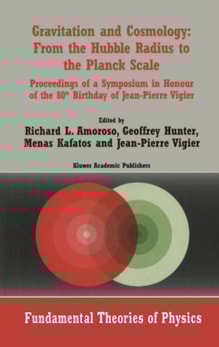
Jean-Pierre Vigier continually labeled one of les heretiques de la science, l'eternel resistant et le patriarche is yet a pillar of modern physics and mathematics, with one leg firmly planted in theory and the other in empiricism spanning a career of nearly 60 years with a publication vitae quickly approaching 400!
Essential Spaceflight Dynamics and Magnetospherics describes, in the first instance, some of the key aspects of celestial mechanics and spaceflight dynamics.
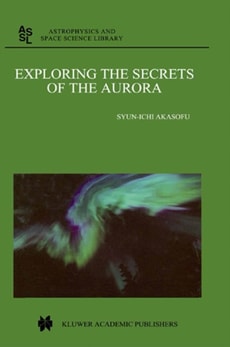
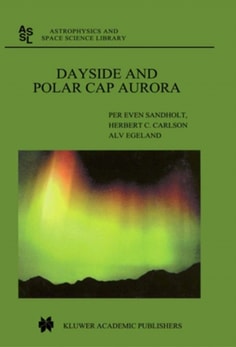
The auroral emissions in the upper atmosphere of the polar regions of the Earth are evidence of the capture of energetic particles from the Sun, streaming by the Earth as the solar wind.
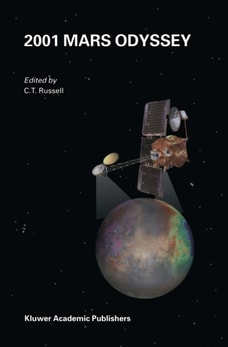
Given that the question of an internal magnetic field is of fundamental importance to the understanding of Mars' formation and thermal evolution, and of the evolution of Mars' atmosphere, surprisingly few of the many spacecraft sent to Mars were equipped with instrumentation for such investigations.
Based on an American Chemical Society Symposium organized by Professors Glenn Seaborg and Oliver Manuel, this volume provides a comprehensive record of different views on this important subject at the end of the 20th century.
A quirky, funny, and accessible blend of science and art that delves into the heart of Einstein's theory of relativity It was a link to his 1905 paper-an early attempt at explaining his revolutionary ideas on space, time, and matter-that drew Tanya Bub into Albert Einstein's imaginative vision of the world.
An award-winning science writer presents a captivating collection of cosmological essays for the armchair astronomerThe galaxy, the multiverse, and the history of astronomy are explored in this engaging compilation of cosmological tales by multiple-award-winning science writer Marcia Bartusiak.
In the decades since the mid-1970s, the Jet Propulsion Laboratory in Pasadena, California, has led the quest to explore the farthest reaches of the solar system.
Particles, Fields, Space-Time: From Thomson's Electron to Higgs' Boson explores the concepts, ideas, and experimental results that brought us from the discovery of the first elementary particle in the end of the 19th century to the completion of the Standard Model of particle physics in the early 21st century.
From the world-renowned physicist and bestselling author of The Elegant Universe and The Fabric of the Cosmos, a captivating exploration of deep time and humanity's search for purposeIn both time and space, the cosmos is astoundingly vast, and yet is governed by simple, elegant, universal mathematical laws.
This book highlights stories of the most important 13 ground-based observatories and 14 space probes in human history, leading readers through each significant step of human's astronomical observation journey.
Written by one of today's most highly respected astrophysicists, Foundations of High-Energy Astrophysics is an introduction to the mathematical and physical techniques used in the study of high-energy astrophysics.
Popular science readers embrace epics-the sweeping stories that claim to tell the history of all the universe, from the cosmological to the biological to the social.
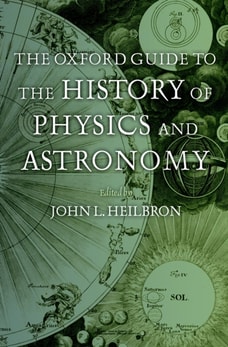
With over 150 alphabetically arranged entries about key scientists, concepts, discoveries, technological innovations, and learned institutions, the Oxford Guide to Physics and Astronomy traces the history of physics and astronomy from the Renaissance to the present.
The magnetosphere is the region where cosmic rays and the solar wind interact with the Earth's magnetic field, creating such phenomena as the northern lights and other aurorae.
A Modern Primer in Particle and Nuclear Physics provides a cohesive introduction to the fundamentals of the field and is designed to be accessible to undergraduate students.
'An incredible tour of our universe's greatest mysteries' Professor Dan Hooper This cutting-edge book investigates the extraordinary potential of multimessenger astronomy to revolutionise our understanding of the universe The spectacular advances of modern astronomy have opened our horizon on an unexpected cosmos: a dark, mysterious universe, populated by enigmatic entities we know very little about, like black holes, or nothing at all, like dark matter and dark energy.
The Sun, as our nearest star, is of enormous importance for life on Earth - providing the warm radiation and light which allowed complex life to evolve.
The Sun, as our nearest star, is of enormous importance for life on Earth - providing the warm radiation and light which allowed complex life to evolve.
The Cosmic Mystery Tour takes us on a lightning tour of the mysteries of the universe enlivened by brief stories of the colourful characters who created modern science.