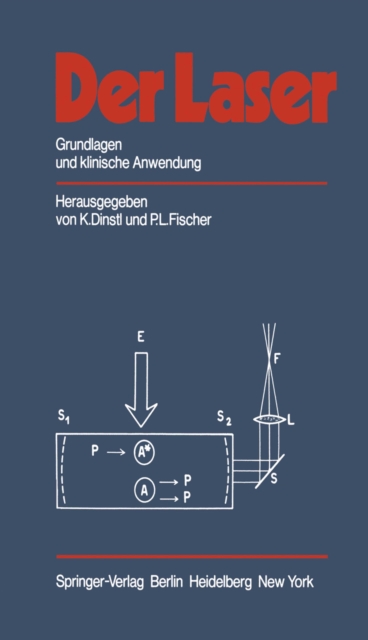
Ausgehend von den Grundlagen der Laserphysik und der biologischen Wirkung von Laserstrahlung beantwortet dieses Buch umfassend alle Fragen des Laser-Strahlenschutzes: Die Meßmethoden für Laserstrahlung, die zulässigen Strahlungswerte, die relevanten technischen Regeln, das System der Laserklassen und die organisatorischen und apparativen Schutzmaßnahmen sind ausführlich dargestellt.
Disintegration of kidney and gall stones by intense laser radiation is becoming increasingly important as a complementary technique to extracorporeal shockwave treatment.
Advances in Comparative and Environmental Physiology helps biologists, physiologists, and biochemists keep track of the extensive literature in the field.
In this volume the contributions of the 2nd International EBSA (European Biophysical Societies Association) Symposium devoted to the biophysical and biochemical aspects of the structure and interaction of cytoskeletal and extracellular proteins are presented.
This manual on "e;Dynamics of Membrane Proteins and Cellular Energetics"e; is the result of a FEBS-CNRS Course held in Grenoble and Besanc;{on in September 1987.
Neural networks are not rigidly wired but rather highly plastic structures, the functional architecture of which can be actively reorganized in response to external or internal events.
"e;Methods in Protein Sequence Analysis - 1988"e; - contains selected contributions on modern protein- analytical techniques as presented by speakers at the Seventh International Conference on "e;Methods in Protein Sequence Analysis"e;, held from July 3rd to July 8th, 1988 in Berlin.
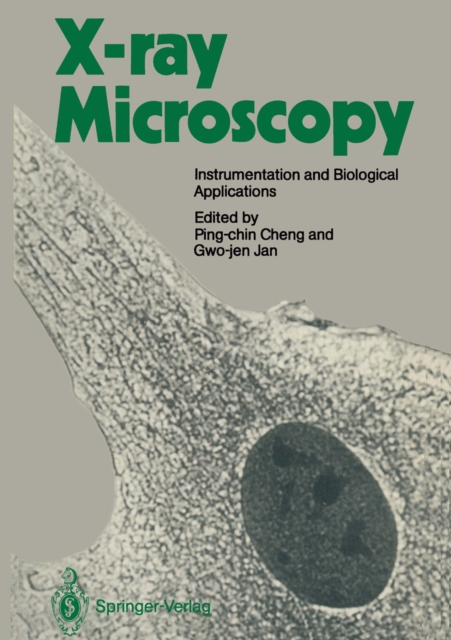
In 1979, a conference on x-ray microscopy was organized by the New York Academy of Sciences, and in 1983, the Second Interna- tional Symposium on X-ray Imaging was organized by the Akademie der Wissenschaften in Gottingen, Federal Republic of Germany.
Rhythms of the heart and of the nervous and endocrine system, breathing, locomotory movements, sleep, circadian rhythms and tissue cell cycles are major elements of the temporal order of man.
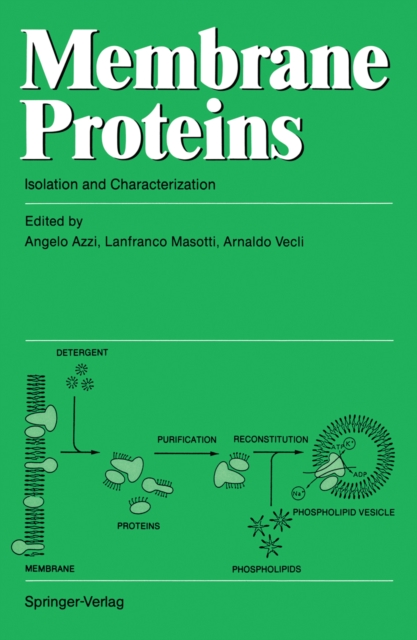
This volume is the third of a series on Membrane Proteins and, like the pre- ceding manuals, is the result of an International Advanced Course entitled Isolation and Characterization of Membrane Proteins: Biochemical and Bio- physical Aspects sponsored by the Federation of European Biochemical So- cieties (FEBS) and the Italian Research Council (CNR).
This book the second volume in the "e;Springer Series in Biophysics"e; col- lects together contributions to the conference on "e;Biophysics and Syn- chrotron Radiation"e; held in July 86 at Frascati.
On three occasions and at different locations, conferences were held to honor the eightieth birthday of Professor Herbert Frohlich: on the 18th December, 1985, in Liverpool, England; on the 14th February, 1986, in Stuttgart, Germany; and on the 8th March, 1986, on the Palm Coast, Florida.
The Editorial Board and the Publishers of the Handbook of Experimental Pharmacology wish to express their profound grief at the untimely death of Professor Peter Baker.
During the past decade we have witnessed not only an increase in knowledge of the "e;traditional"e; biophysical problems, but also an understanding of the molecular basis of various biological phenomena.
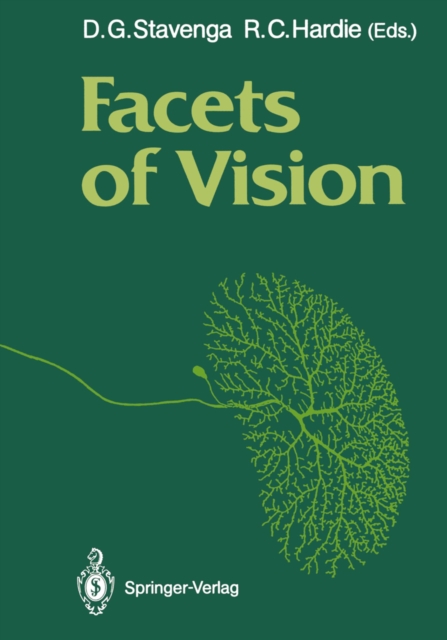
This book consists of papers presented at an international symposium spon- sored and organised by The Rank Prize Funds and held at The Royal Society, London, on 27-29 September, 1982.
The The use use of of lasers lasers in in medicine medicine has has opened opened up up entirely entirely new new fields fields of of therapy therapy and and diagnosis.
According to its definition, synergetics is concerned with the cooperation of indi- vidual parts of a system that produces macroscopic temporal, spatial or functional structures.
The determination of the three-dimensional structure of a biological molecule is the starting point in the understanding of molecular mechanisms involved in its complex biochemical reactions.
This book contains the invited papers of the interdisciplinary workshop on "e;Stochastic Nonlinear Systems in Physics, Chemistry and Biology"e; held at the Center for Interdisciplinary Research (ZIF), University of Bielefeld, West Germany, October 5-11, 1980.
In rund zwei Jahrzehnten hat sich die Entdeckung des Lasers als un gemein fruchtbar erwiesen, nicht nur für die Physik selbst (nichtli neare Optik), sondern auch darüber hinaus in den verschiedenen Zweigen der Naturwissenschaft und Technik.
If, ten years ago, one had been asked to comment on the prospects of peering into the fmest details of biomolecular organization, most electron microscopists would, I suppose at least, have been quite en- thusiastic.
Erstmalig für den deutschen Sprachraum wird ein methodisches Kompendium vorgelegt, mit dessen Hilfe eine umfassende Bearbeitung von historischen menschlichen Skelettresten ohne weiterführende Literatur möglich ist.