With contributions from a team of leading experts, this volume provides a comprehensive survey of recent achievements in our scientific understanding of evolution.
Steering clear of quantum mechanics and product operators, "e;Pocket Guide to Biomolecular NMR"e; uses intuitive, concrete analogies to explain the theory required to understand NMR studies on the structure and dynamics of biological macromolecules.
Physics, mathematics and chemistry all play a vital role in understanding the true nature and functioning of biological membranes, key elements of living processes.
Unlike most natural colours that are based on pigment absorption, the striking iridescent and intense colouration of many butterflies, birds or beetles stems from the interaction of light with periodic sub-micrometer surface or volume patterns, so called "e;photonic structures"e;.
The latest authors, like the most ancient, strove to subordinate the phenomena of nature to the laws of mathematics Isaac Newton, 1647-1727 The approach quoted above has been adopted and practiced by many teachers of chemistry.
Microdosimetry and Its Applications is an advanced textbook presenting the fundamental concepts and numerical aspects of the absorption of energy by matter exposed to ionizing radiation.
This book is intendedas a textbook fora radiationphysicscourseinacademic medical physics graduate programs as well as a reference book for candidates preparingforcerti?
It is well known that the biochemical processes of life on Earth are maintained by the external solar radiation and can be reduced to the synthesis and decomposition of organic matter.
Structural requirements constrain the evolution of biological entities at all levels, from macromolecules to their networks, right up to populations of biological organisms.
Psychoacoustics - Facts and Models offers a unique, comprehensive summary of information describing the processing of sound by the human hearing system.
"e;Physics of the Human Body"e; comprehensively addresses the physical and engineering aspects of human physiology by using and building on first-year college physics and mathematics.
This book provides an overview of single-cellisolation, separation, injection,lysis and dynamics analysis as well as a study of their heterogeneity usingdifferent miniaturized devices.
This volume contains papers presented at the Tenth International Conference on Ultrafast Phenomena held at Del Coronado, California, from May 28 to June 1, 1996.
Brain Dynamics serves to introduce graduate students and nonspecialists from various backgrounds to the field of mathematical and computational neurosciences.
The widespread interest this book has found among professors, scientists and stu- dents working in a variety of fields has made a new edition necessary.
The motivating idea of the first Topical Meeting on Picosecond Phenomena, which took place at Hilton Head Island in 1978, was to bring together scien- tists and engineers in a congenial setting who were developing picosecond lasers with those who were applying them to problems in chemistry, physics, electronics, and biology.
In this monograph, a statistical description of natural phenomena is used to develop an information processing system capable of modeling non-linear relationships between sensory data.
Computational Neurosciences is a burgeoning field of research where only the combined effort of neuroscientists, biologists, psychologists, physicists, mathematicians, computer scientists, engineers and other specialists, e.
This book features tutorial-like chapters on ultrafast intense laser science by world-leading scientists who are active in the rapidly developing interdisciplinary research field.
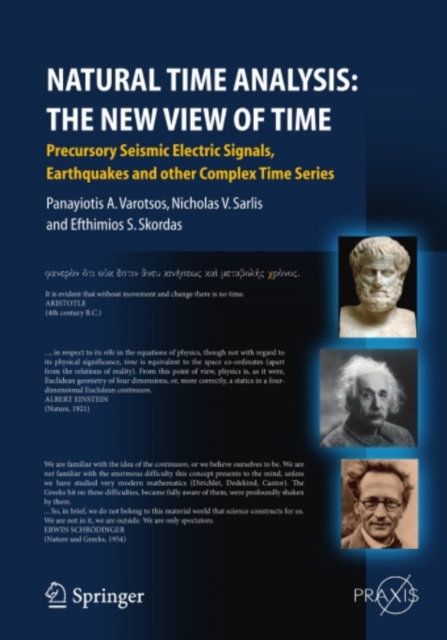
This book deals with the theory and the applications of a new time domain, termed natural time domain, that has been forwarded by the authors almost a decade ago (P.
It is increasingly being recognized that the experimental and theoretical study of the complex system brain requires the cooperation of many disciplines, in- cluding biology, medicine, physics, chemistry, mathematics, computer science, linguistics, and others.
One of the major challenges in tissue engineering is the translation of biological knowledge on complex cell and tissue behavior into a predictive and robust engineering process.