Biophysicists and medical doctors have learned that malfunction of the control layer in cells is responsible for a host of human disorders ranging from neurological disorders to cancers.
Scanning and stationary-beam electron microscopes have become an indespensible tool for both research and routine evaluation in materials science, the semiconductor industry, nanotechnology and the biological, forensic, and medical sciences.
Emergent Computation emphasizes the interrelationship of the different classes of languages studied in mathematical linguistics (regular, context-free, context-sensitive, and type 0) with aspects to the biochemistry of DNA, RNA, and proteins.
Over the years since NMR was first applied to solve problems in structural biology, it has undergonedramaticdevelopmentsinbothNMRinstrumenthardwareandmethodology.
Bioceramics: Properties, Characterization, and Applications will be a general introduction to the uses of ceramics and glasses in the human body for the purposes of aiding, healing, correcting deformities, and restoring lost function.
In these essays Heinz von Foerster discusses some of the fundamental principles that govern how we know the world and how we process the information from which we derive that knowledge.
The vitality of the cardiovascular system, which consists of the heart, vas- culature, and blood, depends on its response to a host of complex stimuli, including biological, chemical, electrical, mechanical, and thermal.
Handbook of Optimization in Medicine is devoted to examining the dramatic increase in the application of effective optimization techniques to the delivery of health care.
The Springer Handbook of Auditory Research presents a series of comp- hensive and synthetic reviews of the fundamental topics in modern au- tory research.
Je tiens impossible de connaitre les parties sans connaitre le tout, non plus que de connaitre le tout sans connaitre particulierement les parties -Pascal The eterna[ mystery of the world is its comprehensibility -Einstein This book deals with the application of mathematical tools to the study of physiological systems.
Jack Sabin, Scientist and Friend, Volume 85 in the Advances in Quantum Chemistry series, highlights new advances in the field, with chapters in this new release including: Elastic scattering of electrons and positrons from alkali atoms, Dissipative dynamics in many-atom systems, Shape sensitive Raman scattering from Nano-particles, Experience in E-learning and Artificial Intelligence, Structure and Correlation of Charges in a Harmonic Trap, Simulation of Molecular Spectroscopy in Binary Solvents, Approach for Orbital and Total Mean Excitation Energies of Atoms, and A New Generation of Quasiparticle Self-Energies.
Intersection of Iron and Lipid Metabolism, Volume 52 in the Enzymes series, highlights new advances in the field, with this new volume presenting interesting chapters on a variety of timely topics relating to enzymes research.
Structure and Intrinsic Disorder in Enzymology offers a direct, yet comprehensive presentation of the fundamental concepts, characteristics and functions of intrinsically disordered enzymes, along with valuable notes and technical insights powering new research in this emerging field.
Quantum Mechanics, Cell-Cell Signaling, and Evolution offers a detailed accounting of the latest research and theorizing on the integration of quantum physics with biological action to produce a novel perspective on evolution.
Essentials of Medical Biochemistry, Third Edition offers a condensed, yet detailed overview of clinical biochemistry, spanning fundamentals and relevant physiologic and pathophysiologic concepts.
Hormones, Fourth Edition provides a report on the field of human hormones viewed in light of our current understanding of cellular and subcellular architecture, along with the molecular details of their modes of action.
This second edition of Medical Biochemistry is supported by more than 45 years of teaching experience, providing coverage of basic biochemical topics, including the structural, physical, and chemical properties of water, carbohydrates, lipids, proteins, and nucleic acids.
**Selected for Doody's Core Titles(R) 2024 in Biochemistry**Human Biochemistry, Second Edition provides a comprehensive, pragmatic introduction to biochemistry as it relates to human development and disease.
Electrochemical Nano-biosensors: Applications in Diagnostics, Therapeutics, Environment, and Food Management features a critical overview of different, recently reported nanomaterial-based electrochemical sensing and biosensing strategies.
Viral Replication Enzymes and their Inhibitors, Part B, Volume 50 in The Enzymes series, highlights new advances in the field, with this new volume presenting interesting chapters on a variety of topics surrounding enzymes.
Advances in Microbial Physiology, Volume 79, the latest release in this serial that highlights new advances in the field, presents interesting and timely chapters authored by an international board of subject matter experts.
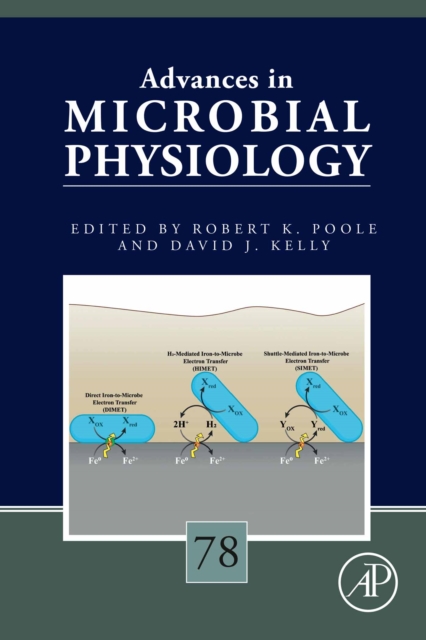
Advances in Microbial Physiology, Volume 78, the latest release in this ongoing series, continues the long tradition of topical, important, cutting-edge reviews in microbiology.
Bio-based Plant Oil Polymers and Composites provides engineers and materials scientists a useful framework to help take advantage of the latest research conducted in this rapidly advancing field-enabling them to develop and commercialize their own products quickly and more successfully.
Quantum Mechanics, Cell-Cell Signaling, and Evolution offers a detailed accounting of the latest research and theorizing on the integration of quantum physics with biological action to produce a novel perspective on evolution.
Physiology of the Eye, Fourth Edition reviews major advances in the physiology of the eye, including improvements in photochemical and electrophysiological techniques.
Metabolic Pathways, Third Edition: Volume IV: Nucleic Acids, Protein Synthesis, and Coenzymes focuses on the metabolic pathways of the major biological constituents of living organisms, namely, nucleic acids, proteins, and coenzymes.
Cytology and Cell Physiology, Third Edition focuses on cell cytology and physiology as well as recent advances in the techniques in studying cells, including microscopy.
The Biochemistry and Physiology of Bone, Second Edition: Volume I: Structure focuses on the nature and behavior of bone cells, the structure of the organic matrix of bone, mineral organization, and bone strength.
The Biochemistry and Physiology of Bone, Second Edition: Volume II: Physiology and Pathology investigates the physiological and pathological aspects of bone, including the blood vessels that nourish the bones; the mechanisms of bone formation, growth, repair, and transplantation; and the role of hormones and vitamins in the formation and maintenance of bone.
The Plasma Proteins: Structure, Function, and Genetic Control, Second Edition, Volume V explores the contribution of molecular biology and gene cloning approaches to the advancement of plasma protein structure, function, and genomic organization studies.