Hormones, Fourth Edition provides a report on the field of human hormones viewed in light of our current understanding of cellular and subcellular architecture, along with the molecular details of their modes of action.
This second edition of Medical Biochemistry is supported by more than 45 years of teaching experience, providing coverage of basic biochemical topics, including the structural, physical, and chemical properties of water, carbohydrates, lipids, proteins, and nucleic acids.
**Selected for Doody's Core Titles(R) 2024 in Biochemistry**Human Biochemistry, Second Edition provides a comprehensive, pragmatic introduction to biochemistry as it relates to human development and disease.
Electrochemical Nano-biosensors: Applications in Diagnostics, Therapeutics, Environment, and Food Management features a critical overview of different, recently reported nanomaterial-based electrochemical sensing and biosensing strategies.
Viral Replication Enzymes and their Inhibitors, Part B, Volume 50 in The Enzymes series, highlights new advances in the field, with this new volume presenting interesting chapters on a variety of topics surrounding enzymes.
Advances in Microbial Physiology, Volume 79, the latest release in this serial that highlights new advances in the field, presents interesting and timely chapters authored by an international board of subject matter experts.
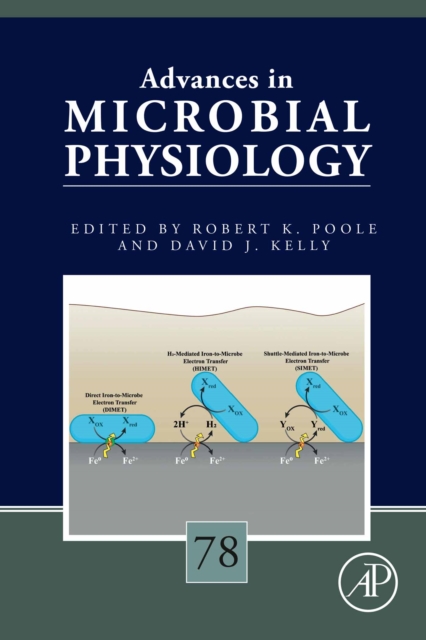
Advances in Microbial Physiology, Volume 78, the latest release in this ongoing series, continues the long tradition of topical, important, cutting-edge reviews in microbiology.
Bio-based Plant Oil Polymers and Composites provides engineers and materials scientists a useful framework to help take advantage of the latest research conducted in this rapidly advancing field-enabling them to develop and commercialize their own products quickly and more successfully.
Quantum Mechanics, Cell-Cell Signaling, and Evolution offers a detailed accounting of the latest research and theorizing on the integration of quantum physics with biological action to produce a novel perspective on evolution.
Physiology of the Eye, Fourth Edition reviews major advances in the physiology of the eye, including improvements in photochemical and electrophysiological techniques.
Metabolic Pathways, Third Edition: Volume IV: Nucleic Acids, Protein Synthesis, and Coenzymes focuses on the metabolic pathways of the major biological constituents of living organisms, namely, nucleic acids, proteins, and coenzymes.
Cytology and Cell Physiology, Third Edition focuses on cell cytology and physiology as well as recent advances in the techniques in studying cells, including microscopy.
Biological Effects of Radiation, Second Edition aims to present an organized survey of the various experiments wherein living materials have been exposed to ionizing and exciting types of radiations.
The Biochemistry and Physiology of Bone, Second Edition: Volume I: Structure focuses on the nature and behavior of bone cells, the structure of the organic matrix of bone, mineral organization, and bone strength.
The Biochemistry and Physiology of Bone, Second Edition: Volume II: Physiology and Pathology investigates the physiological and pathological aspects of bone, including the blood vessels that nourish the bones; the mechanisms of bone formation, growth, repair, and transplantation; and the role of hormones and vitamins in the formation and maintenance of bone.
The Plasma Proteins: Structure, Function, and Genetic Control, Second Edition, Volume V explores the contribution of molecular biology and gene cloning approaches to the advancement of plasma protein structure, function, and genomic organization studies.
The Carbohydrates: Chemistry and Biochemistry, Second Edition, Volume IIB is a complete revision of a previous work that was based on "e;The Chemistry of the Carbohydrates.
Time, Cells, and Aging, 2nd Edition presents the mechanics of cell function and the relevant implications of the molecular-genetic view to the aging phenomena.
The Proteins: Composition, Structure, and Function, Volume III, Second Edition is a collection of papers that deals with the proteins of antibodies and antigens, of the blood clotting system, plasma proteins, and the virus proteins.
The Biochemistry and Physiology of Bone, Second Edition: Volume IV: Calcification and Physiology explores the biochemical and physiological aspects of bone calcification.
The Biochemistry and Physiology of Bone, Second Edition: Volume III: Development and Growth focuses on bone development and growth, including bone repair and transplantation, the mechanisms of bone formation, and the role of hormones in bone formation and maintenance.
G Proteins is an introduction to one class of systems used for signal transduction at the cell surface, with emphasis on its utilization of a heterotrimeric GTP-binding protein (G protein) to mediate the transfer of information across the plasma membrane, from receptor to effector.
Naturally Occurring Quinones aims to discuss where quinones, a major group of organic compounds that are considered as pigments, can be found in nature.
The Proteins: Composition, Structure, and Function, Second Edition, Volume II deals with fundamental properties of proteins, both in solution and in the solid state.
Problems with Temperature Regulation during Exercise covers the proceedings of the 1976 Problems of Temperature Regulation during Exercise symposium in conjunction with the American College of Sports Medicine meeting, held in Anaheim, California.
Chemistry and Functions of Colicins contains the proceedings of a Conference on the Structure and Functions of Colicins, held during the 72nd Annual Meeting of the American Society for Microbiology in Philadelphia, Pennsylvania in May 1972.
Neurochemical Aspects of Hypothalamic Function covers the proceedings of the Second International Meeting of the International Society for Neurochemistry, held in Milan, Italy, on September 1969.
Enzyme Catalysis and Regulation is an introduction to enzyme catalysis and regulation and covers topics ranging from protein structure and dynamics to steady-state enzyme kinetics, multienzyme complexes, and membrane-bound enzymes.
Marijuana and Health Hazards: Methodological Issues in Current Research is a collection of manuscripts presented at a conference on methodological issues involving marijuana research, held in Washington, D.
Newer Methods of Nutritional Biochemistry: With Applications and Interpretations, Volume V, presents discussions and reviews of procedures that may have a significant impact on the future progress of the science of nutrition.
The Biological Fractionation of Isotopes focuses on the biological fractionation of isotopes and presents calculations of the thermodynamic isotopic beta factor for polyatomic carbon compounds.
Systems Neuroscience is a compilation of interdisciplinary contributions to systems neuroscience - an approach within neuroscience that connects system theory and computer simulation.
High-Performance Liquid Chromatography of Proteins and Peptides contains the proceedings of the first International Symposium on High-Performance Liquid Chromatography of Proteins and Peptides, held in Washington, D.
Metabolic Maps of Pesticides, Volume 2, provides a summary of investigations and drawings of the metabolic patterns on pesticides that drawn from references published from 1985-1986 concerning metabolic fates in mammalian, plant, bird, soil, microorganism systems; by physicochemical reactions such as hydrolysis, photolysis, and thermal degradation; or studies in model systems.
Principles of Physiological Measurement examines the basic principles underlying the techniques and instruments used in making measurements, including tracer methods and compartmental analysis.
Clinical Biochemistry: Contemporary Theories and Techniques, Volume 3 broadens the scope of clinical biochemistry, discussing relevant aspects of serology, microbiology, monoclonal antibody techniques, and instrumentation.
Nutrition, Longevity, and Aging documents the proceedings of a symposium on "e;"e;Nutrition, Longevity, and Aging,"e;"e; held at the University of Miami School of Medicine, February 26-27, 1976, sponsored by the Training Program in Cellular Aging of the Departments of Physiology/Biophysics and Microbiology.
Comparative Endocrinology: A Treatise in Two Volumes, Volume II, Part One: Invertebrate Hormones, Part Two: Tissue Hormones focuses on animal physiology, morphology, and chemistry and systematic and comprehensive explanation of endocrine principles from the comparative point of view.
Homogeneous Catalysis by Metal Complexes, Volume II: Activation of Alkenes and Alkynes reviews and systematizes the chemistry of metal ion activation of alkenes and alkynes.