Proteomics in Biology, Part B, the latest volume in the Methods in Enzymology series, continues the legacy of this premier serial with quality chapters authored by leaders in the field.
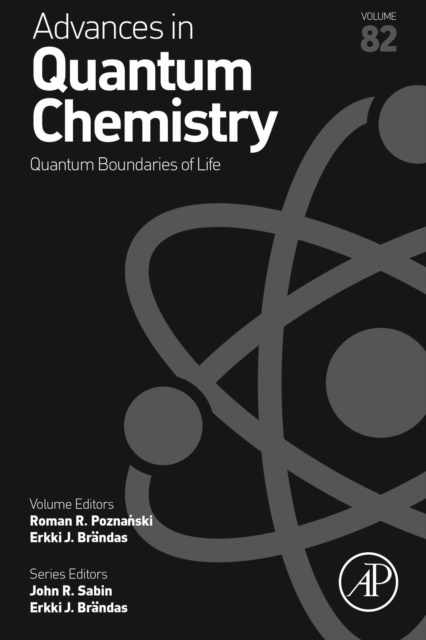
Quantum Boundaries of Life, Volume 82 in the Advances in Quantum Chemistry series, presents current topics in this rapidly developing field that have emerged at the cross section of mathematics, physics, chemistry and biology.
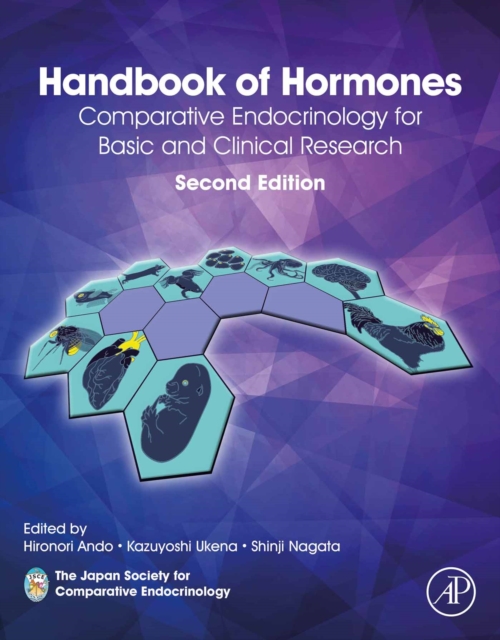
Handbook of Hormones: Comparative Endocrinology for Basic and Clinical Research, Second Edition presents a catalog of fundamental information on the structure and function of hormones from basic biology to clinical use, offering a rapid way to obtain specific facts about the chemical and molecular characteristics of hormones, their receptors, signaling pathways, and the biological activities they regulate.
Biochemistry of Collagens, Laminins, and Elastin: Structure, Function, and Biomarkers provides a comprehensive introduction to collagen and structural proteins.
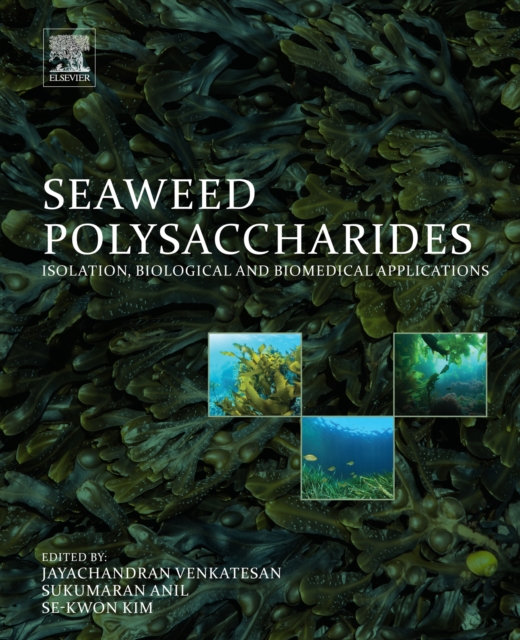
Seaweed Polysaccharides: Isolation, Biological, and Biomedical Applications examines the isolation and characterization of algal biopolymers, including a range of new biological and biomedical applications.
Circuits, Signals and Systems for Bioengineers: A MATLAB-Based Introduction, Third Edition, guides the reader through the electrical engineering principles that can be applied to biological systems.
Tissue Elasticity Imaging: Volume Two: Clinical Applications offers an extensive treatment of the fundamentals and applications of this groundbreaking diagnostic modality.
Tissue Elasticity Imaging: Volume One: Theory and Methods offers an extensive treatment of the fundamentals and applications of this groundbreaking diagnostic modality.
Na Channels from Phyla to Function, the latest volume in the Current Topics in Membranes series, is targeted toward scientists and researchers in biochemistry and molecular and cellular biology, providing the necessary membrane research to assist them in discovering the current state of a particular field and in learning where that field is heading.
Thymosins, the latest volume in the Vitamins and Hormones series, first published in 1943, and the longest-running serial published by Academic Press, provides up-to-date information on thymosins research that spans new data from molecular biology to the clinic.
Advances in Clinical Chemistry, Volume 73, the latest installment in this internationally acclaimed series, contains chapters authored by world-renowned clinical laboratory scientists, physicians, and research scientists.
Advances in Clinical Chemistry, Volume 75, the latest installment in this internationally acclaimed series, contains chapters authored by world-renowned clinical laboratory scientists, physicians, and research scientists.
Advances in Clinical Chemistry, Volume 76, the latest installment in this internationally acclaimed series, contains chapters authored by world-renowned clinical laboratory scientists, physicians, and research scientists.
Advances in Clinical Chemistry, Volume 77, the latest installment in this internationally acclaimed series, contains chapters authored by world-renowned clinical laboratory scientists, physicians, and research scientists.
Nanotechnology and the Brain, the latest edition in the International Review of Neurobiology series is well-known for its appeal to neuroscientists, clinicians, psychologists, physiologists, and pharmacologists.
Nitric Oxide: Biology and Pathobiology, Third Edition, provides information on nitric oxide, a signaling molecule of key importance for the cardiovascular system that regulates blood pressure and blood flow to different organs.
Biomechanics of Living Organs: Hyperelastic Constitutive Laws for Finite Element Modeling is the first book to cover finite element biomechanical modeling of each organ in the human body.
Experimental Methods in Orthopaedic Biomechanics is the first book in the field that focuses on the practicalities of performing a large variety of in-vitro laboratory experiments.
Human Physiology, Biochemistry and Basic Medicine is a unique perspective that draws together human biology, physiology, biochemistry, nutrition, and cell biology in one comprehensive volume.
G-Protein-Coupled Receptors: Signaling, Trafficking, and Regulation, a new volume in the Methods in Cell Biology series continues the legacy of this premier serial with quality chapters authored by leaders in the field.
Handbook of Supportive and Palliative Radiation Oncology serves as a practical tool and rapid reference to assist radiation oncology practitioners in direct patient care with common palliative care issues.
Intermediate Filament Proteins, the latest volume in the Methods in Enzymology series covers all the intermediate filaments in vertebrates and invertebrates, providing a unique understanding of the multiple different tissue-specific intermediate filaments.
Intermediate Filament Associated Proteins, the latest volume in the Methods in Enzymology series, continues the legacy of this premier serial with quality chapters authored by leaders in the field.
Biomechanics of the Female Pelvic Floor, Second Edition, is the first book to specifically focus on this key part of women's health, combining engineering and clinical expertise.
Isotope Labeling of Biomolecules - Labeling Methods, the latest volume of the Methods in Enzymology series contains comprehensive information on stable isotope labeling methods and applications for biomolecules.
The Elsevier book-series Advances in Planar Lipid Bilayers and Liposomes, provides a global platform for a broad community of experimental and theoretical researchers studying cell membranes, lipid model membranes and lipid self-assemblies from the micro- to the nanoscale.
Published continuously since 1944, the Advances in Protein Chemistry and Structural Biology series has been the essential resource for protein chemists.
Electron Paramagnetic Resonance Investigations of Biological Systems by Using Spin Labels, Spin Probes, and Intrinsic Metal Ions Part A & B, are the latest volumes in the Methods in Enzymology series, continuing the legacy of this premier serial with quality chapters authored by leaders in the field.
Virology is in a sense both one of the most important precursors and one of the most significant beneficiaries of structural and cellular molecular biology.
Volume 69 in the internationally acclaimed Advances in Clinical Chemistry contains chapters authored by world renowned clinical laboratory scientists, physicians and research scientists.
RNA Modification provides a useful examination of the science and its role in biological regulation, the current frontier of life science research, and includes various RNA modications and their role in gene expression.
The Elsevier book-series "e;Advances in Planar Lipid Bilayers and Liposomes' (APLBL) provides a global platform for a broad community of experimental and theoretical researchers studying cell membranes, lipid model membranes and lipid self-assemblies from the micro- to the nanoscale.
Combined Quantum Mechanical and Molecular Mechanical Modelling of Biomolecular Interactions continues the tradition of the Advances in Protein Chemistry and Structural Biology series has been the essential resource for protein chemists.
Quantitative Human Physiology: An Introduction, winner of a 2018 Textbook Excellence Award (Texty), is the first text to meet the needs of the undergraduate bioengineering student who is being exposed to physiology for the first time, but requires a more analytical/quantitative approach.
Although the origin and the basic meaning of the terms "e;planar lipid bilayers"e; and "e;liposome"e; have not changed during the years, the present advances in the scientific, technological, biomedical and consumer product fields are remarkable.
Advances in Planar Lipid Bilayers and Liposomes cover a broad range of topics, including main arrangements of the reconstituted system, namely planar lipid bilayers as well as spherical liposomes.
There continues to be intense interest in the microtubule cytoskeleton; the assembly, structure and regulation of microtubules; and the numerous motors and accessory proteins that control cell cycle, dynamics, organization and transport.
Patterns and their formations appear throughout nature, and are studied to analyze different problems in science and make predictions across a wide range of disciplines including biology, physics, mathematics, chemistry, material science, and nanoscience.
This volume of Current Topics in Membranes focuses on metal transmembrane transporters and pumps, a recently discovered family of membrane proteins with many important roles in the physiology of living organisms.
Recent years have seen a considerable emphasis on growth factors and the elucidation of their mode of function, which has led to the recognition that growth factors, their receptors as well as downstream elements of signalling associated with their function might be potential targets in therapeutic management of human diseases.
Principles of Environmental Physics: Plants, Animals, and the Atmosphere, 4e, provides a basis for understanding the complex physical interactions of plants and animals with their natural environment.
Physics in Biology and Medicine, Fourth Edition, covers topics in physics as they apply to the life sciences, specifically medicine, physiology, nursing and other applied health fields.
The Common Extremalities in Biology and Physics is the first unified systemic description of dissipative phenomena, taking place in biology, and non-dissipative (conservative) phenomena, which is more relevant to physics.