Adjustment Models in 3D Geomatics and Computational Geophysics: With MATLAB Examples, Volume Four introduces a complete package of theoretical and practical subjects in adjustment computations relating to Geomatics and geophysical applications, particularly photogrammetry, surveying, remote sensing, GIS, cartography, and geodesy.
Semi-Lagrangian Advection Methods and Their Applications in Geoscience provides a much-needed resource on semi-Lagrangian theory, methods, and applications.
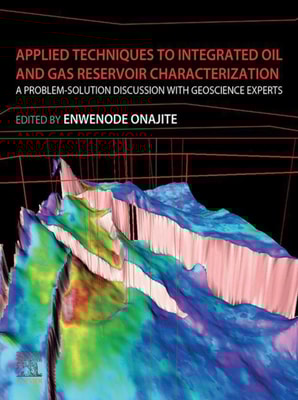
Over the past several years, there has been a growing integration of data - geophysical, geological, petrophysical, engineering-related, and production-related - in predicting and determining reservoir properties.
Satellite Gravimetry and the Solid Earth: Mathematical Foundations presents the theories behind satellite gravimetry data and their connections to solid Earth.
Advanced Remote Sensing: Terrestrial Information Extraction and Applications, Second Edition, is a thoroughly updated application-based reference that provides a single source on the mathematical concepts necessary for remote sensing data gathering and assimilation.
Modern Global Seismology, Second Edition, is a complete, self-contained primer on seismology, featuring extensive coverage of all related aspects-from observational data through prediction-and emphasizing the fundamental theories and physics governing seismic waves, both natural and anthropogenic.
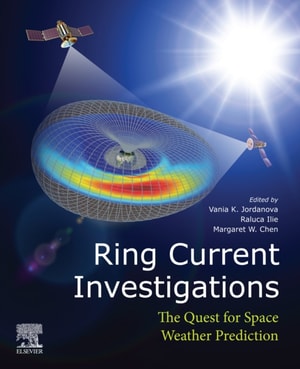
Ring Current Investigations offers a comprehensive description of ring current dynamics in the Earth's magnetosphere as part of the coupled magnetosphere-ionosphere system.
Over the past several years, there has been a growing integration of data - geophysical, geological, petrophysical, engineering-related, and production-related - in predicting and determining reservoir properties.
The Dynamic Loss of Earth's Radiation Belts: From Loss in the Magnetosphere to Particle Precipitation in the Atmosphere presents a timely review of data from various explorative missions, including the Van Allen Probes, the Magnetospheric Multiscale Mission (which aims to determine magnetopause losses), the completion of four BARREL balloon campaigns, and several CubeSat missions focusing on precipitation losses.
This book presents the state-of-the-art of optical remote sensing applied for the generation of marine climate-quality data products, with contributions by international experts in the field.
Introduction to Satellite Remote Sensing: Atmosphere, Ocean and Land Applications is the first reference book to cover ocean applications, atmospheric applications, and land applications of remote sensing.
Understanding Faults: Detecting, Dating, and Modeling offers a single resource for analyzing faults for a variety of applications, from hazard detection and earthquake processes, to geophysical exploration.
You hold in your hands the most original guide to understanding the oil and gas world - from exploration and production to the related economics and geopolitics.
Ring Current Investigations offers a comprehensive description of ring current dynamics in the Earth's magnetosphere as part of the coupled magnetosphere-ionosphere system.
GIS and Geostatistical Techniques for Groundwater Science provides a detailed synthesis of the application of GIS and geostatistics in groundwater studies.
This book describes the derivation of the equations of motion of fluids as well as the dynamics of ocean and atmospheric currents on both large and small scales through the use of variational methods.
This book, now in its second edition, offers a comprehensive and modern treatment on the background knowledge of heat transfer processes in the lithosphere.
The aim of this book is to provide an overview of topics related to the extensive geoheritage of hot springs, their natural environments, and their integration into commercial and industrial functions.
The Sun as a Guide to Stellar Physics illustrates the significance of the Sun in understanding stars through anexamination of the discoveries and insights gained from solar physics research.
The collapse of the Soviet Union has seen the emergence of its unprecedentedly comprehensive global secret military mapping project and the commercial availability of a vast number of detailed topographic maps and city plans at several scales.
The vital interconnections that rivers share with the land, the sky, and usRivers are essential to civilization and even life itself, yet how many of us truly understand how they work?
Structure and Tectonics of the Indian Continental Crust and Its Adjoining Region: Deep Seismic Studies, Second Edition, collates essential data from seismic studies of Earth's crust across India, offering an essential understanding of the tectonic development of the Indian subcontinent.
Geophysical Data Analysis: Diverse Inverse Theory, Fourth Edition is a revised and expanded introduction to inverse theory and tomography as it is practiced by geophysicists.
Parameter Estimation and Inverse Problems, Third Edition, is structured around a course at New Mexico Tech and is designed to be accessible to typical graduate students in the physical sciences who do not have an extensive mathematical background.
The Dynamic Loss of Earth's Radiation Belts: From Loss in the Magnetosphere to Particle Precipitation in the Atmosphere presents a timely review of data from various explorative missions, including the Van Allen Probes, the Magnetospheric Multiscale Mission (which aims to determine magnetopause losses), the completion of four BARREL balloon campaigns, and several CubeSat missions focusing on precipitation losses.
Complexity of Seismic Time Series: Measurement and Application applies the tools of nonlinear dynamics to seismic analysis, allowing for the revelation of new details in micro-seismicity, new perspectives in seismic noise, and new tools for prediction of seismic events.
Dynamic Mars: Recent and Current Landscape Evolution of the Red Planet presents the latest observations, interpretations, and explanations of geological change at the surface or near-surface of this terrestrial body.
Model Ecosystems in Extreme Environments, Second Edition examines ecosystems at the most extreme habitats and their interaction with the environment, providing a key element in our understanding of the role and function of microorganisms in nature.
Extreme Events in Geospace: Origins, Predictability, and Consequences helps deepen the understanding, description, and forecasting of the complex and inter-related phenomena of extreme space weather events.
Innovation in Near-Surface Geophysics: Instrumentation, Application, and Data Processing Methods offers an advanced look at state-of-the-art and innovative technologies for near surface geophysics, exposing the latest, most effective techniques in an accessible way.
Advances in Geophysics, Volume 58, the latest in this critically acclaimed serialized review journal that has published for over 50 years, contains the latest information available in the field.
The Handbook of Borehole Acoustics and Rock Physics for Reservoir Characterization combines in a single useful handbook the multidisciplinary domains of the petroleum industry, including the fundamental concepts of rock physics, acoustic logging, waveform processing, and geophysical application modeling through graphical examples derived from field data.
Transform Plate Boundaries and Fracture Zones bridges the gap between the classic plate tectonic theory and new emerging ideas, offering an assessment of the state-of-the-art, pending questions, and future directions in the study of transform plate boundaries and fracture zones.
Advantages and Pitfalls of Pattern Recognition presents various methods of pattern recognition and classification, useful to geophysicists, geochemists, geologists, geographers, data analysts, and educators and students of geosciences.
Machine Learning Techniques for Space Weather provides a thorough and accessible presentation of machine learning techniques that can be employed by space weather professionals.
Geophysical Potential Fields: Geological and Environmental Applications, Volume Two, investigates the similarities and differences of potential geophysical fields, including gravity, magnetics, temperature, resistivity and self-potential, along with the influence of noise on these fields.
Acquisition and Processing of Marine Seismic Data demonstrates the main principles, required equipment, and suitable selection of parameters in 2D/3D marine seismic data acquisition, as well as theoretical principles of 2D marine seismic data processing and their practical implications.
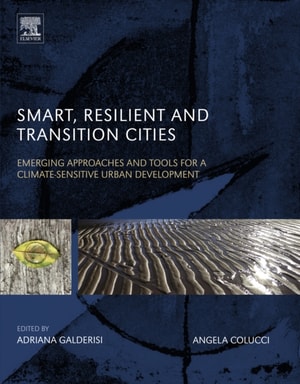
Smart, Resilient and Transition Cities: Emerging Approaches and Tools for Climate-Sensitive Urban Development starts with a presentation of three widespread Urban Metaphors, which are gaining increasing attention from urban planners and decision-makers: Smart City, Resilient City and Transition Towns, being all of them focused on the need for enhancing cities' capacities to cope with the multiple and heterogeneous challenges threatening contemporary cities and their future development and, above all, with climate issues.
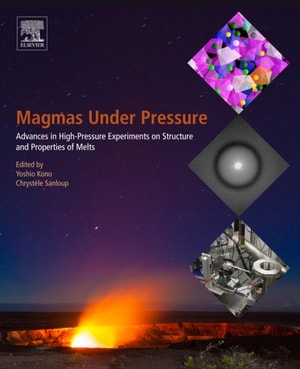
Magmas under Pressure: Advances in High-Pressure Experiments on Structure and Properties of Melts summarizes recent advances in experimental technologies for studying magmas at high pressures.
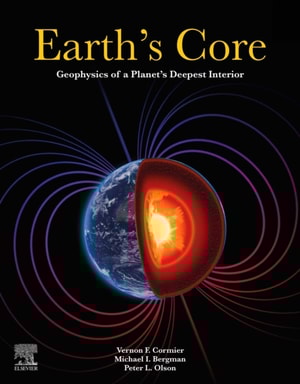
Earth's Core: Geophysics of a Planet's Deepest Interior provides a multidisciplinary approach to Earth's core, including seismology, mineral physics, geomagnetism, and geodynamics.
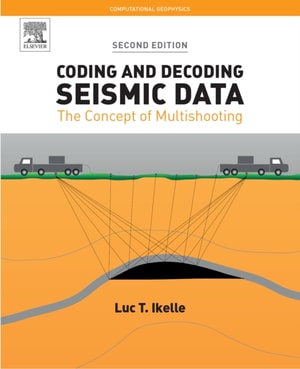
Coding and Decoding Seismic Data: The Concept of Multishooting, Volume One, Second Edition, offers a thorough investigation of modern techniques for collecting, simulating, and processing multishooting data.
From Habitability to Life on Mars explores the current state of knowledge and questions on the past habitability of Mars and the role that rapid environmental changes may have played in the ability of prebiotic chemistry to transition to life.
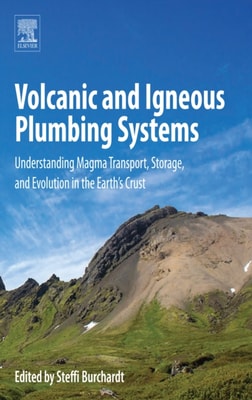
Volcanic and Igneous Plumbing Systems: Understanding Magma Transport, Storage, and Evolution in the Earth's Crust synthesizes research from various geoscience disciplines to examine volcanic and igneous plumbing systems (VIPS) in-depth.
Advances in Geophysics, the latest in this critically acclaimed serialized review journal that has published for over 50 years, contains the latest information available in the field.
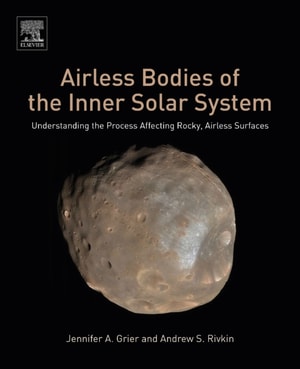
Airless Bodies of the Inner Solar System: Understanding the Process Affecting Rocky, Airless Surfaces focuses on the airless, rocky bodies in the inner solar system as a host unto themselves, with a unique set of processes that require a specific set of investigative techniques.