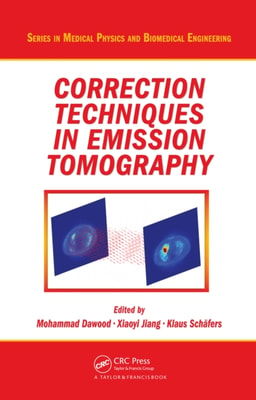
Written by an interdisciplinary team of medical doctors, computer scientists, physicists, engineers, and mathematicians, Correction Techniques in Emission Tomography presents various correction methods used in emission tomography to generate and enhance images.
Combining a professional development course on diagnostic endoscopy from SPIE (the international society advancing light-based research) and the authors' graduate course on biomedical optics, this work is written for researchers in medical optics and biomedical engineering as well as graduate medical optics students.
Covering theoretical methods and computational techniques in biomolecular research, this book focuses on approaches for the treatment of macromolecules, including proteins, nucleic acids, and bilayer membranes.
The Dictionary of Geophysics, Astrophysics, and Astronomy provides a lexicon of terminology covering fields such as astronomy, astrophysics, cosmology, relativity, geophysics, meteorology, Newtonian physics, and oceanography.
The revolution in twentieth-century physics has offered answers to many of the big questions of existence, such as the ultimate nature of things and how the universe came into being.
Explaining the chromatic methodology for the intelligent monitoring of complex systems, Chromatic Monitoring of Complex Conditions demonstrates that chromatic processing is analogous to human vision yet also extends into a wide range of nonoptical domains.
Surface tension provides a thermodynamic avenue for analyzing systems in equilibrium and formulating phenomenological explanations for the behavior of constituent molecules in the surface region.
Polymer translocation occurs in many biological and biotechnological phenomena where electrically charged polymer molecules move through narrow spaces in crowded environments.
Does a change, which affects a few biological macro-molecules, some cells, or a few individuals within a population, have any ecological significance that would allow the prediction of deleterious effects at higher levels of biological organization, namely the population, community, and ultimately the ecosystem?
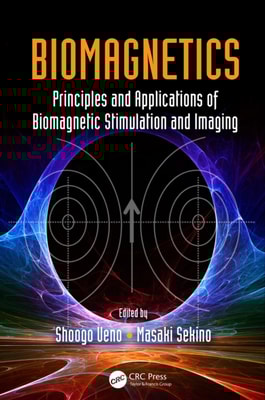
Discover the Most Advanced Technologies in BiomagneticsCo-edited by Professor Ueno, a leader in the biomagnetics field for over 40 years, Biomagnetics: Principles and Applications of Biomagnetic Stimulation and Imaging explains the physical principles of biomagnetic stimulation and imaging and explores applications of the latest techniques in neuroscience, clinical medicine, and healthcare.
Modern brachytherapy is one of the most important oncological treatment modalities requiring an integrated approach that utilizes new technologies, advanced clinical imaging facilities, and a thorough understanding of the radiobiological effects on different tissues, the principles of physics, dosimetry techniques and protocols, and clinical expertise.
Dark Matter: An Introduction tackles the rather recent but fast-growing subject of astroparticle physics, encompassing three main areas of fundamental physics: cosmology, particle physics, and astrophysics.
As a result of their unique physical properties, biological membrane mimetics, such as liposomes, are used in a broad range of scientific and technological applications.
Soft condensed matter physics, which emerged as a distinct branch of physics in the 1990s, studies complex fluids: liquids in which structures with length scale between the molecular and the macroscopic exist.
The future of cancer research and the development of new therapeutic strategies rely on our ability to convert biological and clinical questions into mathematical models-integrating our knowledge of tumour progression mechanisms with the tsunami of information brought by high-throughput technologies such as microarrays and next-generation sequencin
Addressing the persistent environmental threat of organic chemicals with a fresh approach to degradation and transformation processes, Organic Chemicals in the Environment: Mechanisms of Degradation and Transformation, Second Edition examines a wide range of compounds as well as abiotic and microbiological reactions mediated by microorganisms
An In-Depth View of Hardware Issues, Programming Practices, and Implementation of Key MethodsExploring the challenges of parallel programming from the perspective of quantum chemists, Parallel Computing in Quantum Chemistry thoroughly covers topics relevant to designing and implementing parallel quantum chemistry programs.
Modern petroleum and petrotechnical engineering is increasingly challenging due to the inherently scarce and decreasing number of global petroleum resources.
Gain a Unique and Comprehensive Understanding of UltrasonicsDespite its importance, most books on ultrasonics cover only very specific sub-fields of the science.
In a microgravity experiment, the conditions prevalent in fluid phases can be substantially different from those on the ground and can be exploited to improve different processes.
From the discovery of x-rays in 1895 through the emergence of computed tomography (CT) in the 1970s and magnetic resonance imaging (MRI) in the 1980s, non-invasive imaging has revolutionized the practice of medicine.
The subject of wavelet analysis and fractal analysis is fast developing and has drawn a great deal of attention in varied disciplines of science and engineering.
Helping readers understand the complicated laws of nature, Advanced Particle Physics Volume I: Particles, Fields, and Quantum Electrodynamics explains the calculations, experimental procedures, and measuring methods of particle physics.
Red blood cells in humans-and most other mammals-have a tendency to form aggregates with a characteristic face-to-face morphology, similar to a stack of coins.
The Radiological Sciences Dictionary is a rapid reference guide for all hospital staff employed in diagnostic imaging, providing definitions of over 3000 keywords as applied to the technology of diagnostic radiology.
Providing the most comprehensive, up-to-date coverage of this exciting biomedical field, Handbook of Photomedicine gathers together a large team of international experts to give you a complete account of the application of light in healthcare and medical science.
This book describes the enormous depth of work carried out since the early 1970s on the Messina Strait Bridge, up to the recent award of the detailed design and construction contract.
Providing a comprehensive introduction with the necessary background material to make it accessible for a wide scientific audience, Kinetics of Phase Transitions discusses developments in domain-growth kinetics.
Physics to a Degree provides an extensive collection of problems suitable for self-study or tutorial and group work at the level of an undergraduate physics course.
Detecting Signals at the Single Molecule Level: Pioneering Achievements in MicroscopyRecent advances have led to such remarkable improvements in fluorescence lifetime imaging microscopy's (FLIM) capacity for contrast and sensitivity that researchers can now employ it to detect signals at the single molecule level.
CI Techniques & Algorithms for a Variety of Medical Imaging SituationsDocuments recent advances and stimulates further researchA compilation of the latest trends in the field, Computational Intelligence in Medical Imaging: Techniques and Applications explores how intelligent computing can bring enormous benefit to existing technology in medical
This text gives students a clear and easily understood introduction to entropy - a central concept in thermodynamics, but one which is often regarded as the most difficult to grasp.
Materials where electrons show nearly localized rather than itinerant behaviour, such as the high-temperature superconducting copper oxides, or manganate oxides, are attracting interest due to their physical properties and potential applications.
Since the publication of the popular first edition, stellar and planetary scientists have produced numerous new observations, theories, and interpretations, including the "e;demotion"e; of our former ninth planet Pluto as a dwarf planet.