For a machine to convert text into sounds that humans can understand as speech requires an enormous range of components, from abstract analysis of discourse structure to synthesis and modulation of the acoustic output.
This is a broad-based text on the fundamentals of explosive behavior and the application of explosives in civil engineering, industrial processes, aerospace applications, and military uses.
This IMA Volume in Mathematics and its Applications DYNAMICAL ISSUES IN COMBUSTION THEORY is based on the proceedings of a workshop which was an integral part of the 1989-90 IMA program on "e;Dynamical Systems and their Applications.
The basic topic of this book is to advocate the establishment of a world federation and world government and to consider the philosophy on how we can be happy.
The revised edition of this book offers an expanded review of acoustic metamaterials; novel materials which can manipulate sound waves, surface Rayleigh waves and water waves, in surprising ways, which include collimation, focusing, negative refraction, passive and active cloaking, sonic screening and extraordinary transmission.
Control of Noise and Structural Vibration presents a MATLAB(R)-based approach to solving the problems of undesirable noise generation and transmission by structures and of undesirable vibration within structures in response to environmental or operational forces.
Modeling and Simulation of Sono-processes provides an overview of the mathematical modeling and numerical simulation as applied to sono-process-related phenomena, from the microscopic to the macroscopic scale, collecting information on this topic into one dedicated resource for the first time.
Shallow water acoustics (SWA), the study of how low and medium frequency sound propagates and scatters on the continental shelves of the worlds oceans, has both technical interest and a large number of practical applications.
The symposium on Acoustical Signal Processing in the Central Auditory System which was held in Prague on September 4--7, 1996 was the third in a series organized in Prague, after the Neuronal Mechanisms of Hearing symposium in 1980 and Auditory Pathway - Structure and Function symposium in 1987.
Senior level/graduate level text/reference presenting state-of-the- art numerical techniques to solve the wave equation in heterogeneous fluid-solid media.
The contents of this volume are the proceedings of the 23'd International Symposium on Acoustical Imaging which took place 13-16 April, 1997, in Boston, Massachusetts.
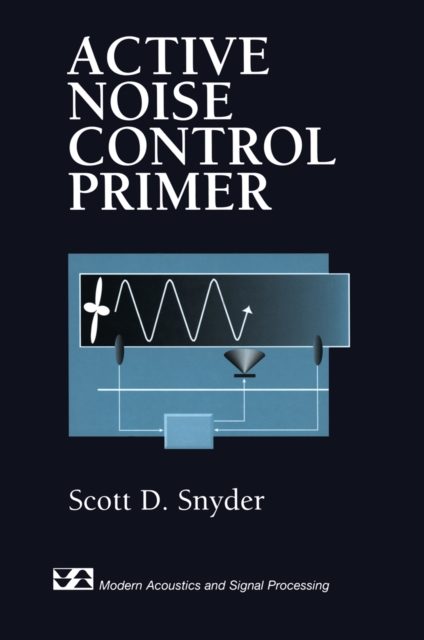
Active noise control - the reduction of noise by generating an acoustic signal that actively interferes with the noise - has become an active area of basic research and engineering applications.
The Springer Handbook of Auditory Research presents a series of comprehensive and synthetic reviews of the fundamental topics in modern auditory research.
This volume contains the papers presented at the 15th International Symposium on Hearing (ISH), which was held at the Hotel Regio, Santa Marta de Tormes, Salamanca, Spain, between 1st and 5th June 2009.
Ando establishes a theory of subjective preference of the sound field in a concert hall, based on preference theory with a model of human auditory-brain system.
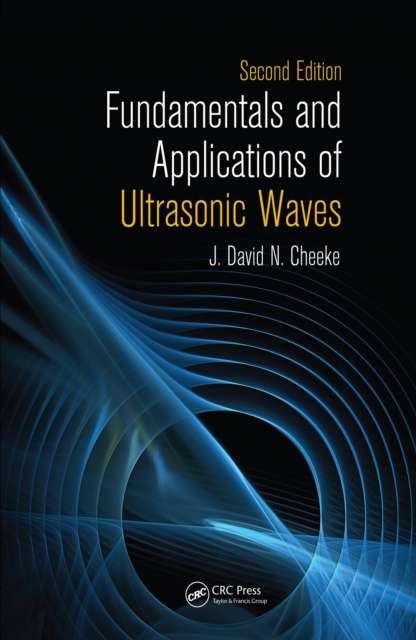
Written at an intermediate level in a way that is easy to understand, Fundamentals and Applications of Ultrasonic Waves, Second Edition provides an up-to-date exposition of ultrasonics and some of its main applications.
Requiring no advanced knowledge of wave propagation, An Introduction to Metamaterials and Waves in Composites focuses on theoretical aspects of metamaterials, periodic composites, and layered composites.
From jet engine noise that generates vibrations in the structure of an aircraft, to the sound radiation from the hull of a ship or submarine that makes it identifiable, an understanding of structural acoustics is key in the design process in maritime, automotive, aerospace, and architectural engineering.
Although scientists have effectively employed the concepts of probability to address the complex problem of prediction, modern science still falls short in establishing true predictions with meaningful lead times of zero-probability major disasters.
Over the last twenty years, the growing availability of computing power has had an enormous impact on the classical fields of direct and inverse scattering.
Although a wide range of mathematical techniques can apply to solving problems involving the interaction of waves with structures, few texts discuss those techniques within that context-most often they are presented without reference to any applications.
Although the theory behind solitary waves of strain shows that they hold significant promise in nondestructive testing and a variety of other applications, an enigma has long persisted-the absence of observable elastic solitary waves in practice.
Due to the increase in computational power and new discoveries in propagation phenomena for linear and nonlinear waves, the area of computational wave propagation has become more significant in recent years.
Roger Fosdick The Journal of Elasticity: The Physical and Mathematical Science of Solids invites expository articles from time-to-time in order to collect results in areas of research that have made significant impact on the field of solid mechanics and that show continued interest in present-day research and thinking.
Low-Frequency Noise in Advanced CMOS Devices begins with an introduction to noise, describing the fundamental noise sources and basic circuit analysis.
The International Acoustical Imaging Symposium has been held continuously since 1968 as a unique forum for advanced research in all areas of acoustical imaging.
Written at an intermediate level in a way that is easy to understand, Fundamentals and Applications of Ultrasonic Waves, Second Edition provides an up-to-date exposition of ultrasonics and some of its main applications.
Emerging from the challenge to reconstruct sonic and spatial experiences of the deep past, this multidisciplinary collection of ten essays explores the intersection of liturgy, acoustics, and art in the churches of Constantinople, Jerusalem, Rome and Armenia, and reflects on the role digital technology can play in re-creating aspects of the sensually rich performance of the divine word.
Emerging from the challenge to reconstruct sonic and spatial experiences of the deep past, this multidisciplinary collection of ten essays explores the intersection of liturgy, acoustics, and art in the churches of Constantinople, Jerusalem, Rome and Armenia, and reflects on the role digital technology can play in re-creating aspects of the sensually rich performance of the divine word.
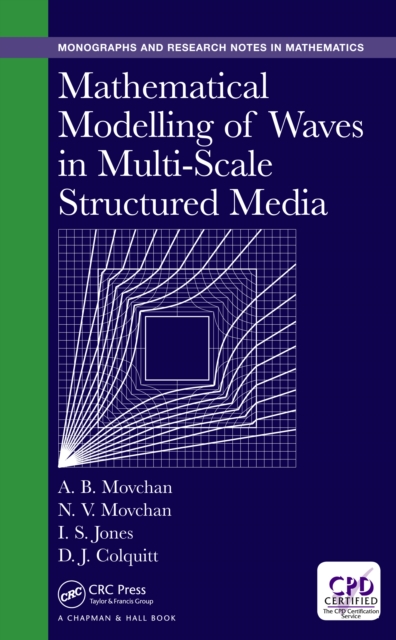
Mathematical Modelling of Waves in Multi-Scale Structured Media presents novel analytical and numerical models of waves in structured elastic media, with emphasis on the asymptotic analysis of phenomena such as dynamic anisotropy, localisation, filtering and polarisation as well as on the modelling of photonic, phononic, and platonic crystals.
Presenting a comprehensive description of the theory and physics of high-intensity ultrasound, this book also deals with a wide range of problems associated with the industrial applications of ultrasound, mainly in the areas of metallurgy and mineral processing.
Presenting a comprehensive description of the theory and physics of high-intensity ultrasound, this book also deals with a wide range of problems associated with the industrial applications of ultrasound, mainly in the areas of metallurgy and mineral processing.
For the first time in a single book, Non-Linear Instabilities in Plasmas and Hydrodynamics presents the underlying physics of fast secondary instabilities.
For the first time in a single book, Non-Linear Instabilities in Plasmas and Hydrodynamics presents the underlying physics of fast secondary instabilities.