Progress in Surface and Membrane Science, Volume 13 covers the progress in understanding certain aspects of surface and membrane science, including catalysis, permeability, and biomembranes.
The Statistical Theory of Non-equilibrium Processes in a Plasma covers the modern statistical theory of non-equilibrium processes in a plasma by a unified method, proceeding from the microscopic equations.
Transparencies to Accompany Physics for Students of Science and Engineering is a collection of 151 transparencies, illustrations, figures, and a table of moments of inertia of some common shapes that students in physics, science or engineering will find useful in advancing their course.
University Physics: Arfken Griffing Kelly Priest covers the concepts upon which the quantitative nature of physics as a science depends; the types of quantities with which physics deals are defined as well as their nature; and the concepts of units and dimensions.
Plasma Diagnostics, Volume 1: Discharge Parameters and Chemistry covers seven chapters on the important diagnostic techniques for plasmas and details their use in particular applications.
Materials Science and Technology Series: Synthetic Modulated Structures focuses on synthetic modulated structures, which is described as any periodically perturbed materials with a repetition greater than the basic unit cell dimension.
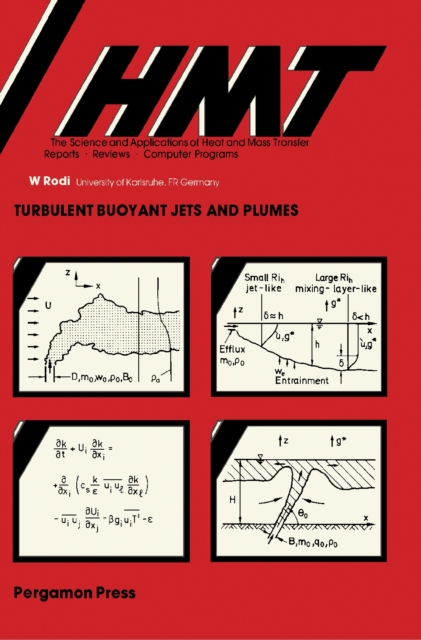
The Science & Applications of Heat and Mass Transfer: Reports, Reviews, & Computer Programs, Volume 6: Turbulent Buoyant Jets and Plumes focuses on the formation, properties, characteristics, and reactions of turbulent jets and plumes.
Methods of Statistical Physics is an exposition of the tools of statistical mechanics, which evaluates the kinetic equations of classical and quantized systems.
Mechanics of Liquids and Gases, Second Edition is a 10-chapter text that covers significant revisions concerning the dynamics of an ideal gas, a viscous liquid and a viscous gas.
The Theory of Space, Time, and Gravitation, 2nd Revised Edition focuses on Relativity Theory and Einstein's Theory of Gravitation and correction of the misinterpretation of the Einsteinian Gravitation Theory.
Engineering Field Theory focuses on the applications of field theory in gravitation, electrostatics, magnetism, electric current flow, conductive heat transfer, fluid flow, and seepage.
Statistical Mechanics discusses the fundamental concepts involved in understanding the physical properties of matter in bulk on the basis of the dynamical behavior of its microscopic constituents.
Foundations of Classical and Quantum Statistical Mechanics details the theoretical foundation the supports the concepts in classical and quantum statistical mechanics.
Introduction to the Theory of Shells provide a brief introduction to the foundations of shell theory, and to some of the important problems that can be tackled within the framework of shell theory.
Quantum Mechanics deals with various aspects of quantum mechanics and covers topics ranging from the uncertainty principle and the principle of superposition to conservation laws, Schrodinger's equation, and perturbation theory.
International Series in Natural Philosophy, Volume 86: Gravitation and Relativity provides information pertinent to the fundamental aspects of the theories of gravitation.
Problems in Undergraduate Physics, Volume II: Electricity and Magnetism is part of a series of titles that provides a collection of problems in the various aspects of physics.
Men of Physics: Benjamin Thompsona Count Rumford: Count Rumford on the Nature of Heat presents the life and works of Count Rumford, an American-born British physicist and inventor.
Handbook of Vacuum Physics, Volume 3: Technology is part of a series of publications that presents articles featuring the whole spectrum of vacuum physics.
Men of Physics: Karl Lark-Horovitz presents the biography of Karl Lark-Horovitz, a physicist who significantly contributed in the then-young field of experimental nuclear physics.
Tables of the Velocity of Sound in Sea Water contains tables of the velocity of sound in sea water computed on a "e;Strela-3"e; high-speed electronic computer and a T-5 tabulator at the Computational Center of the Academy of Sciences.
International Series of Monographs on Aeronautics and Astronautics, Division VII, Volume 5: The Flight of Uncontrolled Rockets focuses on external ballistics of uncontrolled rockets.
Thermoelasticity, Second Edition reviews advances in thermoelasticity and covers topics ranging from stationary problems of thermoelasticity to variational theorems of stationary thermoelasticity; stresses due to the action of a discontinuous temperature field in an infinite elastic body; the action of heat sources in the elastic space; and thermal inclusions in an infinite disc and semi-infinite disc.
Matrix Computer Methods of Vibration Analysis is an eight-chapter introductory text to a particular technique that combines vibration analysis, matrix algebra, and computational methods.
Prediction of Transport and Other Physical Properties of Fluids reviews general methods for predicting the transport and other physical properties of fluids such as gases and liquids.
Structural Analysis Systems: Software-Hardware Capability-Compatibility-Applications, Volume 2 is a practical guidebook on structural analysis systems and their applications.