Radar Signal Processing and Its Applications brings together in one place important contributions and up-to-date research results in this fast-moving area.
Multidimensional Filter Banks and Wavelets: Reserach Developments and Applications brings together in one place important contributions and up-to-date research results in this important area.
Since the beginning of the preparation of this volume, we have been convinced that temperature and pressure measurements should not be separated, particularly in different applications at low temperatures.
By modern analytic mechanics we mean the classical mechanics of today, that is, the mechanics that has proven particularly useful in understanding the universe as we experience it from the solar system, to particle accelerators, to rocket motion.
The second edition of Loudspeaker Handbook follows the same general outlines as the highly successful first edition and has been augmented and updated in many areas of technology.
Elements of Continuum Mechanics and Conservation Laws presents a systematization of different models in mathematical physics, a study of the structure of conservation laws, thermodynamical identities, and connection with criteria for well-posedness of the corresponding mathematical problems.
This book is devoted to the study of the acoustic wave equation and of the Maxwell system, the two most common wave equations encountered in physics or in engineering.
Laser Machining: Theory and Practice addresses state-of-the-art laser machining in a way useful for research- ers, academicians and practitioners, particularly manufacturing engineers, who are considering lasers as a solution to the machining requirements of their factories and plants.
Proceedings of a workshop on the physics and biophysics of hearing that brought together experimenters and modelers working on all aspects of audition.
One of the main goals of investigations of shock-wave phenomena in condensed matter is to develop methods for predicting effects of explosions, high-velocity collisions, and other kinds of intense dynamic loading of materials and structures.
Presenting some of the most recent results of Russian research into shock compression, as well as historical overviews of the Russian research programs into shock compression, this volume will provide Western researchers with many novel ideas and points of view.
This Volume 13 of the Fracture Mechanics of Ceramics series constitutes the th Proceedings of the 7 International Symposium on the fracture mechanics of ceramics held at the Presidium of the Russian Academy of Sciences, Moscow, Russia on July 20 to 22, 1999.
The question of when and how the basic concepts that characterize modern science arose in Western Europe has long been central to the history of science.
The question of when and how the basic concepts that characterize modern science arose in Western Europe has long been central to the history of science.
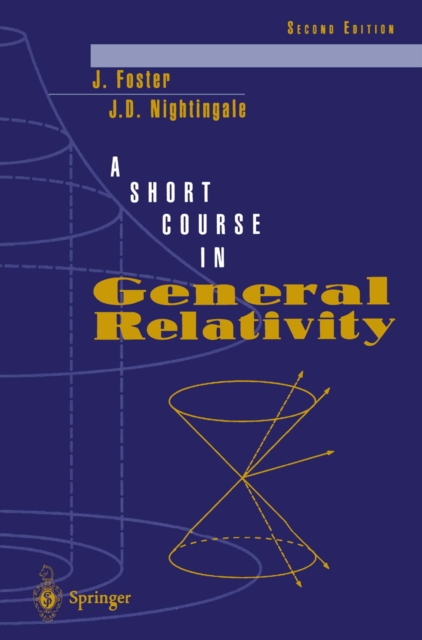
Suitable as a one-semester course in general relativity for senior undergraduate or beginning graduate students, this text clarifies the mathematical aspects of Einstein's general theory of relativity without sacrificing physical understanding.
Optical Metrology for Fluids, Combustion and Solids is the first practical handbook that presents the assemblage of the techniques necessary to provide a basic understanding of optical measurement for fluids, combustion, and solids.
EMATs for Science and Industry comprises the physical principles of electromagnetic acoustic transducers (EMATs) and the applications to scientific and industrial ultrasonic measurements on materials.
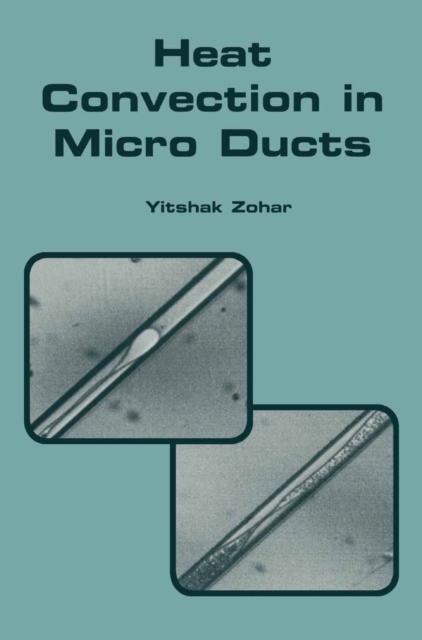
As the field of Microsystems expands into more disciplines and new applications such as RF-MEMS, Optical MEMS and Bio-MEMS, thermal management is becoming a critical issue in the operation of many microdevices, including microelectronic chips.
Microfluidics and BioMEMS Applications central idea is on microfluidics, a relatively new research field which finds its niche in biomedical devices, especially on lab-on-a-chip and related products.
Inverse problems have a long history in acoustics, optics, electromagnetics and geophysics, but only recently have the signals provided by ocean acoustic sensors become numerous and sophisticated enough to allow for realistic identification of the ocean parameters.
Motivated by practical problems in engineering and physics, drawing on a wide range of applied mathematical disciplines, this book is the first to provide, within a unified framework, a self-contained comprehensive mathematical theory of duality for general non-convex, non-smooth systems, with emphasis on methods and applications in engineering mechanics.
Benefiting from Thermal and Mechanical Simulation in Micro-Electronics presents papers from the first international conference on this topic, EuroSimE2000.
Recent Developments in Time-Frequency Analysis brings together in one place important contributions and up-to-date research results in this fast moving area.
This book is an attempt to bring the full range of relativity theory within reach of advanced undergraduates, while containing enough new material and simplifications of old arguments so as not to bore the expert teacher.